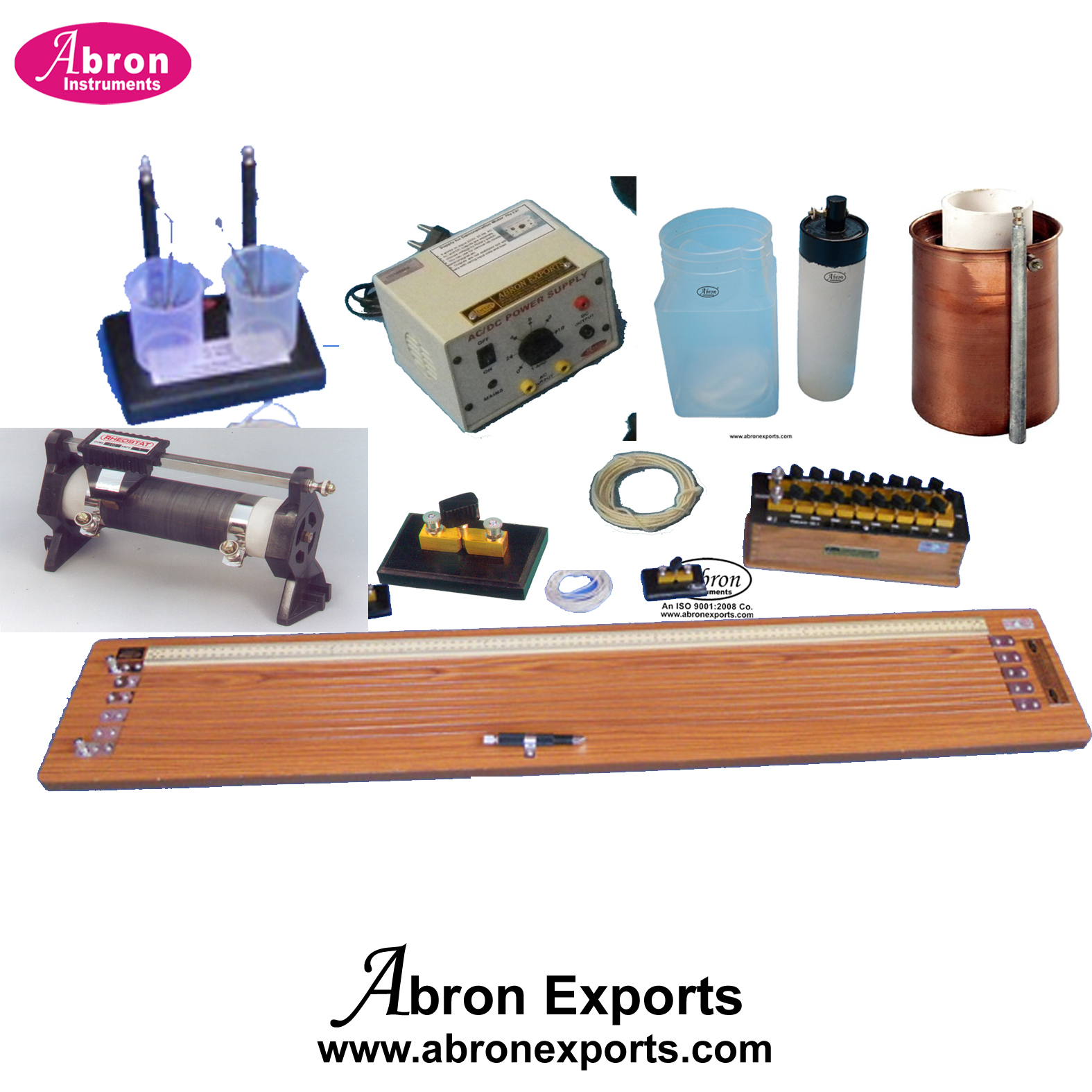
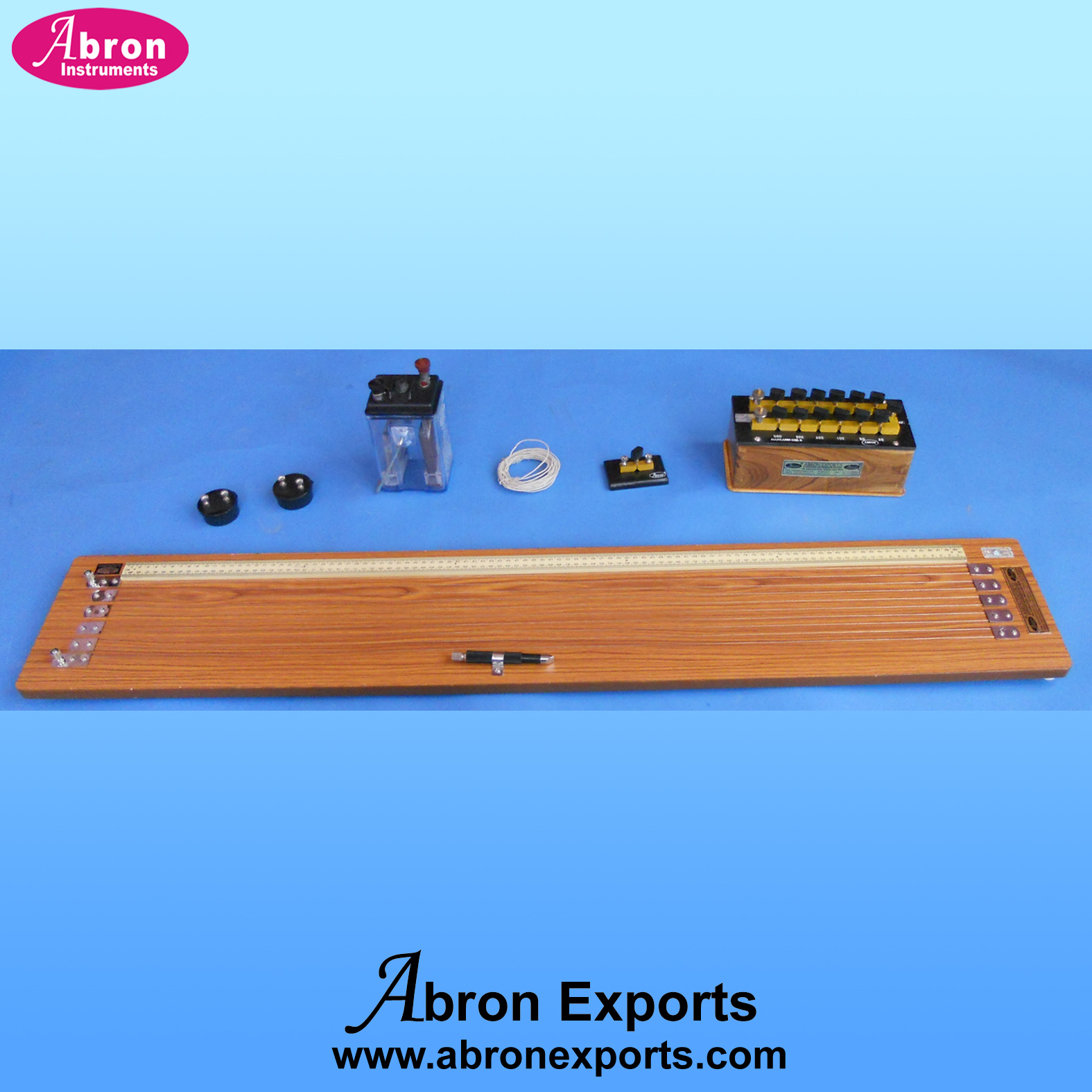
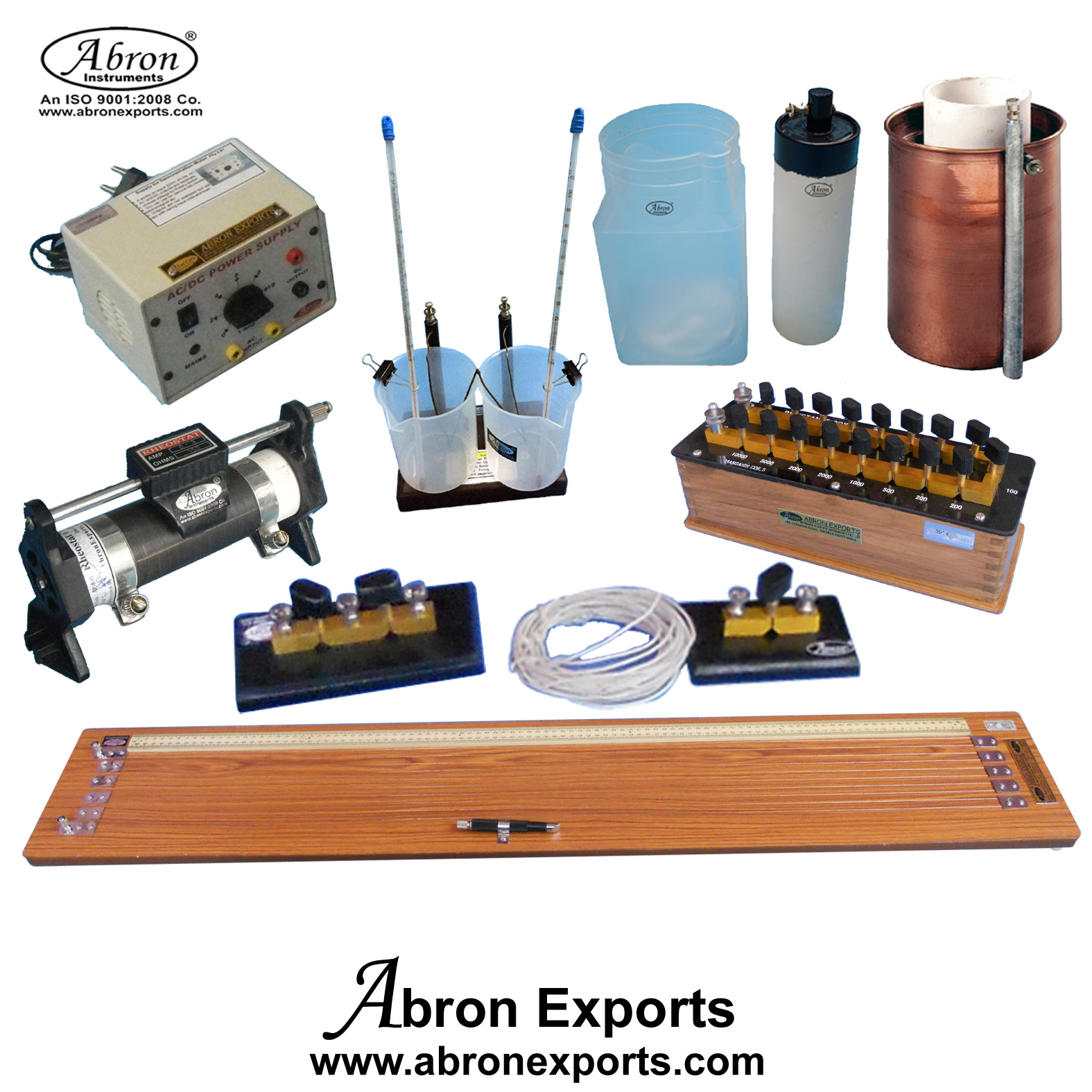
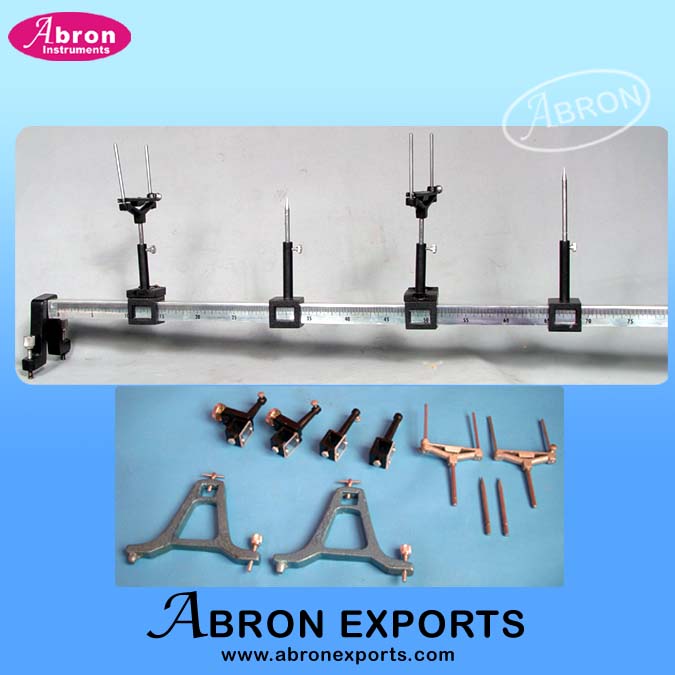
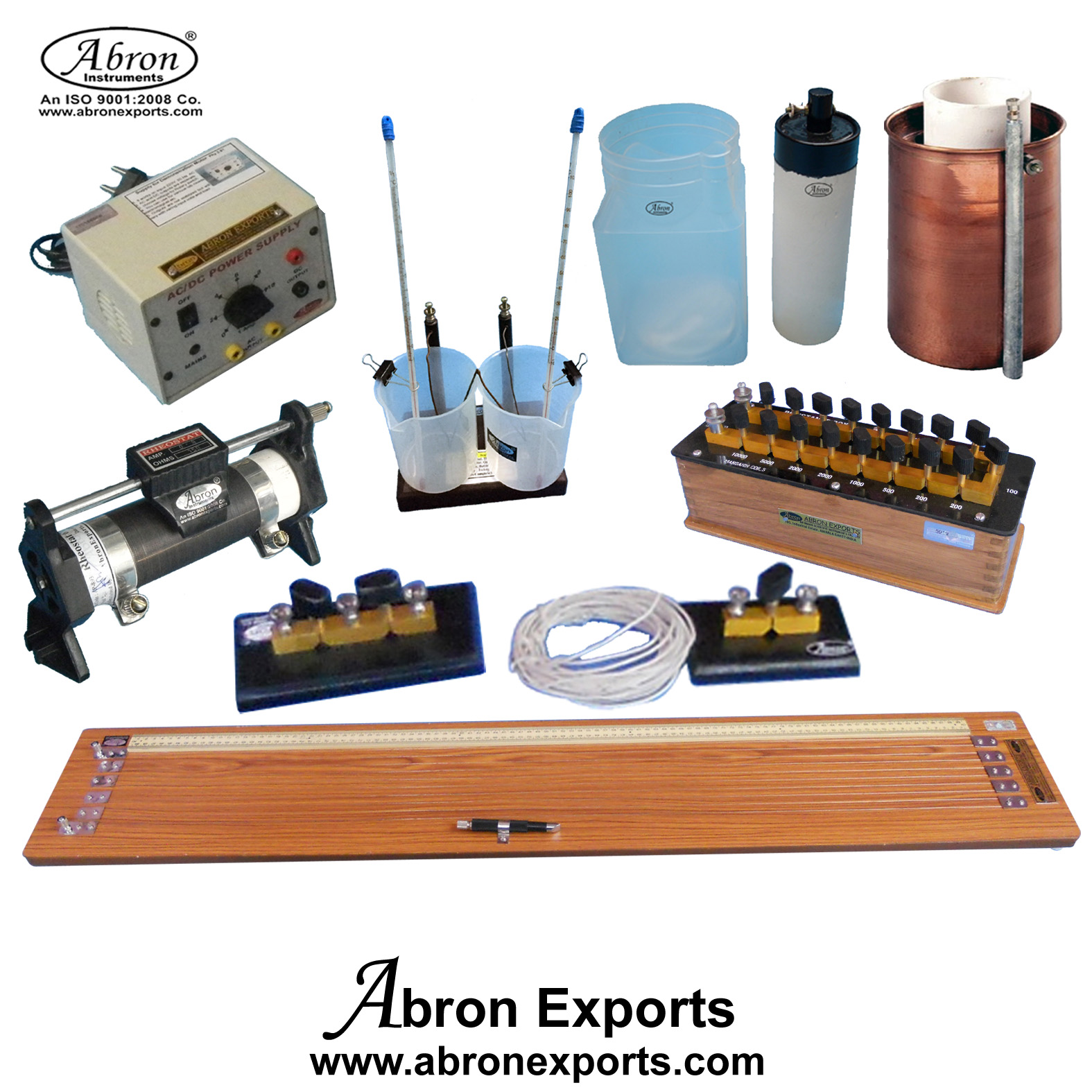
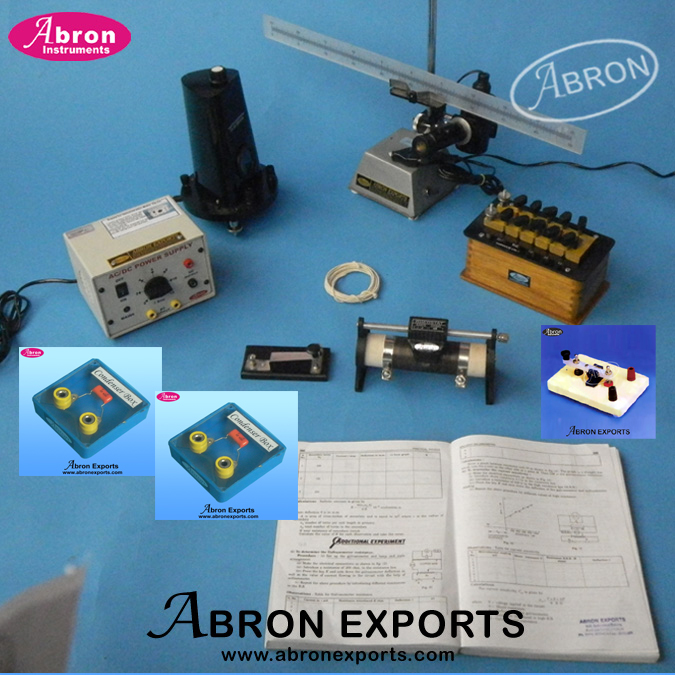
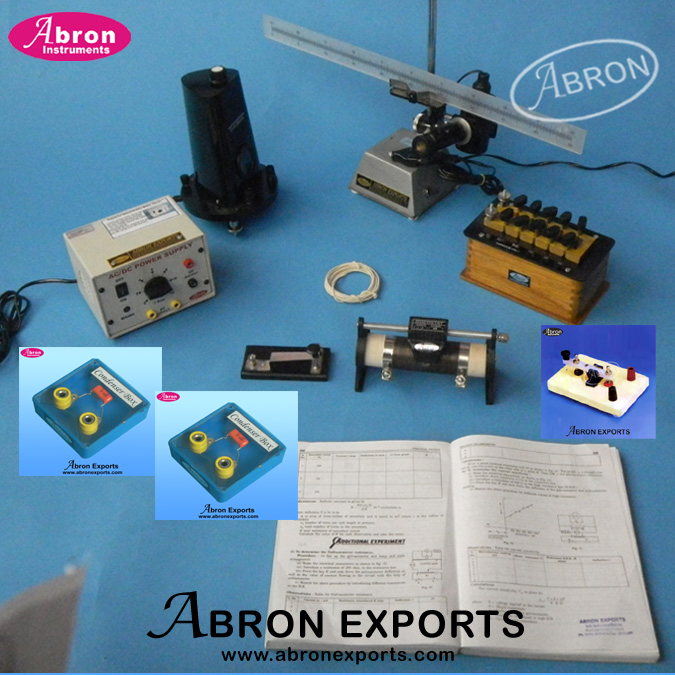
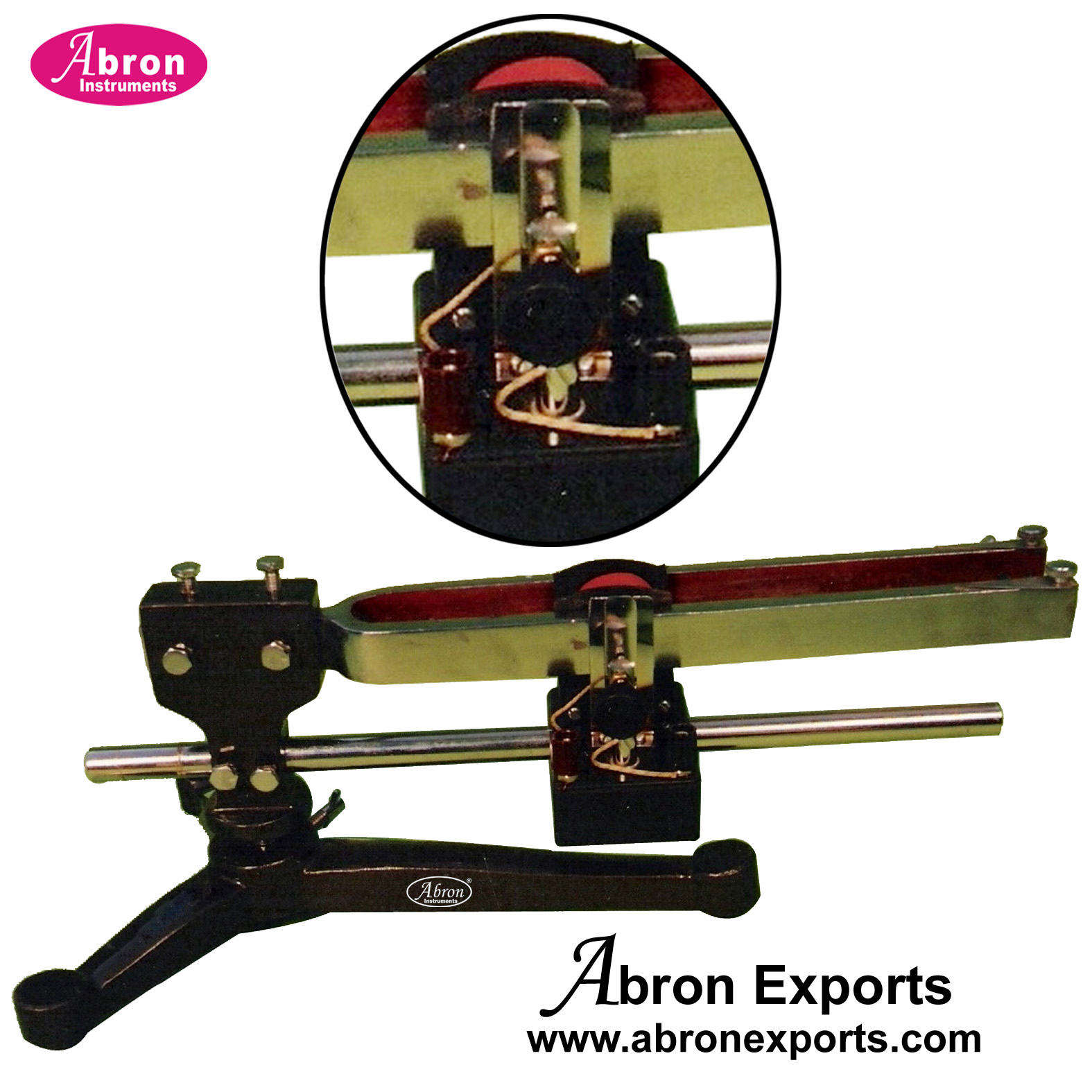
Callender And Griffith Bridge Slidewire 50cm For Low Resistance Measurment Rheostat ResistanceBox Galvanometer Key Power Supply Battery Elliminator wire etc set Abron AP-670K

Callender And Griffith Bridge Slidewire 50cm For Low Resistance Measurment Rheostat ResistanceBox Galvanometer Key Power Supply Battery Elliminator wire etc set Abron AP-670K

Callender And Griffith Bridge Slidewire 50cm For Low Resistance Measurment Rheostat ResistanceBox Galvanometer Key Power Supply Battery Elliminator wire etc set Abron AP-670K 

To Find Resistance By Potentiometer Slidewire Bridge 100cm Jockey Rheostat Resistance Box Power supply Battery Eliminator Abron AP-670KB

To Find Resistance By Potentiometer Slidewire Bridge 100cm Jockey Rheostat Resistance Box Power supply Battery Eliminator Abron AP-670KB

To Find Resistance By Potentiometer Slidewire Bridge 100cm Jockey Rheostat Resistance Box Power supply Battery Eliminator Abron AP-670KB 

Carey Foster Bridge 100cm Kit Rheostat Galvanometer Low Resistance By Potentiometer +Box Keys Supply Abron AP-670KP

Carey Foster Bridge 100cm Kit Rheostat Galvanometer Low Resistance By Potentiometer +Box Keys Supply Abron AP-670KP

Carey Foster Bridge 100cm Kit Rheostat Galvanometer Low Resistance By Potentiometer +Box Keys Supply

Abron AP-670KP 

Low Resistance by Potentiometer:

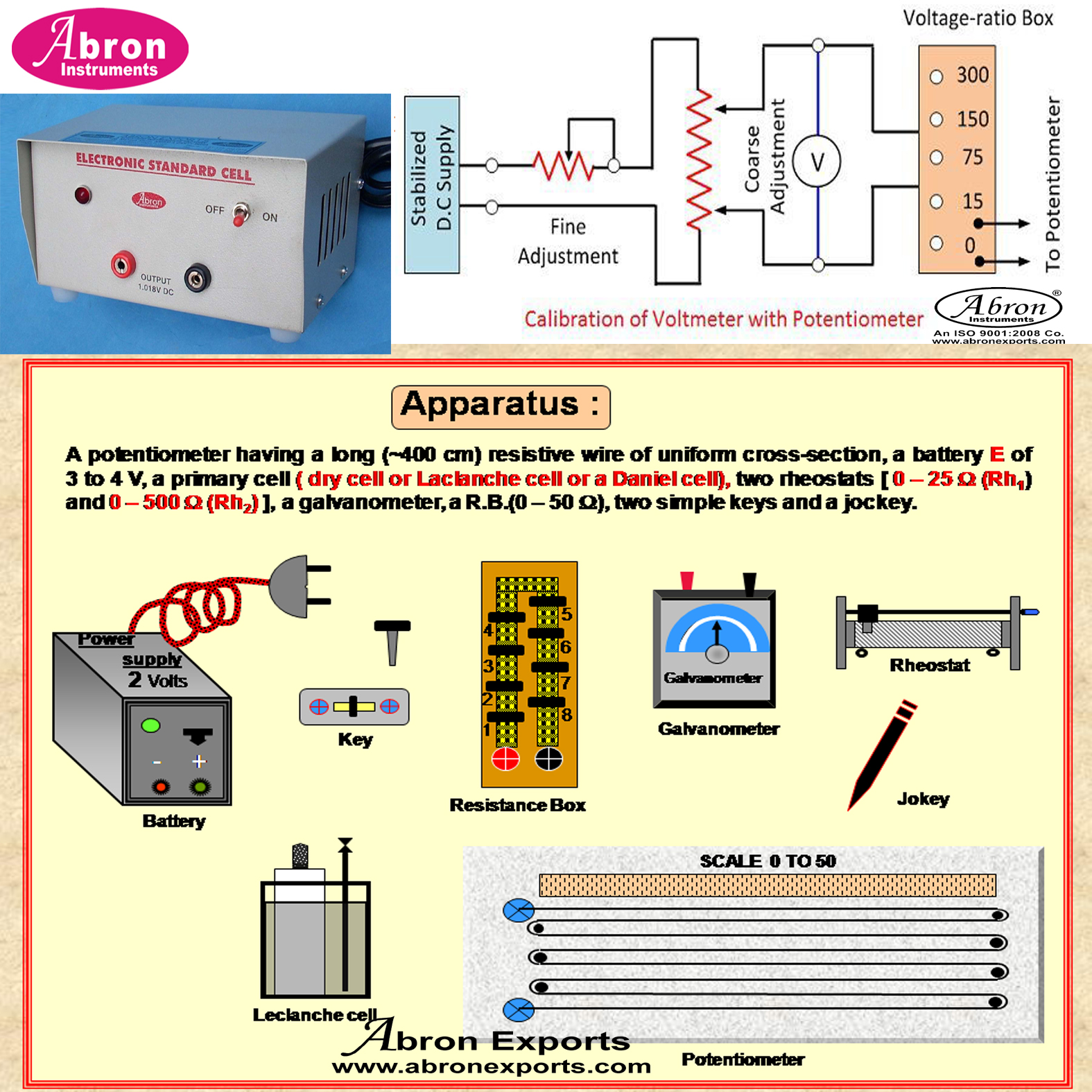
A potentiometer, low resistance (e.g., a thick wire or a standard low resistance coil), standard cell, battery eliminator, rheostat, galvanometer, and connecting wires are used.

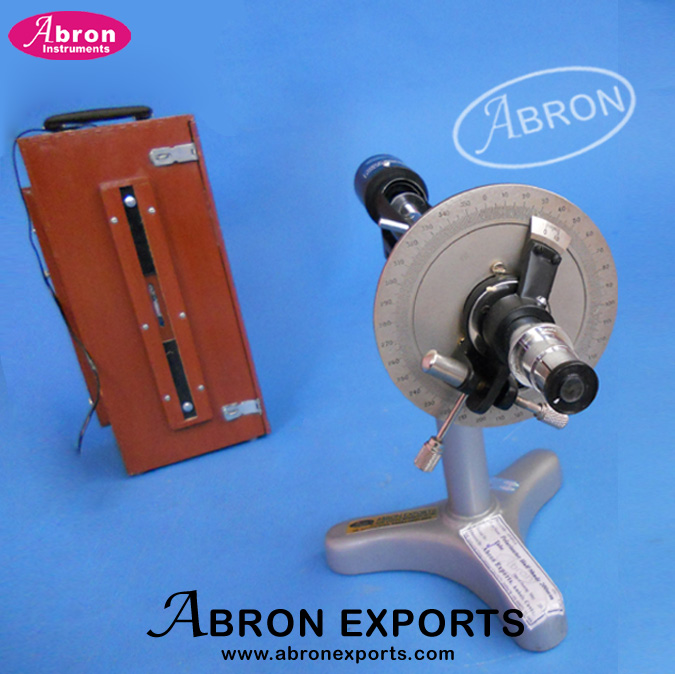
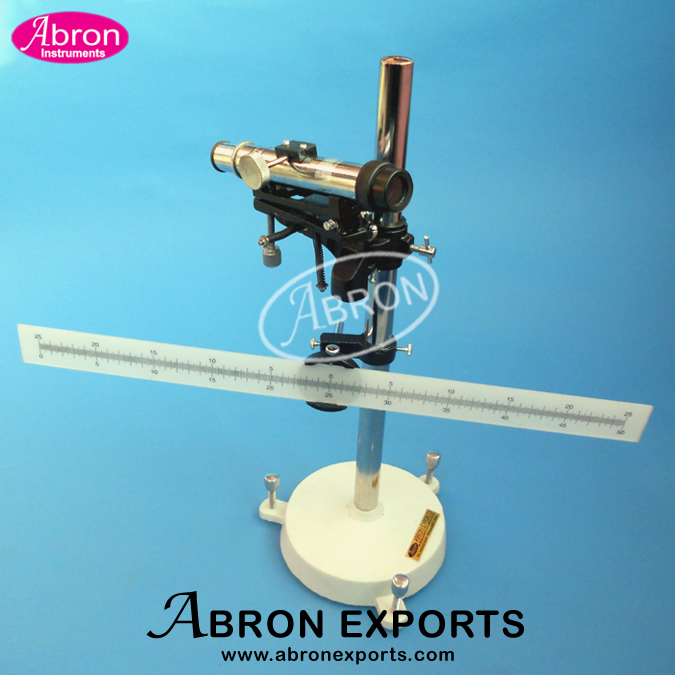
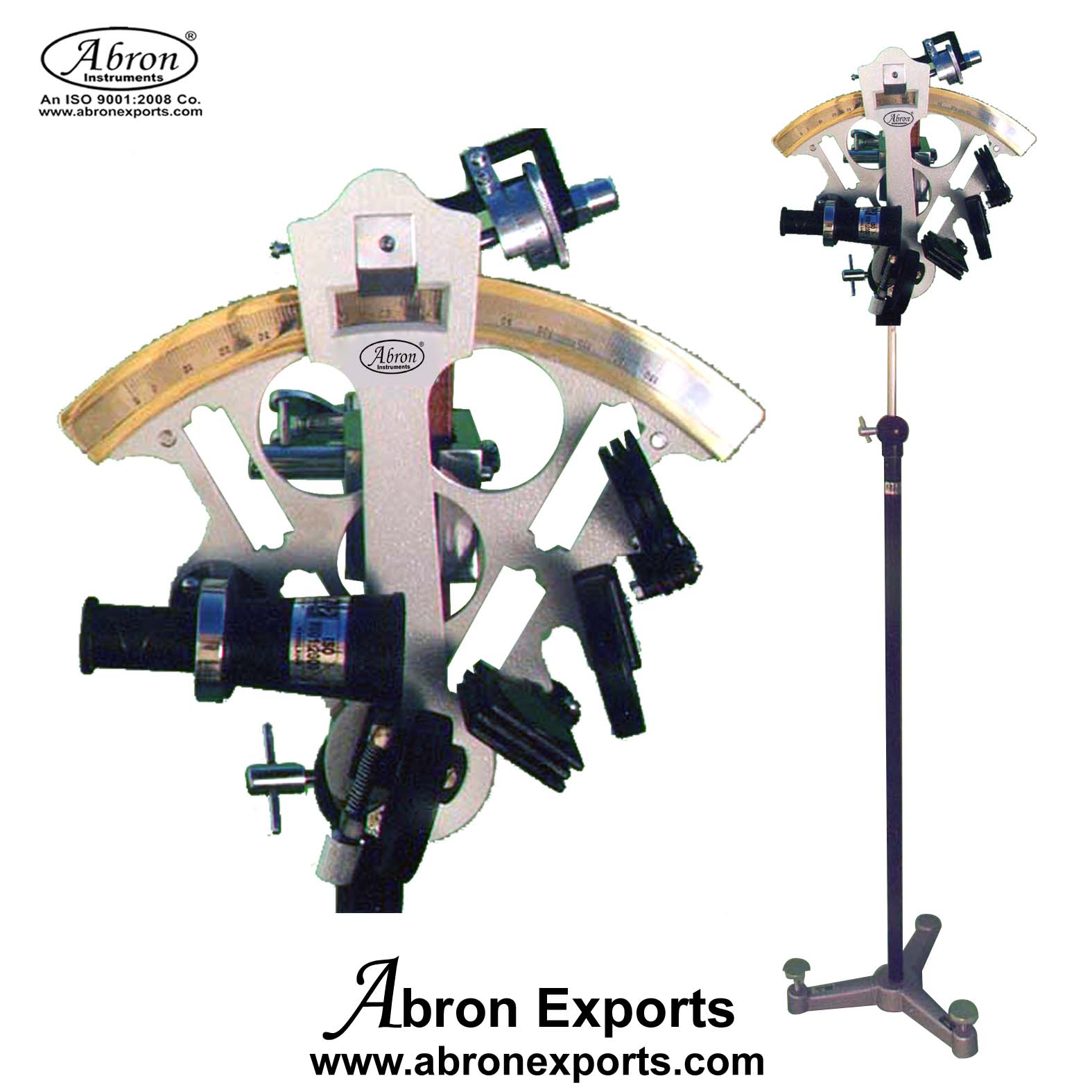
Resolving Power of Telescope Using Travelling Slit Scale With Telescope On Stand,Slit Holder Lamp Houde Setup Abron AP-938KT

Resolving Power of Telescope Using Travelling Slit Scale With Telescope On Stand,Slit Holder Lamp Houde Setup Abron AP-938KT

Resolving Power of Telescope Using

Travelling  Slit   Scale

With Telescope On Stand,Slit Holder

Lamp Houde Setup

Abron AP-938KT 

Viscosity Apparatus 25mm glass tube in stand Stokes Method steel balls 3 doz Digital stop watch, screw gauge, thermometer Setup AP-966K APP-Bsc-222

Viscosity Apparatus 25mm glass tube in stand Stokes Method steel balls 3 doz Digital stop watch, screw gauge, thermometer Setup AP-966K APP-Bsc-222

Viscosity App. with glass tube 23 rods abase and top Stokes Method

steel balls 3 doz Digital stop watch,

screw gauge, thermometer Setup APP-Bsc-222

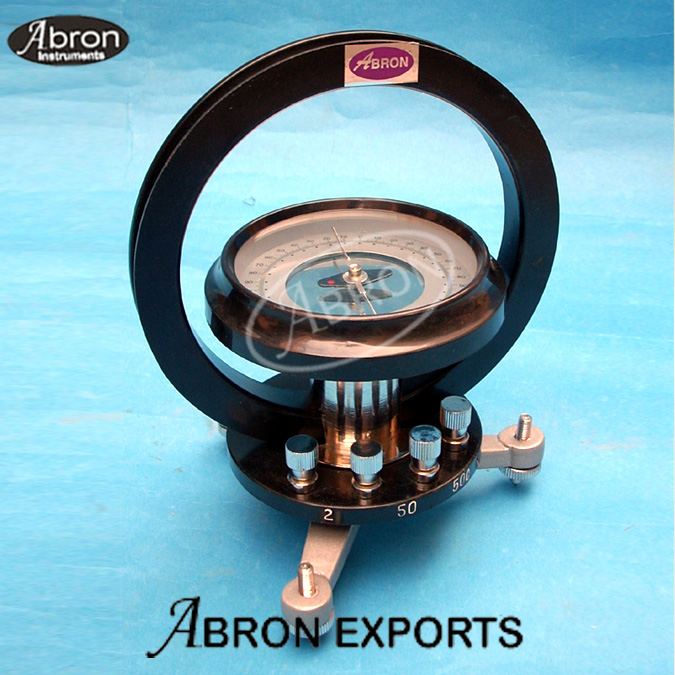
Thermal conductivity of coper rod by Angstrom setup digital graphical 0.1c ap-900ak

Thermal conductivity of coper rod by Angstrom setup digital graphical 0.1c ap-900ak

Thermal conductivity of coper rod by Angstrom setup digital graphical 0.1c ap-900ak

Ray box light kit set spare filters set of 8 colour cards abron AP-890i

Ray box light kit set spare filters set of 8 colour cards abron AP-890i

Ray box light kit set spare filters set of 8 colour cards abron ap-890i

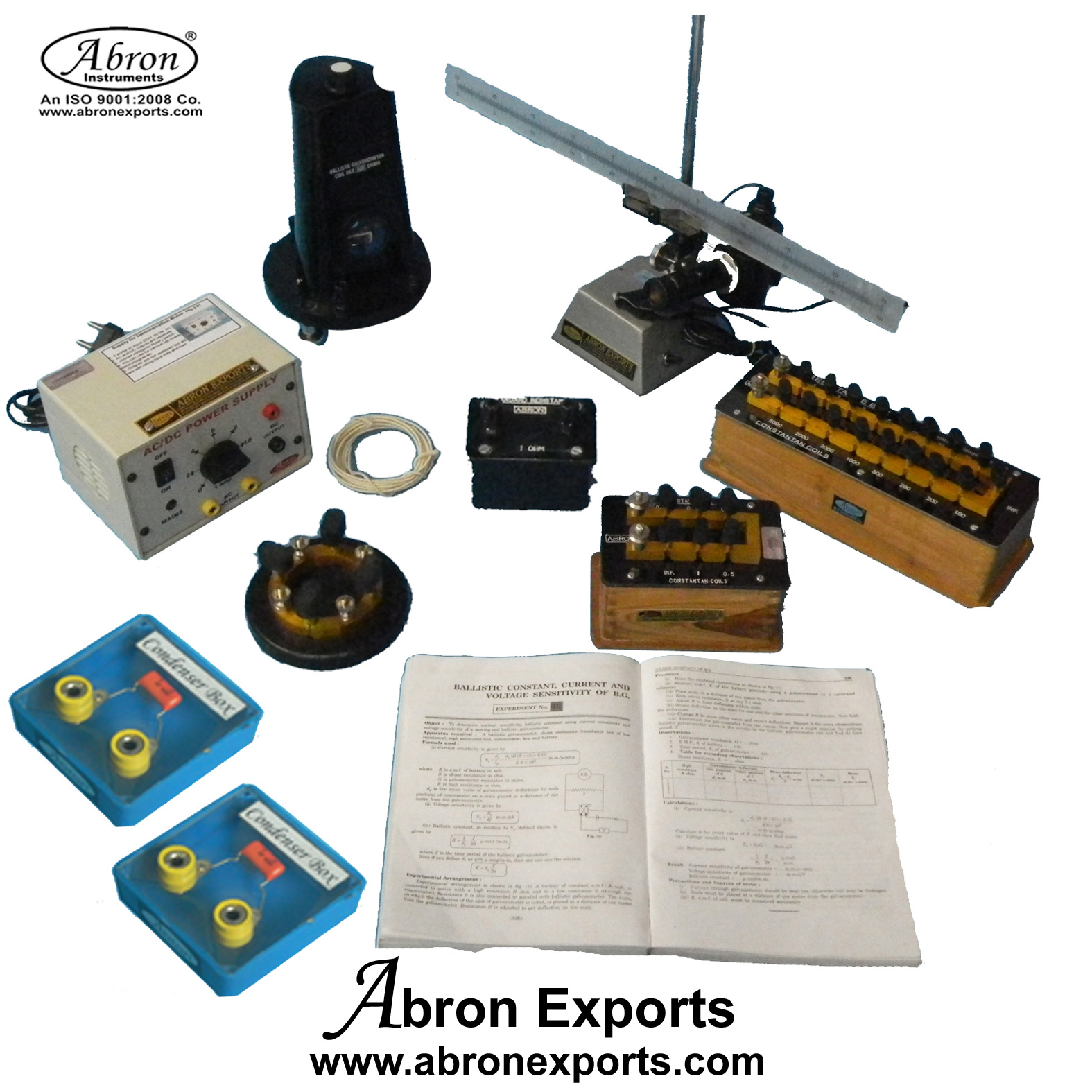
Resistance by leakage capacitor method using ballistic galvanometer lamp and scale apparatus setup AP-2100R AP-2345P23

Resistance by leakage capacitor method using ballistic galvanometer lamp and scale apparatus setup AP-2100R AP-2345P23

Resistance by leakage capacitor method using ballistic galvanometer lamp and scale apparatus setup

APP-2100R

AP-2345P23 

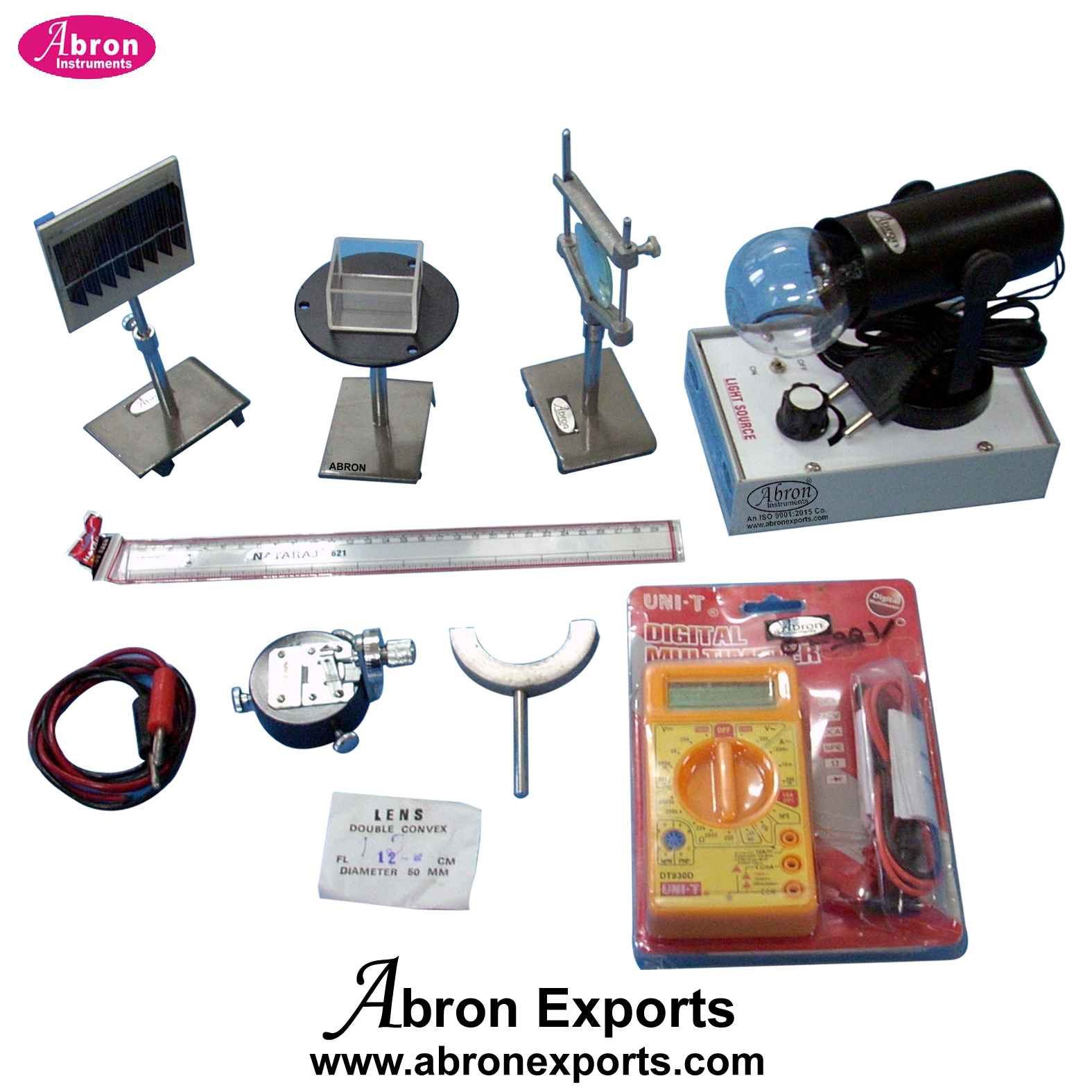
Class XII-exp- To determine the focal Length of a convex lens with the help of a Convex lens AP-12b15-05

Class XII-exp- To determine the focal Length of a convex lens with the help of a Convex lens AP-12b15-05

To determine the focal Length of a convex lens with the help of a Convex lens ( When they are Kept at a distance)

Apparatus Required: Optical Bench Vertical Stand, Convex lens, Concave lens and two pins.

Class XII-exp-To find focal length of a convex lens with the help of Convex Lens AP-12b15-04

Class XII-exp-To find focal length of a convex lens with the help of Convex Lens AP-12b15-04

To find focal length of a convex lens with the help of Convex Lens ( When both Lenses are Kept in Contact with each other)

Apparatus Required: Optical Bench ,Vertical stands, convex lens (of more power i.e., of short focal length), concave lens, plane mirror, one pin.

Class XII-exp-To determine the refractive Index of Prism Material AP-12b15-03

Class XII-exp-To determine the refractive Index of Prism Material AP-12b15-03

To determine the refractive Index of Prism Material (Glass) by Plotting Graph Between angle of incidence and angal of deviation

Apparatus Required: Drawing Board, White Paper,Board pins,all pins, prism, measuring scale,protactor.

Class XII-exp-To determine the focal Length of a Convex Lens by using two pins or u-v Method AP-12b15-02

Class XII-exp-To determine the focal Length of a Convex Lens by using two pins or u-v Method AP-12b15-02

To determine the focal Length of a Convex Lens by using two pins or u-v Method

Apparatus Required: Optical Bench ,Vertical Stands, Convex Lens, and two pins.

Class XII-exp- To determine the focal lenth of a Concave Mirror AP-12b15-01

Class XII-exp- To determine the focal lenth of a Concave Mirror AP-12b15-01

To determine the focal lenth of a Concave Mirror by u-v method or conjugate foci method ( wire the help of two Pins)

Apparatus Required: Concave Mirror, Optical Bench,Vertical pin stands and two pins.

Physics Exp A27 Determination of valve coefficients (ura,gm) of a triode valve and to investigate the variation of voltage gain AE-1436A

Physics Exp A27 Determination of valve coefficients (ura,gm) of a triode valve and to investigate the variation of voltage gain AE-1436A

Determination of valve coefficients (ura,gm) of a triode valve and to investigate the variation of voltage gain with load resistance by using a.c. bridges.

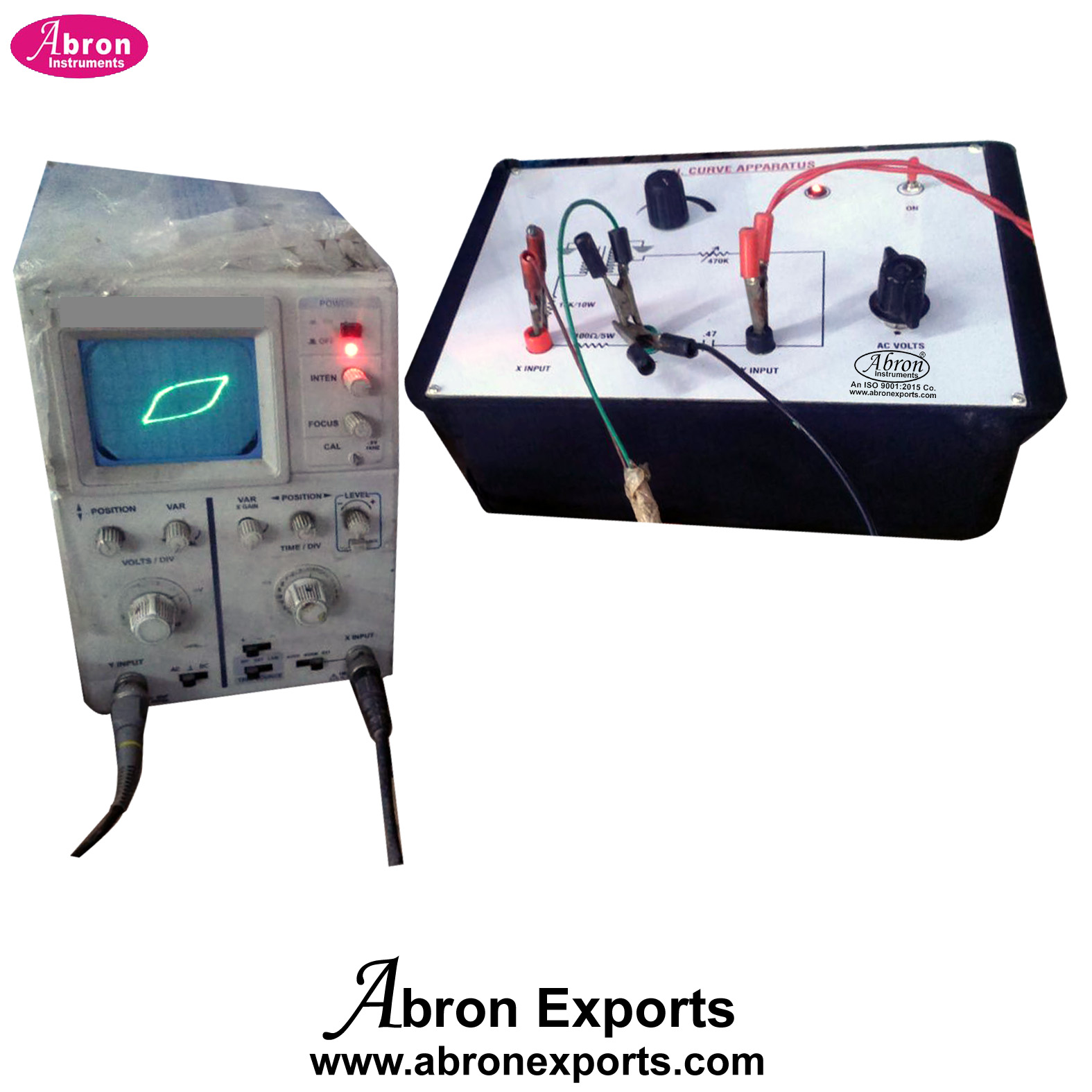
Physics Exp A22 To display BH curve on the screen of a cathode ray oscilloscopegraph AE-1208k

Physics Exp A22 To display BH curve on the screen of a cathode ray oscilloscopegraph AE-1208k

To display (b-H) curve on the screen of a cathode ray oscillograph and determine the energy loss.

-bh-curve-cro-10mhz-setup-kit-trainer-kit-abron


Physics Exp A21 To plot a (B-H) curve for an iron specimen in the form of an ring AP2521

Physics Exp A21 To plot a (B-H) curve for an iron specimen in the form of an ring AP2521

To plot a (B-H) curve for an iron specimen in the form of an anchor ring (toroid)


Physics Exp A20 Measurement of magnetic field Hall probe crystal type or pen typeAE-1317P APP-A20

Physics Exp A20 Measurement of magnetic field Hall probe crystal type or pen typeAE-1317P APP-A20

Measurement of magnetic field B by the following methods:

(A) Hall probe fluxmeter.

(B) Moving coil fluxmeter.

(C) Bismuth spiral fluxmeter

 Physics Exp A19 Measurement of magnetic volume susceptibility of a liquid or solution AR-1011A

Physics Exp A19 Measurement of magnetic volume susceptibility of a liquid or solution AR-1011A

Measurement of magnetic volume susceptibility of a liquid or solution by using Quincke's method.

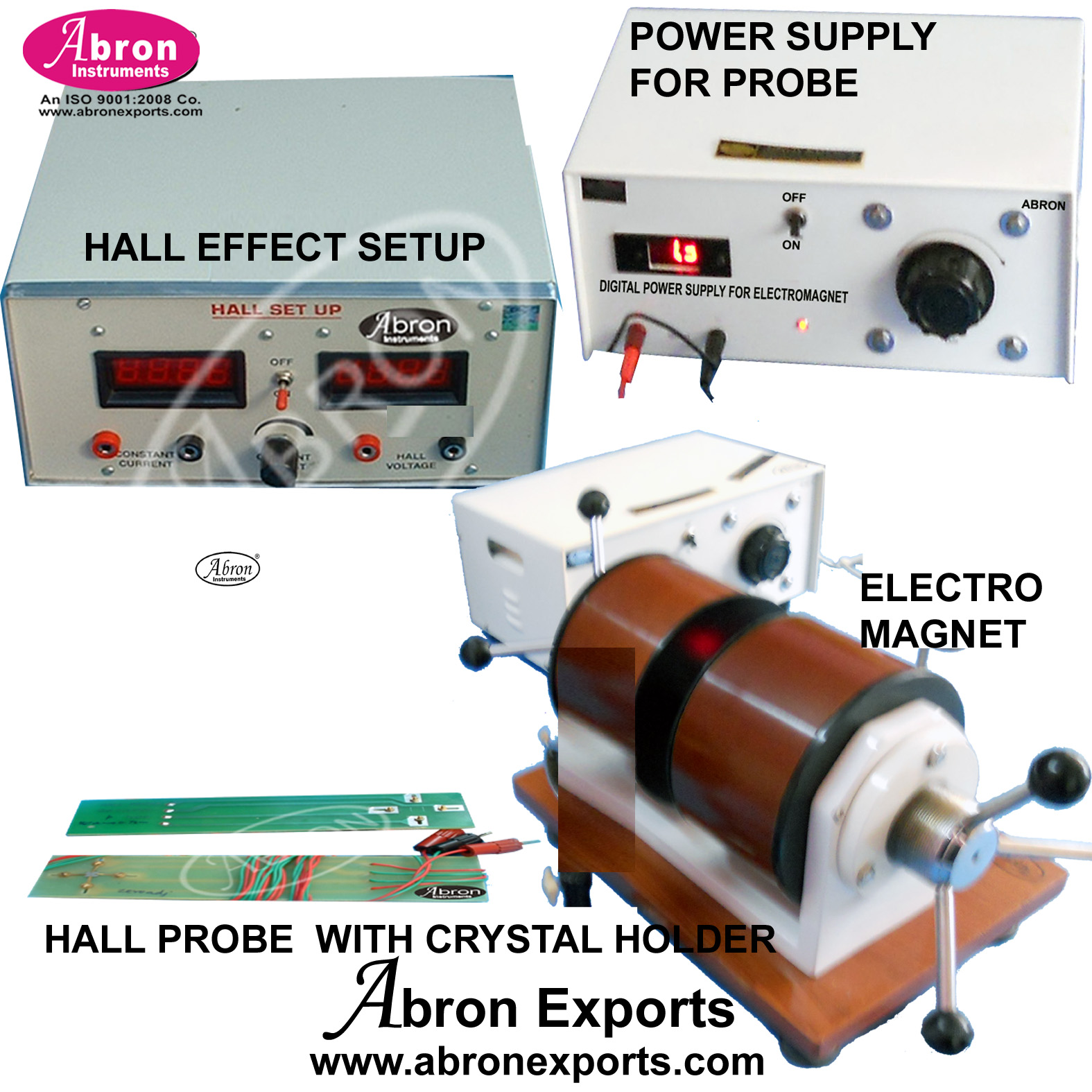
Physics Exp A17 To study Hall effect in semiconductors APP-A17 AE-1282A

Physics Exp A17 To study Hall effect in semiconductors APP-A17 AE-1282A

To study Hall effect in semiconductors with following objectives:

(a) Determination of Hall coefficient (Rh).

(b) Determination of concentration (n) of charge earriers in the specimen semiconductor.

(c)Determination of Hall angle (0)

(d) Determination of magnetoresistance (Rx), teh magnetic conductivity (o) and the mobility (u) of the carriers of the specimen.

(e) Four probe and Hall probe.

Physics Exp A16 Measurement of electrical conductivity APP-A16

Physics Exp A16 Measurement of electrical conductivity APP-A16

Measurement of electrical conductivity by four probe technique.

Physics Exp A15 To determine the energy band gap in case of a semiconductor APP-A15 LED

Physics Exp A15 To determine the energy band gap in case of a semiconductor APP-A15 LED

To determine the energy band gap in case of a semiconductor by investigating the spectral response of its electrical conductivity.

Band Gap of A Semi-Conductor Diode Digital Electronic Trainer setup kit with power supply

Semi-Conductor Diode with the increase in surrounding temperature, the current suddenly starts flowing excessively to see this band, the instrument is designed accordingly.

Specification :

Digital Meter                     LCD two meters

Power Supply (Ist)            0 - 30 Volt at 15 mA

Power Supply (IInd)          0 - 1.5 Volt at 10 mA

Voltmeter Dual Range      0 - 30 V / 1 - 1.5 V DC

mA / uA                             15 mA / 100 uA

Mini Oven                         With Heater ON/OFF Switch

Semi-Conductor Diode     Fitted in Lid with Terminal

Thermometer                    110° x 1/2°C

Working                            Forward & Reverse characteristic

Patch cord connection      Complete with Manual                       

Cat No        Item           with Power Supply                       meters

AE-1204DC Band of A SemiConductor diode Electronic Digital LED  Trainer Kit connecting wire power supply in box   

Physics Exp A14 To determine the energy band gap in case of a semiconductor APP-A14

Physics Exp A14 To determine the energy band gap in case of a semiconductor APP-A14

To determine the energy band gap in case of a semiconductor (silicon) by studying the variation of its electrical conductance with temperature.

Band Gap of A Semi-Conductor Diode Digital Electronic Trainer setup kit with power supply

Semi-Conductor Diode with the increase in surrounding temperature, the current suddenly starts flowing excessively to see this band, the instrument is designed accordingly.

Specification :

Digital Meter                     LCD two meters

Power Supply (Ist)            0 - 30 Volt at 15 mA

Power Supply (IInd)          0 - 1.5 Volt at 10 mA

Voltmeter Dual Range      0 - 30 V / 1 - 1.5 V DC

mA / uA                             15 mA / 100 uA

Mini Oven                         With Heater ON/OFF Switch

Semi-Conductor Diode     Fitted in Lid with Terminal

Thermometer                    110° x 1/2°C

Working                            Forward & Reverse characteristic

Patch cord connection      Complete with Manual                       

Cat No        Item           with Power Supply                       meters

AE-1204DC Band of A SemiConductor diode Electronic Digital LCD  Trainer Kit connecting wire power supply in box   

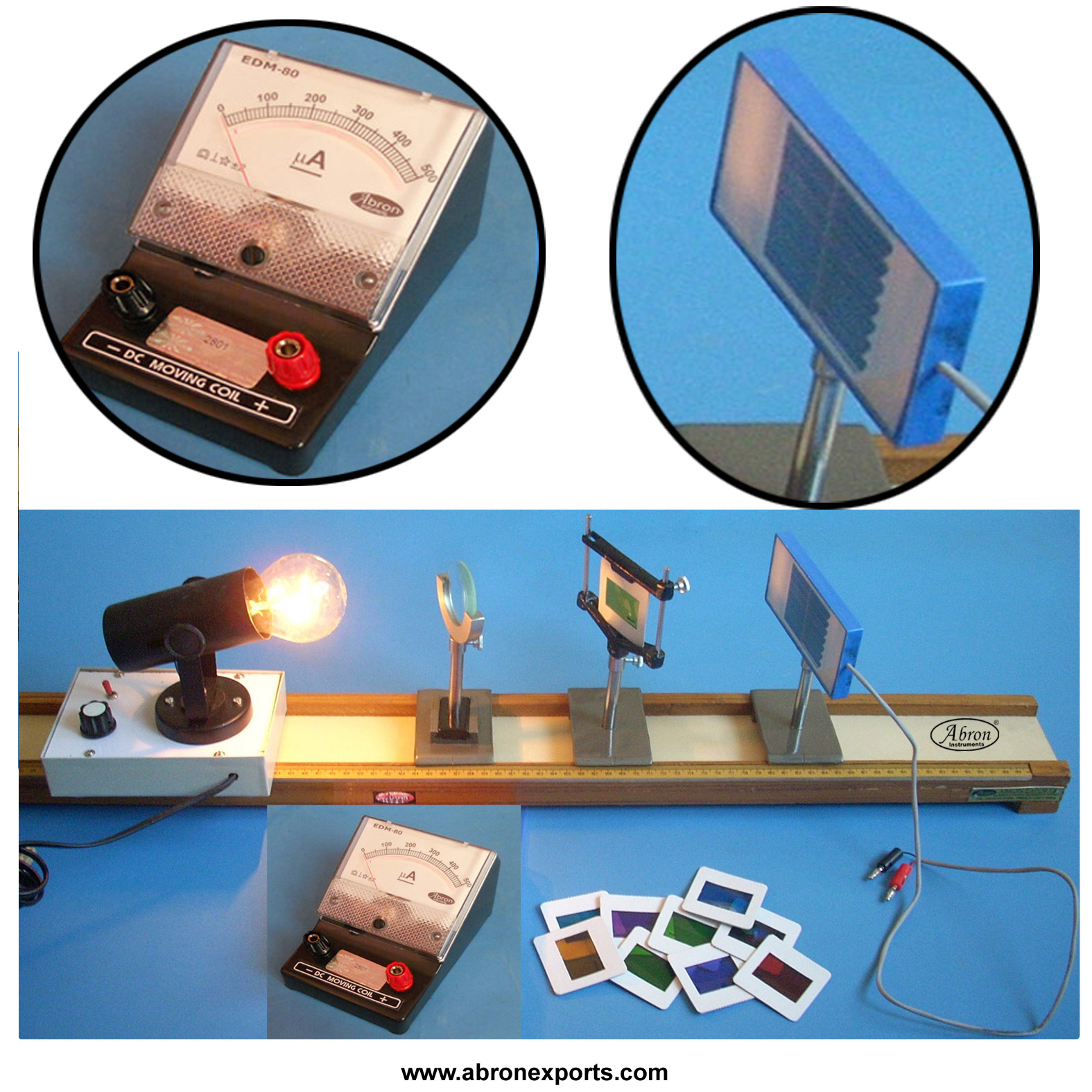
Physics Exp A11 To use emission type of photo cell to study photoelectric effect APP-A11 AE-1367K

Physics Exp A11 To use emission type of photo cell to study photoelectric effect APP-A11 AE-1367K

To use emission type of photocell to study photoelectric effect and find the following:

(1) The value of Planck radiation constant h.

(2) The values of threshold frequency v0 and the work function of the photocathode w0.

(3) The verification of photoelectric equation: hv=hv0+1/2mv2max

Physics Exp A10 To Determine The Value of Stefans Constant Photo Voltaic Cell Setup APP-A10 AE1372A

Physics Exp A10 To Determine The Value of Stefans Constant Photo Voltaic Cell Setup APP-A10 AE1372A

(a) To determine the value of Stefan's constant by using a photovoltaic cell and an incandescent filament lamp as black body radiator.

(b) To test photoelectric equation in case of photovoltaic cell.

Physics Exp A09 Verification of Stefan s law of radiation APP-A09

Physics Exp A09 Verification of Stefan s law of radiation APP-A09

Verification of Stefan's law of radiation by using on incandescent lamp as black body radiator.

Physics Exp A08 Determination of Stefan s radiation constant APP-A08 AE-1372A

Physics Exp A08 Determination of Stefan s radiation constant APP-A08 AE-1372A

Determination of Stefan's radiation constant by using heated hemispherical enclosure.

Physics Exp A07 Measurement of temperature AAP-A07 AP-675BK

Physics Exp A07 Measurement of temperature AAP-A07 AP-675BK

Measurement of temperature by platinum resistance thermometer.

Physics Exp A06 Determination of viscosity of a fluid AP-965C

Physics Exp A06 Determination of viscosity of a fluid AP-965C

Determination of viscosity of a fluid by rotation viscometer.

Physics Exp A05 Determination of elastic constants of a polycrystalline material APP-A05 AP-794c Youngs modulus of glass Crystal or plate by Cornus interferometer fringes mathod Abron

Physics Exp A05 Determination of elastic constants of a polycrystalline material APP-A05 AP-794c Youngs modulus of glass Crystal or plate by Cornus interferometer fringes mathod Abron

Determination of elastic constants of a polycrystalline material by using waves

AP-794c Youngs modulus of glass Crystal or plate by Cornus interferometer fringes mathod Abron

Physics Exp APP-A04 Determination of Velocity of Ultrasonic Waves AR-1442

Physics Exp APP-A04 Determination of Velocity of Ultrasonic Waves AR-1442

Determination of velocity of ultrasonic waves in a liquid medium.

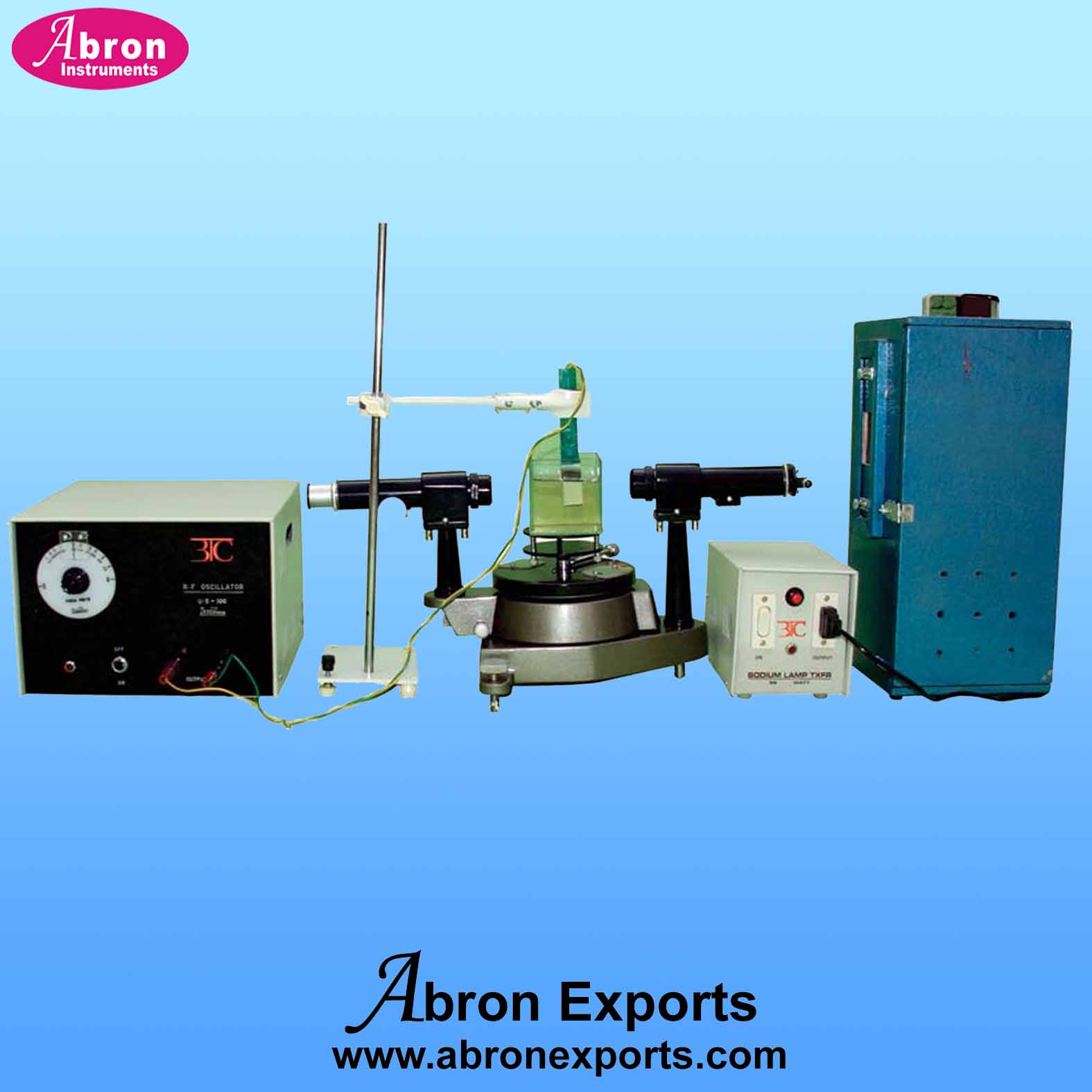
Ultrasonic diffraction apparatus abron ae-1442  The instrument is designed to give accurate and best results keeping in view the various difficulties faced by the institutions. A proper R. F. Oscillator is designed for this experiment and special type of High Resolving Spectrometer with Micrometer Eyepiece in manufactured for this experiment. It is fully tested and nice fringes are formed with the help of R. F. Oscillator. Specifications R. F. Oscillator Input :  230 Volts AC 50 c/s Frequency :    2.5 - 6.5 Mc/s calibrated for different set of crystal frequencies and is continuously variable. R. F. Output :      The output is brought out on the terminals. Built-in a nicely polished box with ON / OFF switch, jewel light etc. Leads : Connecting leads are provided with the instrument.

Physics Exp A03 The Study of Thermal Expansion of a Crystal APP-A03

Physics Exp A03 The Study of Thermal Expansion of a Crystal APP-A03

The study of thermal expansion of a crystal by optical interference method.

Physics Exp A02 Determination of Elastic Constants Youngs modulus with Microscope abron

Physics Exp A02 Determination of Elastic Constants Youngs modulus with Microscope abron

Determination of elastic constants of elastic constants of glass by Cornu's interference method.

Physics Exp A01 Determination of Youngs Modulus of a Metallic Rod AP-974A

Physics Exp A01 Determination of Youngs Modulus of a Metallic Rod AP-974A

Determination of Young's modulus of a metallic rod by using Searle's 

Engg-BE Btech 1st Year Potentiometer-Thermo EMF APP-2346E10

Engg-BE Btech 1st Year Potentiometer-Thermo EMF APP-2346E10

Engg-BE Btech 1st Year- Potentiometer-Thermo EMF

Engineering-BE Btech 1st Year- Apparatus Reqiuired- Poteniometer resistance boxes lead lead acid accumulator daniel cell table galvanometer high resistance (HR), thermocouple thermometer, water bath heater ice cubes jockey connecting wires etc.

A Mechanics BSc Exp 010B To determine the Youngs modulus of the material of a given beam supported on two knife-edges and loaded at the middle AP-688K

A Mechanics BSc Exp 010B To determine the Youngs modulus of the material of a given beam supported on two knife-edges and loaded at the middle AP-688K

Koenig’s arrangement

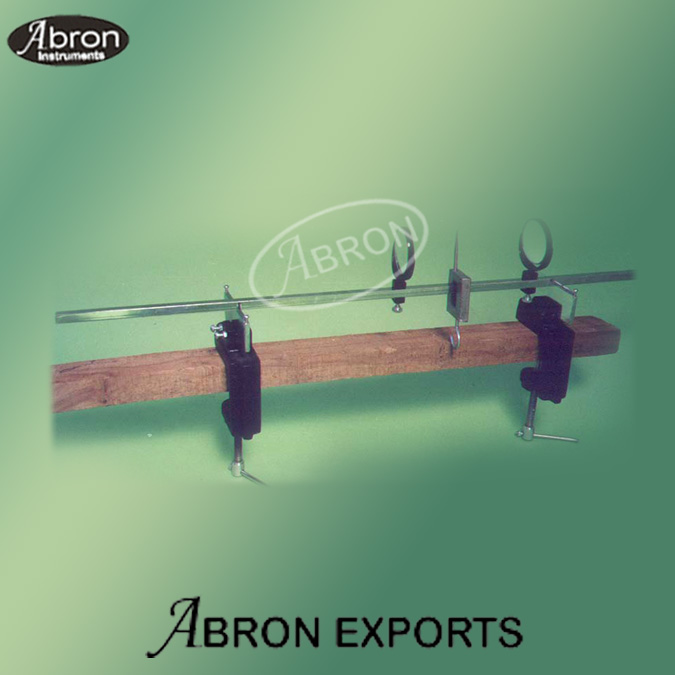
BENDING OF BEAM Koenig’s method mirror AP-688k

Consists of two G clamp with knife edge top metal chrome plate bar Rectangular of 100cm x 25mm Sharp knife edge with hanger and Mirror on top is also provided which moves on metal bar. A spherometer fitted on a cast iron stand supplied without weights

A Mechanics BSc Exp 010A To determine the Youngs modulus of the material of a given beam supported on two knife-edges and loaded at the middle point, using

A Mechanics BSc Exp 010A To determine the Youngs modulus of the material of a given beam supported on two knife-edges and loaded at the middle point, using

Spherometer arrangement

B.Sc 3rd year AP-2363E40 To draw the output characteristics of FET and measure the pinch off voltage AE-1270

B.Sc 3rd year AP-2363E40 To draw the output characteristics of FET and measure the pinch off voltage AE-1270

B.Sc IIIrd year Apparatus : FET (BFW 10 or BFW 11), two voltmeters of range 0-30 volt and 0-10 volt, a milliammeter of range 0-50 mA, two rheostats, two voltage sources one of nearly 2 volt and other of 12 volt and connection wires.

B.Sc 3rd year AP-2363P33 To determine high resistance by the method of leakage of condenser with the help of ballistic galvanometer. AP-2100R

B.Sc 3rd year AP-2363P33 To determine high resistance by the method of leakage of condenser with the help of ballistic galvanometer. AP-2100R

B.Sc IIIrd year Apparatus : Ballistic galvanometer with the lamp and scale arrangement, morse key, the given high resistance (≈1 mega ohm), standard condanser (capacit ≈0.5 uF), accumulator, rheostat, a plug key, dmaping key (or tapping key), a two-way key, stop watch and connection wires.

B.Sc 3rd year AP-2363P32 To determine the capacity of a condenser with the help of ballistic galvanometer AP-2100R

B.Sc 3rd year AP-2363P32 To determine the capacity of a condenser with the help of ballistic galvanometer AP-2100R

B.Sc IIIrd year Apparatus : Ballistic galvanometer with the lamp and scale arrangement, Morse key, two condensers (one of known capacity and other of unknown capacity), accumulator, rheostat, two-way key, damping key, plug key, stop watch and connection wires.

B.Sc 3rd year AP-2363P30 To study the dispersion relation for a monoatomic lattice

B.Sc 3rd year AP-2363P30 To study the dispersion relation for a monoatomic lattice

B.Sc IIIrd year Apparatus : A lattice dynamics kit, a cathode ray oscilloscope.

B.Sc 3rd year APP-2363-28 To determine the frequency of an audio oscillator (Wien bridge oscillator) AE-1352C

B.Sc 3rd year APP-2363-28 To determine the frequency of an audio oscillator (Wien bridge oscillator) AE-1352C

B.Sc IIIrd year Apparatus : Wein bridge oscillator, cathode ray oscilloscope (C.R.O.), audio frequency oscillator, V.T.V.M. and connection wires.

B.Sc 3rd year AP-2363-25 To study and draw the characteristics of vacuum tube voltmeter (VTVM) AE-1449

B.Sc 3rd year AP-2363-25 To study and draw the characteristics of vacuum tube voltmeter (VTVM) AE-1449

B.Sc IIIrd year Apparatus : A power supply unit with a potential divider and voltmeter, VTVM and connection wires.

The instrument is accurate and highly useful for measurement of AC Volts, DC Volts and ohms as per the ranges below :

Due to very high impedance the test probe can be connected without disturbing or loading the circuit under test.

Specifications :

DC Voltages Ranges          :   1.5 V, 5 V, 15 V, 50 V, 150 V, 500 V, 1500 V

                                                F. S. D. in 7 ranges

Accuracy                                : + 1% on all ranges

Input Resistance                    :         10 Meg. ohms

AC Voltages Ranges          :   1.5 V, 5 V, 15 V, 50 V, 150 V, 500 V, 1500 V

                                                F. S. D. in 7 ranges

Accuracy                                : + 1% on all ranges

Input Impedance                    : Approximately 1 M at low frequencies

Frequency Response         :   10 Hz to 10 MHz

Ohm Meter Ranges            :   0.2 ohms to 1000 M ohms in 7 decade ranges

Accuracy                                : + 1.5% of mid scale upto 1 meg. ohm

Meter                                      : Using Taut Bend Meter

Power Supply                         :      220 Volts 50 Hz

Zero Adjustment                    :    By Potentiometer

Ohms Adjustment                  :    By Potentiometer

Terminal                                 : 1 Pair for Connection

Selector                                  : For range & AC / DC, ohms


Study wave form of an electrically maintained tuning fork (or alternating current source) with the help of cathode ray oscilloscope and to determine unknown frequency AP-2363-24 AE-1298T AE-1340A

Study wave form of an electrically maintained tuning fork (or alternating current source) with the help of cathode ray oscilloscope and to determine unknown frequency AP-2363-24 AE-1298T AE-1340A

B.Sc IIIrd year Apparatus : Cathode ray oscilloscope, electrically maintained tuning fork (or alternating current source and a step down transformer), standard audio frequency signal generator, tracing paper.

B.Sc 3rd year AP-2363-23 To study filter circuits and to determine ripple factor and voltage regulation of a power supply using L and I section filters

B.Sc 3rd year AP-2363-23 To study filter circuits and to determine ripple factor and voltage regulation of a power supply using L and I section filters

B.Sc IIIrd year Apparatus : Power supply, milliammeter (0-100 mA),

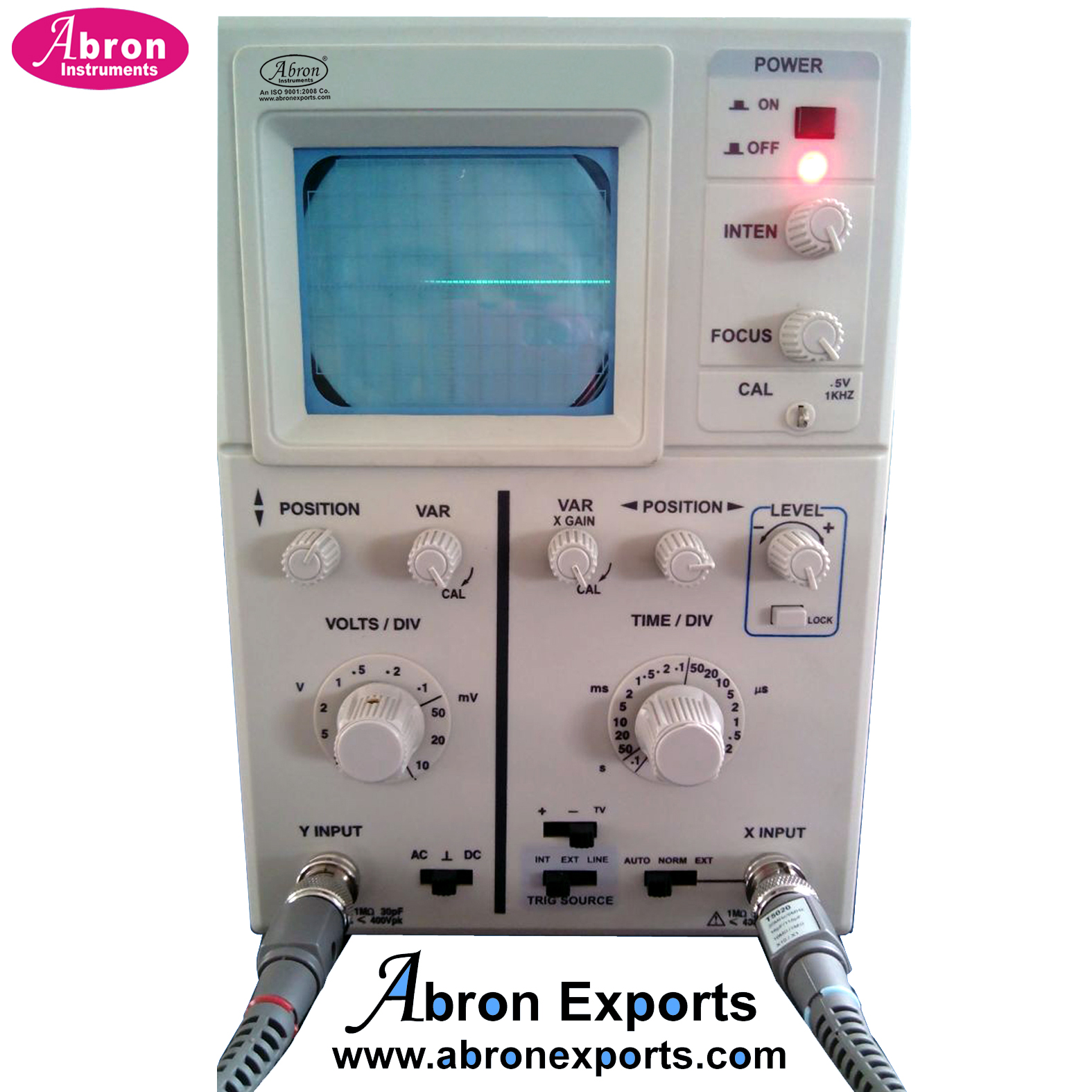
CRO-10mhz 

option  

VTVM (d.c. range 0-500 votl and a.c. range 0-5 volt).

B.Sc 3rd year AE-2363E22 To study the unregulated and regulated power supply AE-1424AUR

B.Sc 3rd year AE-2363E22 To study the unregulated and regulated power supply AE-1424AUR

B.Sc IIIrd year Apparatus : Power supply unit, milliammeter (0-100 mA), voltmeter (0-50 V), connection wires.

B.Sc 3rd year AP-2363-21 To study the half wave and full wave rectifiers and to determine the voltage regulation and ripple factor of half wave and full wave rectifiers

B.Sc 3rd year AP-2363-21 To study the half wave and full wave rectifiers and to determine the voltage regulation and ripple factor of half wave and full wave rectifiers

B.Sc IIIrd year Apparatus : A half wave/full wave rectifier unit, a milliammeter (0-100 mA), a cathode ray oscillator and connection wires.

optional 

a V.T.V.M. (d.c. range 0-500 volt and a.c. range 0-5 volt), or any one 

B.Sc 3rd year AP-2363E20 To study the characteristics of light a tunnel diode Abron AP-2363E20 AE-1438A

B.Sc 3rd year AP-2363E20 To study the characteristics of light a tunnel diode Abron AP-2363E20 AE-1438A

B.Sc IIIrd year Apparatus : Tunnel diode, milliammeter (0-500 mA), millivoltmere (0-500 mV),

battery, rheostat and connection wires.

Tunnel Diode study Power Supply 2 Dial meters with potentiometer AE-1438A

          Power supply            DC variable at 25mA

          Metes                        DC 0-50 mA

          Meter                        Dual Range mV                                         

          with Manual              on off in Box

Cat No          Item with Power Supply                  meters

AE-1438A      Tunnel diode study with Power Supply 2 meter  Potentiometer With on off

B.Sc 3rd year AP-2363-16 To draw the characteristic curves of a PNP junction transistor in the common emitter (CE) mode

B.Sc 3rd year AP-2363-16 To draw the characteristic curves of a PNP junction transistor in the common emitter (CE) mode

B.Sc IIIrd year Apparatus : PNP junction transistor, two batteries, two rheostats, a voltmeter, a millivoltmeter, a microammeter, connection wires.

4 meter setup

B.Sc 3rd year APP-2363-13 To determine the forbidden energy band gap of semiconductor using temperature dependence of reverse saturation current.

B.Sc 3rd year APP-2363-13 To determine the forbidden energy band gap of semiconductor using temperature dependence of reverse saturation current.

B.Sc IIIrd year Apparatus : A P-N junction diode (OA 79), oven, thermometer, a microammeter (range 50 uA), a 3 V source, 15 V a-c source, switch.

B.Sc 3rd yearTo determine the resistivity and forbidden energy gap of a semiconductor (germanium) using the four probe method

B.Sc 3rd yearTo determine the resistivity and forbidden energy gap of a semiconductor (germanium) using the four probe method

B.Sc IIIrd year Apparatus : Simple semiconductor (germanium) chip with a non-conducting base, four equispaced probes coated with zinc at the tips, oven, thermometers, a d.c. source of e.m.f. about 20 V, milli-voltmeter (range from 100 mV to 1V), power supply.

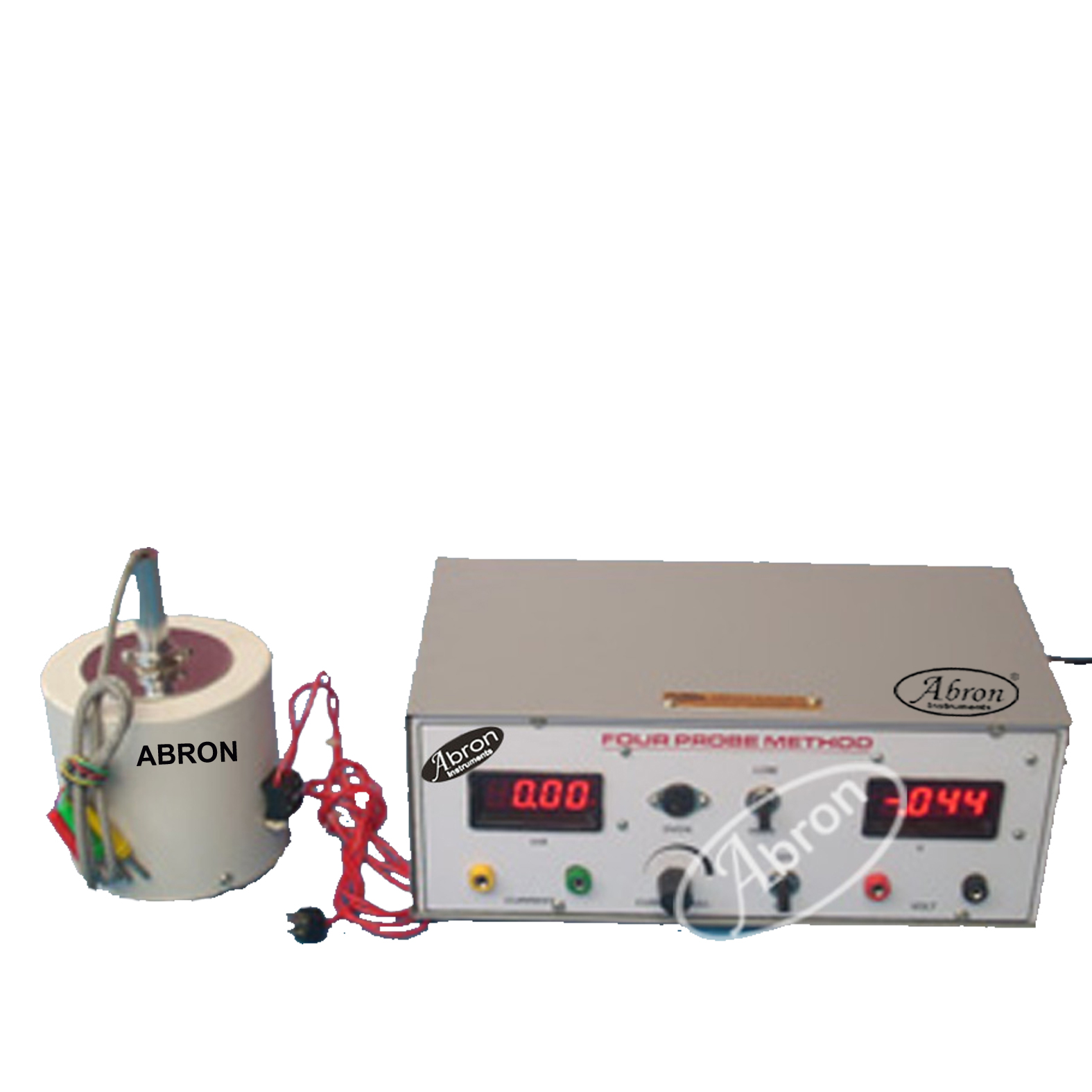
Band gap of Semi-conductor Energy Gap in Ge Crystal 4 Probe Resistivity Method Electronic Trainer setup kit with power supply

Built in constant current source and Milli-voltmeter

Easy change of sample

With mini Heating Oven complete in all respect.

The Four Probe Method is one of the standard and most widely used methods for the measurement of resistivity of semi-conductors. effective resistance of the voltage measuring device

Probe Arrangement        Four individually spring loaded

Sample : Germanium crystal in the form of a chip.

Oven : It is a small oven for the variation of temperature.

Four Probe Set-up          : Set-up consists units

(i)  Digital Voltmeter       0-200mV) & 0-2Vx10x

Display 3-1/2 digit,            7 segment LED (12.5 mm height)

auto polarity and decimal     Overload Indicator

(ii) Constant Current Generator    Specifications:

    Open Circuit Voltage        18 V

    Current Range                  0 - 20 mA

    Resolution                        10 uA

    Accuracy                           + 0.25% of the reading + 1 digit

    Load Regulation               0.03% for 0 to full load

    Line Regulation                0.05% for 10% changes


(iii) Oven Power Supply

Glowing LED indicates when the oven power supply is 'ON'.

*  Complete with Manual and Connection Wire.

Cat No        Item           with Power Supply                       meters

AE-1204R   Band Gap of GE Crystal semi-conductor diode digital

                    4 four probe method mini oven temp controlled

                    power supply electronic trainer set up kit abron

B.Sc 3rd year APP-2363-11 To determine drift mobility in a N-type semiconductor by the Hall effect method AE-1282A

B.Sc 3rd year APP-2363-11 To determine drift mobility in a N-type semiconductor by the Hall effect method AE-1282A

B.Sc IIIrd year Apparatus : Hall probe (ge crystal of thickness 0.4-0.5 mm) mounted on a wooden stand, another Hall probe (In-As crystal), fluxmeter (a gauss meter), electromagnet with pole pieces nearly 75 mm, in diameter and producing magnetic field of intensity nearly 10000 gauss in between the pole pices, a constant current power supply for the electromagnet, Hall effect set up provided with a constant current power supply connected with a rheostat and millivoltmeter (range 0-200 mV) and milliammeter (range 0-20mA)

B.Sc 3rd year APP-2363-10 To measure the magnetic field by the Hall probe method AE-1282A

B.Sc 3rd year APP-2363-10 To measure the magnetic field by the Hall probe method AE-1282A

B.Sc IIIrd year Apparatus : Hall probe I.C. (UGN 350 T), electromagnet, a battery of e.m.f. 9 volt, digital multimeter.

B.Sc 3rd year AP-2363-09 To draw the B-H curve for a ferro-megnatic material (a thin rod of soft iron) with the help of cathode ray oscilloscope and hence to determine the residual magnetism, coercive

B.Sc 3rd year AP-2363-09 To draw the B-H curve for a ferro-megnatic material (a thin rod of soft iron) with the help of cathode ray oscilloscope and hence to determine the residual magnetism, coercive

B.Sc 3rd year AP-2363-09 To draw the B-H curve for a ferro-megnatic material (a thin rod of soft iron) with the help of cathode ray oscilloscope and hence to determine the residual magnetism, coercive

B.Sc IIIrd year Apparatus : Cathode ray oscilloscope, step down transformer of 6-12 volt, experimental thin rod of soft iron, a.c. ammeter, rheostat, one resistor of 1Ω, a resistance of 4.7kΩ, a variable resistance of 5kΩ, a condenser of 2uF and a condenser of 1uF, a hollow glass tube of length nearly 30 cm and diameter 3 cm with primary coil of insulated thin copper wire wound over it and a secondary coil of nearly 10,000 turns wound on 10 cm length in its middle, screw guage, connection wires.

B.Sc 3rd year APP-2363-08 To calibrate the tank condenser of a Hartley oscillator in terms of frequency and hence to determine the dielectric constant of the given liquid (carbon tetrachloride)

B.Sc 3rd year APP-2363-08 To calibrate the tank condenser of a Hartley oscillator in terms of frequency and hence to determine the dielectric constant of the given liquid (carbon tetrachloride)

B.Sc IIIrd year Apparatus : Hartley oscillator, power supply unit, frequency meter, a condenser of known capacity, a parallel plate condenser, the given liquid (carbon tetrachloride).

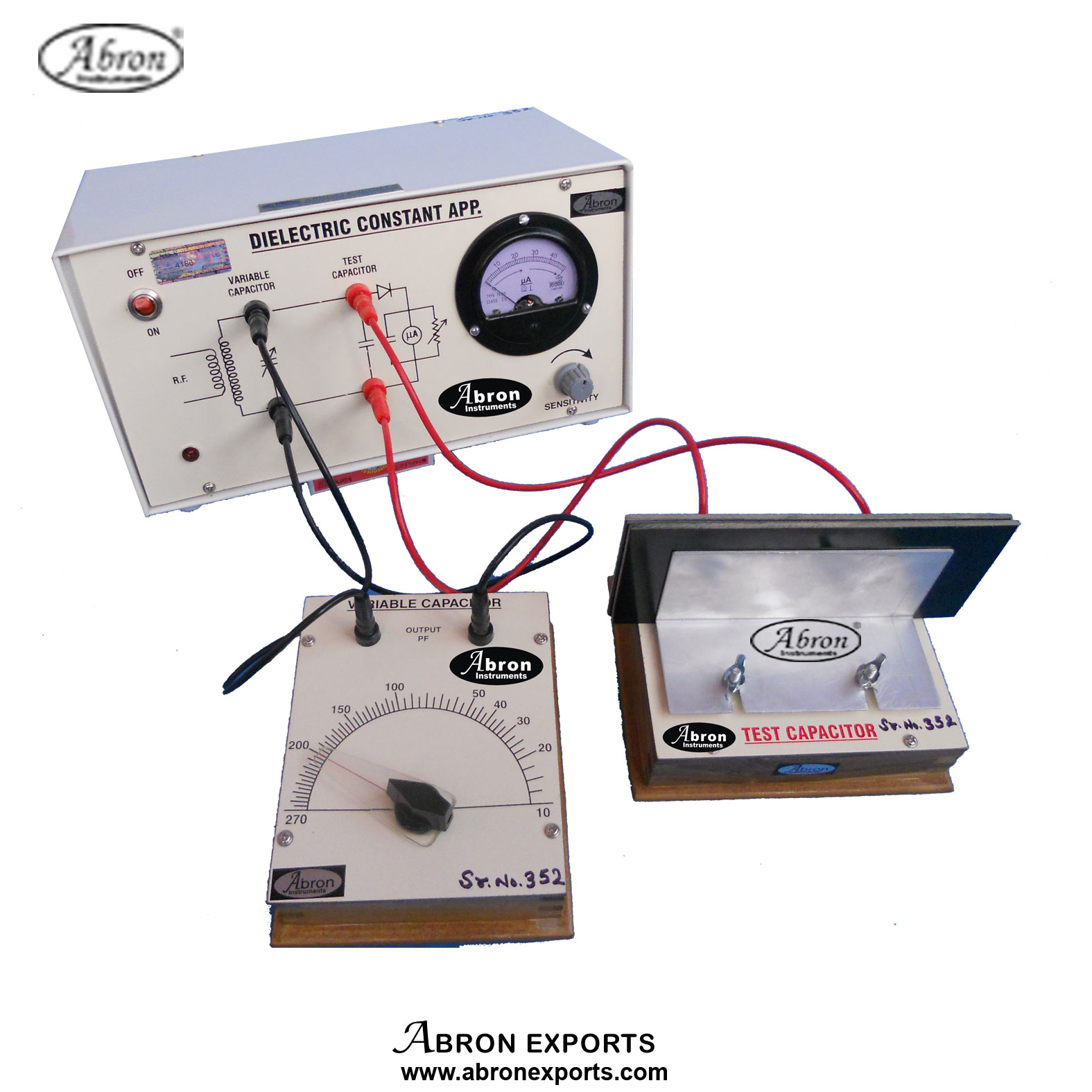
B.Sc 3rd year APP-2363-07 To determine dielectric constant and permittivity of a given substance by the resonance method

B.Sc 3rd year APP-2363-07 To determine dielectric constant and permittivity of a given substance by the resonance method

B.Sc IIIrd year Apparatus : A radio frequency oscillator of variable frequency, coupling coils, a variable air capacitor (range 0-100 pF), a tets capacitor of known capacity with a facility to fill it with the given dielectric (for it a gang capacitor which is used in radio sets can be used), P-N junction diode, a microammeter (range 0-50 uA)

B.Sc 3rd year APP-2363-06 To determine specific charge (e/m) of electronic by Zeeman effect setup

B.Sc 3rd year APP-2363-06 To determine specific charge (e/m) of electronic by Zeeman effect setup

B.Sc IIIrd year Apparatus : A specially designed electromagnet with conical pole pieces and having a slit cut along their axes with a source of current for it, a capillary source of light such as neon discharge tube, constatnt deviation spectrometer provided with echelon grating, a standard source of light such as sodium or mercury vapour lamp, a convex lens and nicol prism.

       ‘e/m’ by Zeeman’s Effect Apparatus  The apparatus consists of the following items: - i)    Constant deviation spectrograph  Calibration range: 4000 Å – 7000 Å, ± 10 Å ii)   Constant deviation spectrograph prism (μ= 1.71)   (iii)  Fabry-Perot Etalon.  Clear aperture: 25 mm (iv)   Micrometer eyepiece. Measuring Range: 25 mm; LC: 0.01mm  (v)  Electromagnet having field strength 10 kilo Gauss at 10 mm gap between its pole  (vi)  Constant current Power supply for above electromagnet (vii) Neon discharge tubes   (viii)   Wooden stand with clamp for holding discharge tube    (ix)    High voltage transformer to run the above discharge tubes  (x)   Digital Gauss meter with probe 

B.Sc 3rd year AP-2363P05 To study the absorption spectra of iodine vapour and to find the force constant of iodine molecule by drawing the energy level diagram

B.Sc 3rd year AP-2363P05 To study the absorption spectra of iodine vapour and to find the force constant of iodine molecule by drawing the energy level diagram

B.Sc IIIrd year Apparatus : A 60 W bulb enclosed inside a box having a slit, a glass tube and diameter 3 cm the iodine vapour and closed at its ends by means of convex lenses, a constant deviation spectrometer.

To determine the Rydbergs constant with the help of diffraction grating and the hydrogen discharge bulb with spectrometer abron

To determine the Rydbergs constant with the help of diffraction grating and the hydrogen discharge bulb with spectrometer abron

B.Sc IIIrd year Apparatus : Spectrometer, prism, grating, hydrogen discharge tube, reading lens and reading lamp.

B.Sc 3rd year AP-2363-03 To determine the electronic charge by Millikans method AE-1307a

B.Sc 3rd year AP-2363-03 To determine the electronic charge by Millikans method AE-1307a

B.Sc IIIrd year Apparatus : Milikan's apparatus, atomiser, non-volatile oil, power supply, rheostat, voltmeter, key, stop watch and connection wires.

B.Sc 3rd year AP-2363A02 To determine the specific charge Digital E by M of electron by Thomson method. AE-1265A

B.Sc 3rd year AP-2363A02 To determine the specific charge Digital E by M of electron by Thomson method. AE-1265A

B.Sc IIIrd year Apparatus : Cathode ray tube, power supply, a pair of bar magnets, compass box, a wooden stand provided with scale.

E/M by Thomson Method (Bar Magnet Method)
with CRT on wooden stand compass magnets
pair CRT power supply AE-1265
One of the most fascinating demonstration of modern physics in
controlled bending of high speed electrons magnetic field
Measurement the ratio of the charge on electron to its equally
minute mass imparts a stimulating sense of achievement.
Apparatus
Cathode Ray Tube Power Supply EHT , Deflection voltage
DC Voltage for deflection plates and LT 6.3VDC
Intensity control Focusing Control shift controls, reverse
Wooden stands for CRT and compass and Bar magnets
voltages on deflection plates can be interchanged
Cat No Item with Power Supply meters
AE-1265 E/M By Thomson method with CRT + supply
With intensity, focusing, shift, controls supply

Planks constant vacuum type BSc 3rd year APP-2363-01 To determine the value of Planks constant with the help of a vacuum type photo cell

Planks constant vacuum type BSc 3rd year APP-2363-01 To determine the value of Planks constant with the help of a vacuum type photo cell

B.Sc IIIrd year Apparatus : A vacuum type photo cell vacuum tube type power supply),setup having a key and a rheostat, asensitive galvanometer or a microammeter, a voltmeter, a light source filters a convex lens and connecting wires.

B.Sc 2nd year APP-2362-52 To determine the refractive index and dispersive power of the material of prism with the help of spectrometer.

B.Sc 2nd year APP-2362-52 To determine the refractive index and dispersive power of the material of prism with the help of spectrometer.

B.Sc IInd year IVth Sem. Apparatus : Spectrometer, prism, spirit level, reading lens, mercury vapour lamp and reading lamp.

B.Sc 2nd year APP-2362-50 To determine the specific rotation of sugar solution with the help of polarimeter

B.Sc 2nd year APP-2362-50 To determine the specific rotation of sugar solution with the help of polarimeter

B.Sc IInd year IVth Sem. Apparatus : Halfshade (or biquartz) polarimeter, light source (sodium lamp for the half shade polarimeter or white light source for the biquartz polarimeter), measuring cylinder, beaker, physical balance with weight box, sugar, reading lens and reading lamp.

AP-851-A

Polarimeter Half shade with 200mm tube with graduated scale with vernier Abron

For determining the specific rotation of optically active substances. A corning glass tube (size 200 mm) is enclosed in a circular aluminum tube with top door for access and exclusion of external light. The circular scale is attached near to analyzer and a range of measurement is 0 - 360° Vernier moveable on the scale enables reading of optical rotation to 60 seconds. Rough and fine adjustment, provided with HALF WAVE MICA PLATE giving three parts field for easy setting adjustable half shadow angles. The instrument can be used on monochromatic light. The light when passes through a polarized sheet and then through the solution. The emerging light is then observed through a rotatable polarized lens analyzer which is used as eye piece. The angle of light is rotated and read directly of the circular scale. Supplied on the the adjustable stand, packed in cardboard box.

AP-851A    Polarimeter Half Shade Type 

AP-851B    Polarimeter Bi Quartz Type

AP-851C    Polarimeter Spare Tubes 200mm

BSc 2nd year AP-2362-49 To study the polarisation (polarization)of light by reflection and to verify the Brewsters and Malus laws AP-922P

BSc 2nd year AP-2362-49 To study the polarisation (polarization)of light by reflection and to verify the Brewsters and Malus laws AP-922P

B.Sc IInd year IVth Sem. Apparatus : A plane glass plate, 60 W electric bulb, polariod, convex lens, photo cell and micro-ammeter. spectrometer setup

B.Sc 2nd year APP-2362-48 To determine the resolving power of telescope

B.Sc 2nd year APP-2362-48 To determine the resolving power of telescope

B.Sc IInd year IVth Sem. Apparatus : A telescope provided with a variable slit, a cardboard coated black with equi-spaced and equal width white strips drawn on it (or a blackened glass plate with equi-spaced and of equal width slits on it and a monochromatic light source such as sodium lamp), vernier callipers, travelling microscope and a metre scale.

B.Sc 2nd year APP-2362E47 To determine the resolving power of plane diffraction grating Using Spectrometer Grating Mercury Lamp Setup AP_922KG APP-2362K47

B.Sc 2nd year APP-2362E47 To determine the resolving power of plane diffraction grating Using Spectrometer Grating Mercury Lamp Setup AP_922KG APP-2362K47

B.Sc IInd year IVth Sem. Apparatus : Plane diffraction grating, spectrometer,

Mercury lamp, Diffraction Grating

rectangular slit of variable width,

prism and reading lens.

B.Sc 2nd year APP-2362-46 To determine the wavelength of main spectral lines of sodium lamp with the help of plane transmission grating.

B.Sc 2nd year APP-2362-46 To determine the wavelength of main spectral lines of sodium lamp with the help of plane transmission grating.

B.Sc IInd year IVth Sem. Apparatus : Plane transmission grating, spectrometer, mercury lamp, prism, reading lamp and reading lens.

B.Sc 2nd year APP-2362-45 To determine the wavelength of monochromatic light by diffraction at a straight edge.

B.Sc 2nd year APP-2362-45 To determine the wavelength of monochromatic light by diffraction at a straight edge.

B.Sc IInd year IVth Sem. Apparatus : An optical bench provided with three vertical stands, a sharp razor blade (i.e., straight edge), micrometer eyepiece, sodium lamp, reading lamp and reading lens.

To determine the wavelength of the given monochromatic light source with the help of Newtons circular fringes . BSc 2nd year APP-2362-44

To determine the wavelength of the given monochromatic light source with the help of Newtons circular fringes . BSc 2nd year APP-2362-44

B.Sc IInd year IVth Sem. Apparatus : A plano-convex lens of large radius of curvature (nearly 100 cm), a plane glass plate in a wooden frame inclined at 45o, sodium lamp (monochromatic light source), a convex lens of low focal length mounted on a vertical stand, a plane glass plate, travelling microscope, spherometer, reading lamp and reading lens.

B.Sc 2nd year APP-2362E43 To find the wavelength of sodium light monochromatic source with the help of Fresnels Biprism AP-689B

B.Sc 2nd year APP-2362E43 To find the wavelength of sodium light monochromatic source with the help of Fresnels Biprism AP-689B

B.Sc IInd year IVth Sem. Apparatus : An optical bench with four vertical stands, biprism, Optional sodium lamp (monochromatic source), convex lens (whose focal length is less than 20 cm), eyepiece provided with micrometer screw, slit.

AP-689    Bi-Prism Assembly Abron

Bi-Prism Holder, Slit, Micrometer Eye Piece assembly only.

 (i) Bi-Prism Holder : Has fine radial motion by a fine pitch screw.

(ii) Auto Action Lens Holder : With automatic spring action for equal opening and closing of both sides.

(iii) Micrometer Eye Piece : Ramsden Eye Piece, 10 x moves along a micrometer screw, perfectly made.

(iv) Optical Slit : Optical true, precision ground stainless jaws, spring action for opening of jaws eliminated to ensure, original accuracy even after prolonged use. Jaws open uniformly all along through a milled head. Jaw alignment tested for optical accuracy. Made for a lifetime of accurate use.


AP-689A Bi-Prism Assembly Complete with 1 meter rod

AP-689B Bi-Prism Assembly Complete with 1.5 meter Optical Bench having two C. P. rods with accessories.

AP-689C Mica Sheet assorted sizes pack of 1 doz ( 12pc)

AP-726a  Fresnel Biprism 40 mm x 32 mm in box     

AP-726b  Fresnel Biprism 50 mm x 40 mm in box


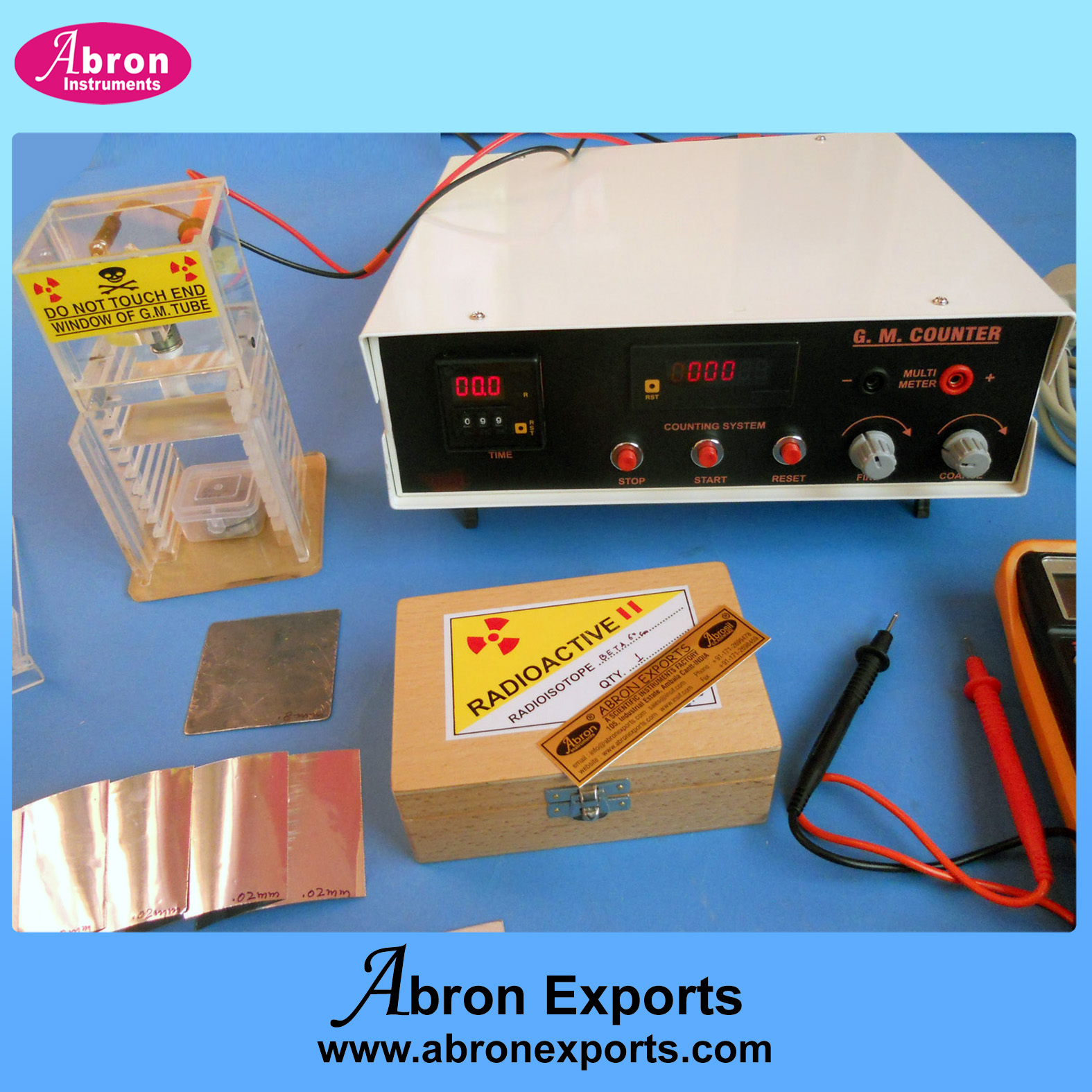
B.Sc 2nd year AP-2362-42 To study the statistical distribution on nuclear disintegration data and hence to determine the half life of a radioactive substance with the help of Geiger-Muller counter GM

B.Sc 2nd year AP-2362-42 To study the statistical distribution on nuclear disintegration data and hence to determine the half life of a radioactive substance with the help of Geiger-Muller counter GM

B.Sc IInd year IVth Sem. Apparatus : Radioactive substance (22086Rn) or plastic bottle and thorium hydroxide, Geiger- Muller counter (M X 168/01), stop watch.

B.Sc 2nd year APP-2362-41 To study experimentally the probability distribution of a two-option system with the help of coloured dice.

B.Sc 2nd year APP-2362-41 To study experimentally the probability distribution of a two-option system with the help of coloured dice.

B.Sc IInd year IVth Sem. Apparatus : 12 two-face die with its one face coloured black and other face coloured white.

B.Sc 2nd year APP-2362-40d To study the monochromaticity of laser and to determine the wavelength of laser with a grating.

B.Sc 2nd year APP-2362-40d To study the monochromaticity of laser and to determine the wavelength of laser with a grating.

B.Sc IInd year IIIrd Sem. Apparatus : Diode laser, holographic diffraction grating, optical bench, three vertical stands and a screen (or a transparent horizontal scale).

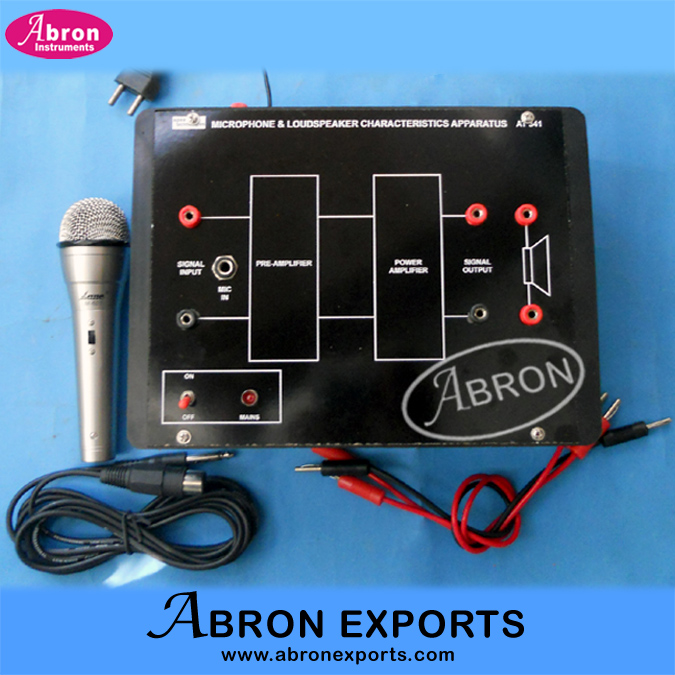
To study the characteristics of a given microphone and loudspeaker APP-2362C40

To study the characteristics of a given microphone and loudspeaker APP-2362C40

B.Sc IInd year IIIrd Sem. Apparatus : Microphone and loudspeaker.

B.Sc 2nd year AP-2362-40b To measure the intensity of sound by Rayleigh Disc method.

B.Sc 2nd year AP-2362-40b To measure the intensity of sound by Rayleigh Disc method.

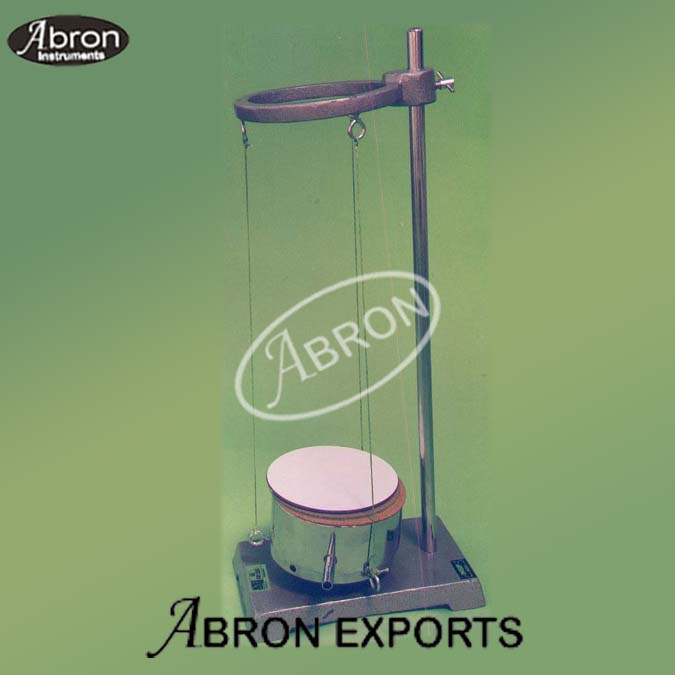
B.Sc IInd year IIIrd Sem. Apparatus : Rayleigh's apparatus, tuning fork of frequency 256 Hz and rubber pad.

to measure the intensity of sound by Rayleigh disc method 

B.Sc 2nd year APP-2362-40a To determine the velocity of wave in a starched string with the help of sonometer. Tuning fork

B.Sc 2nd year APP-2362-40a To determine the velocity of wave in a starched string with the help of sonometer. Tuning fork

B.Sc IInd year IIIrd Sem. Apparatus : Sonometer having a copper (or brass) wire steel wire streached on it, a weight slotted of mass 500 gm,  with tuning for set rubber pad etc 

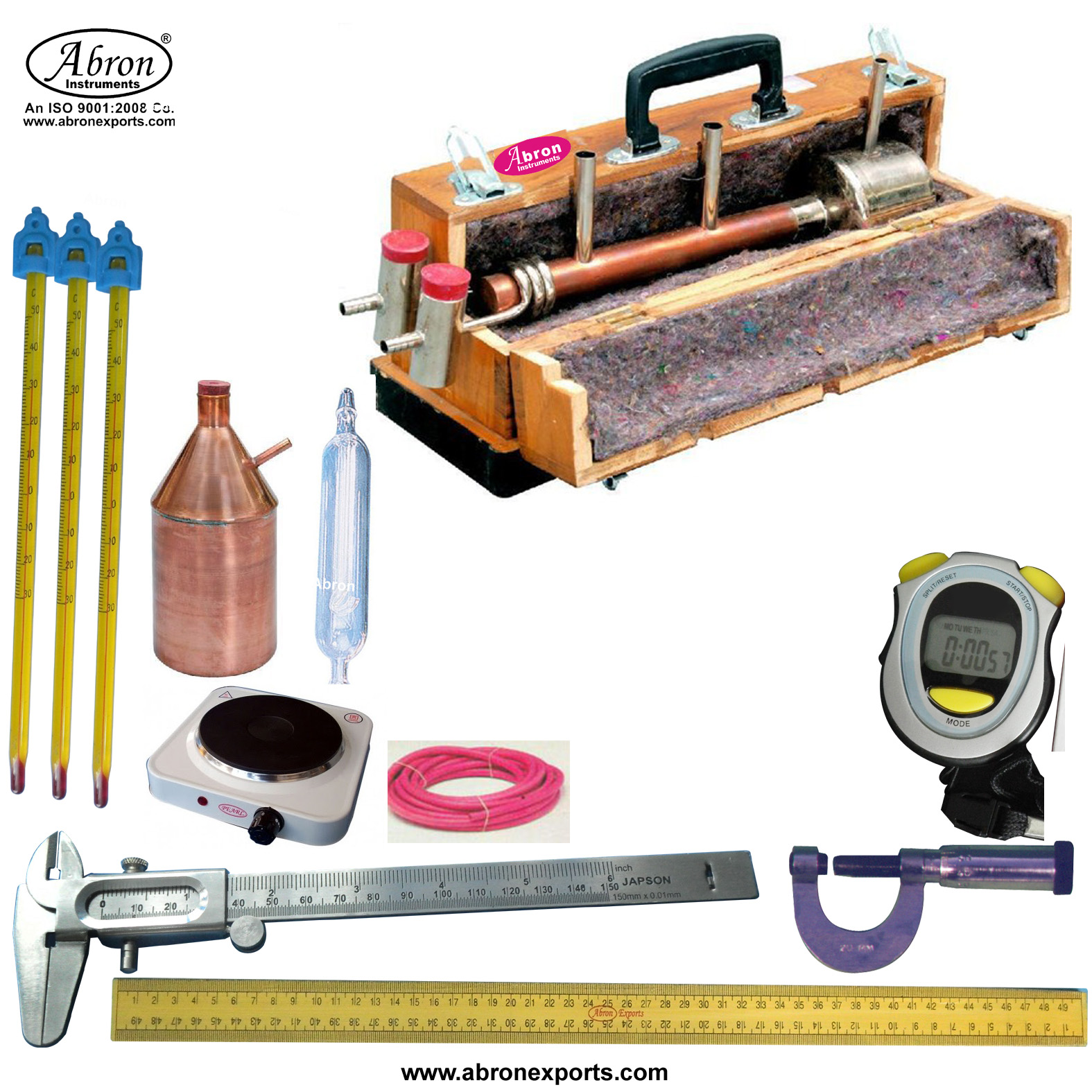
B.Sc 2nd year APP-2362-40 To determine the coefficient of thermal conductivity of rubber (in form of a cylindrical tube). AP_944K APP-2363-40

B.Sc 2nd year APP-2362-40 To determine the coefficient of thermal conductivity of rubber (in form of a cylindrical tube). AP_944K APP-2363-40

B.Sc IInd year IIIrd Sem. Apparatus : A hollow tube of rubber nearly 1 m long, calorimeter alongwith the stirrer, boiler, tripod stand, burner, thermometer, beaker, water, stop watch, physical balance and weight box, travelling microscope and wooden screen.

B.Sc 2nd year APP-2362-39 To determine the thermal conductivity of a non-conducting material by the Lees disc method disc and Charlton Apparatus Brass aluminium parts bad glass conductor stand

B.Sc 2nd year APP-2362-39 To determine the thermal conductivity of a non-conducting material by the Lees disc method disc and Charlton Apparatus Brass aluminium parts bad glass conductor stand

B.Sc IInd year IIIrd Sem. Apparatus : Lee's apparatus, steam boiler, two thermometers sensitive up to 0.1oC, vernier callipers, heater, stop watch, screw gauge, hot plate rubber tube abron setup complete 


B.Sc 2nd year APP-2362-38 To study the veriation of thermo e.m.f. with temprature, for the copper-iron thermocouple with the help of potentiometer.

B.Sc 2nd year APP-2362-38 To study the veriation of thermo e.m.f. with temprature, for the copper-iron thermocouple with the help of potentiometer.

B.Sc IInd year IIIrd Sem. Apparatus : Potentiometer, thermometer, battery, copper-iron thermocouple, high resistance box, two beakers, cold water at room temperature, heater, hot water, high resistance rheostat, key, galvanometer, connection wires etc.

B.Sc 2nd year APP-2362-37 To study the temperature coefficient of resistance of platinum with the help of Carey Fosters bridge.

B.Sc 2nd year APP-2362-37 To study the temperature coefficient of resistance of platinum with the help of Carey Fosters bridge.

B.Sc IInd year IIIrd Sem. Apparatus : Carey Foster's bridge, heater, thermometer, decimal resistance box, vertical stand, Leclanche cell, galvanometer, thick copper strip, plug key, rheostat of nearly 10 ohm, platinum resistance thermometer and connection wires.

B.Sc 2nd year AP-2362-36 To study the temperature dependence of spectral density of radiation and to determine the value of Plancks constant by radiation law using the photo valtaic cell.

B.Sc 2nd year AP-2362-36 To study the temperature dependence of spectral density of radiation and to determine the value of Plancks constant by radiation law using the photo valtaic cell.

B.Sc IInd year IIIrd Sem. Apparatus : A 6 volt, 6 watt bulb (the filement of bulb being considered as the blck body), power supply or battery, a rheostat (100Ω, 3 A), an ammeter (range 3 A), a voltmeter (range 10 V), a green colour filter, a convex lens, a photovoltaic cell, a micro-ammeter, a wooden or card board hollow box and connection wires.

B.Sc 2nd year AP-2362-35 To study the temperature dependence of total radiation and to verify the Stefans law.

B.Sc 2nd year AP-2362-35 To study the temperature dependence of total radiation and to verify the Stefans law.

B.Sc IInd year IIIrd Sem. Apparatus : 6 V battery, key, a d.c. voltmeter of range 0-10 V, a d.c. ammeter of range 0-1 A, an electric bulb of tungsten filament of rating 6 V, 6 W, a rheostat of resistance 100 Ω and connection wires etc.

B.Sc 2nd year AP-2362-33 To determine the mechanical equivalent of heat by Calendar and Barnes method abron AP-695K

B.Sc 2nd year AP-2362-33 To determine the mechanical equivalent of heat by Calendar and Barnes method abron AP-695K

B.Sc IInd year IIIrd Sem. Apparatus : Callender and Barne's continuous flow calorimeter, constant level water flow arrangement, step down transformer (output 20 volt), a.c. ammeter, a.c. voltmeter, two thermometers, stop watch, measuring cyclinder, rheostat, key and connection wires.

B.Sc 2nd year AP-2362-32 To determine the mechanical equivalent of heat (J) with the help of ammeter and voltmeter by Joules calorimeter.

B.Sc 2nd year AP-2362-32 To determine the mechanical equivalent of heat (J) with the help of ammeter and voltmeter by Joules calorimeter.

B.Sc IInd year IIIrd Sem. Apparatus : Accumulator of e.m.f. 6 V, nichrome wire of near 3 ohm resistance (heating coil), ammeter (range 3A), voltmeter (range 10 V), rheostat, plug key, connection wires, calorimeter, thermometer, stop watch, water.

B.Sc 2nd year AP-2362-31 To determine the value of mechanical equivalent of heat (J) by the mechanical method using the Searles friction cone apparatus

B.Sc 2nd year AP-2362-31 To determine the value of mechanical equivalent of heat (J) by the mechanical method using the Searles friction cone apparatus

B.Sc IInd year IIIrd Sem. Apparatus : Searle's friction cone apparatus, thermometer, stop watch, physical balance, weight box, few 0.5 kg weights.

B.Sc 1st year AP-2361-38 To study the Lorentz force and hence to determine the specific charge (e/m) of electron by Thomson's method.

B.Sc 1st year AP-2361-38 To study the Lorentz force and hence to determine the specific charge (e/m) of electron by Thomson's method.

B.Sc Ist year IInd Sem. Apparatus : Cathode ray tube, power supply, a pair of bar megnets, compass box, a wooden stand provided with scale.

B.Sc 1st year APP-2361-37 To determine the self inductance of a given coil Rayleighs method

B.Sc 1st year APP-2361-37 To determine the self inductance of a given coil Rayleighs method

B.Sc Ist year IInd Sem. Apparatus : The coil of which self inductance is t be determined, Post Office box, ballistic galvanometer with lamp and scale arrangement, decimal resistance box, a stretched resistance wire with sliding contact, copper sulpahte solution in U tube in form or resistance, accumulator, tapping key, stop watch, and connection wires

B.Sc 1st year AP2361E36 To determine the resistance, self inductance, impedance and power factor of a choke coil

B.Sc 1st year AP2361E36 To determine the resistance, self inductance, impedance and power factor of a choke coil

B.Sc Ist year IInd Sem. Apparatus : Step down transformer with potential divider, choke coil, a.c. voltmeter, a.c. milli-ammeter, Leclanche cell, galvanomete

B.Sc 1st year AP-2361-35 To determine the sensitivity of a cathode ray oscilloscope 10mhzCRO AE-1344A10

B.Sc 1st year AP-2361-35 To determine the sensitivity of a cathode ray oscilloscope 10mhzCRO AE-1344A10

B.Sc Ist year IInd Sem. Apparatus : Cathode ray oscilloscope (CRO), provided with a potential divider and connection wires.

B.Sc 1st year APP-2361-34 To draw the response curve for series L-C-R circuit and hence to determine the resonant frequency and quality factor.

B.Sc 1st year APP-2361-34 To draw the response curve for series L-C-R circuit and hence to determine the resonant frequency and quality factor.

B.Sc Ist year IInd Sem. Apparatus : Variable step down transformer, inductive coil (self induction ≈ 1 henry), ten condensers (capacity ≈ 0.01 uF, 0.02 uF, 0.04 uF, 0.06 uF,....) of working voltage 500 volt (or the variable condensar box), resistance ( ≈ 1 kΩ), four a.c. voltmeters (or one V.T.V.M.), flexible connection wires

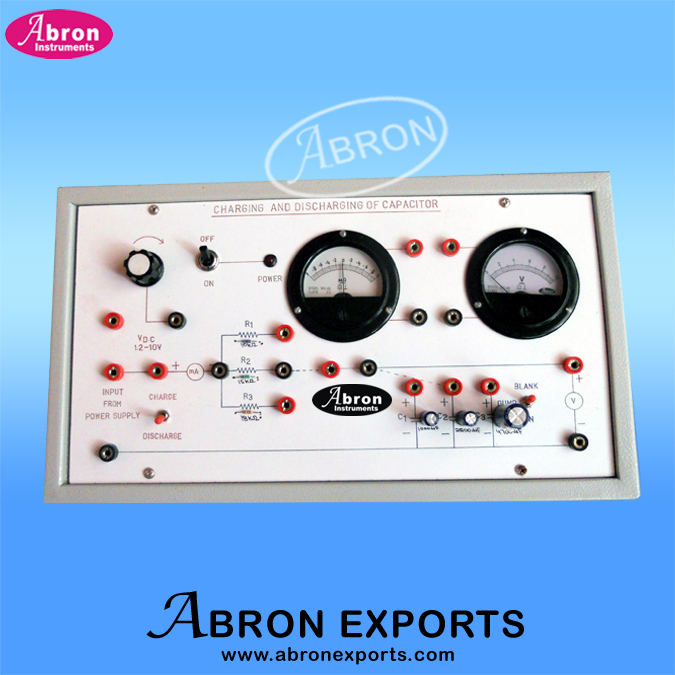
B.Sc 1st year APP-2361-32 To Study the Charge and discharge of a condenser through a high resistance and hence to determine the time constant of CR circuit

B.Sc 1st year APP-2361-32 To Study the Charge and discharge of a condenser through a high resistance and hence to determine the time constant of CR circuit

B.Sc Ist year IInd Sem. Apparatus : A d.c. power supply (0-300 Volt), six paper condensers (each of capacity 0.5 uF), six ccarbon resistances, (each of resistance 1MΩ), a neon bulb (which is used in line tester), stop watch, connection wires.

B.Sc 1st year APP-2361-31 To determine the capacity of the given capacitor by Wien bridge

B.Sc 1st year APP-2361-31 To determine the capacity of the given capacitor by Wien bridge

B.Sc Ist year IInd Sem. Apparatus : Experimental capacitor, a standard capacitor, four resistance boxes, head phone, audio frequency oscillator and connection wires.

B.Sc 1st year APP-2361-30 To determine the capacity of condenser with the help of Schering bridge

B.Sc 1st year APP-2361-30 To determine the capacity of condenser with the help of Schering bridge

B.Sc Ist year IInd Sem. Apparatus : Experimental condenser of low capacity, standard condenser, variable air condenser, two resistance boxes (in which one is decimal resistance box), audio frequency oscillator, head phone and connection wires.

B.Sc 1st year APP-2361-29 To determine the self inductance of a given coil by Owen bridge.

B.Sc 1st year APP-2361-29 To determine the self inductance of a given coil by Owen bridge.

B.Sc Ist year IInd Sem. Apparatus : The Coil of unknown inductance, post office box, audio frequency oscillator, two standard capacitors (C1 = 0.3 uF, C2 = 0.3 uF), head phone, galvanometer, leclanche cell etc.

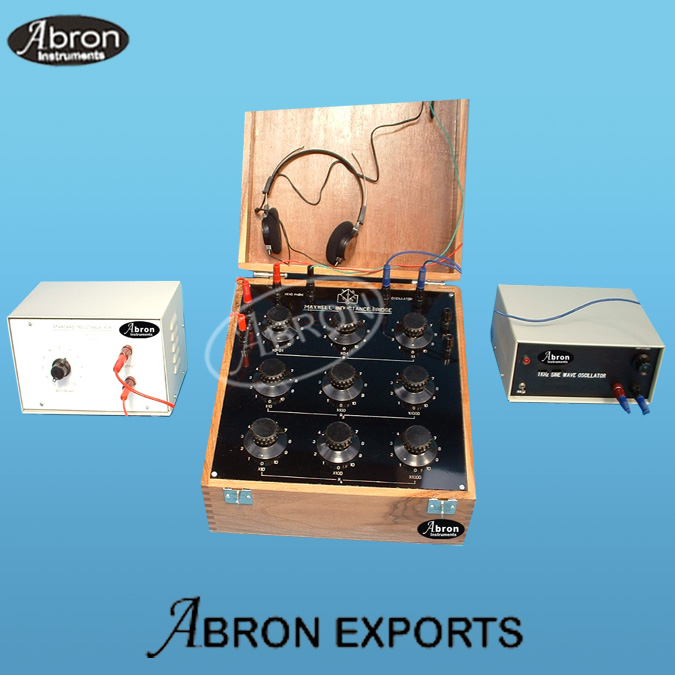
B.Sc 1st year APP-2361-28 To determine the self inductance of a given coil by Maxwell bridge.AP-674D

B.Sc 1st year APP-2361-28 To determine the self inductance of a given coil by Maxwell bridge.AP-674D

B.Sc Ist year IInd Sem. Apparatus : Post office box, three resistance boxes, a standard inductance, an audio frequency oscillator, head phone, given coil and connection wires.

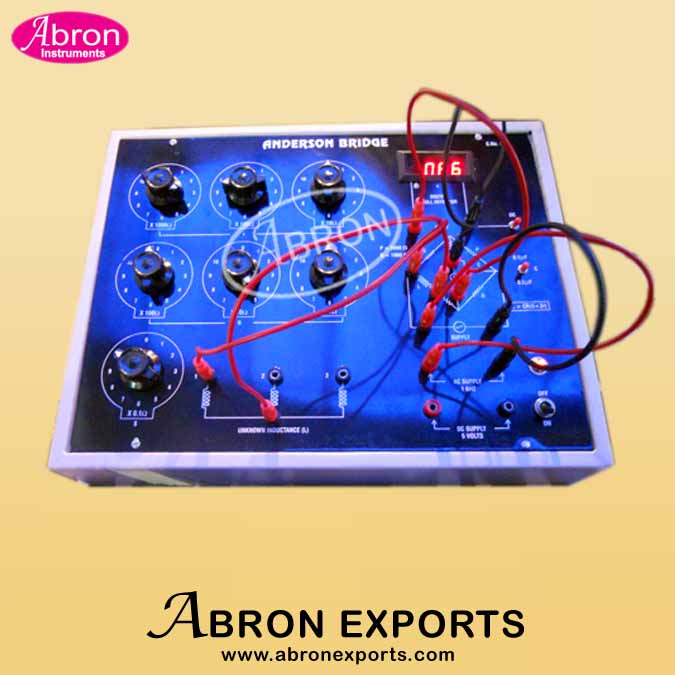
B.Sc 1st year APP-2361-27 To determine the self inductance of a given coil by Anderson bridge.

B.Sc 1st year APP-2361-27 To determine the self inductance of a given coil by Anderson bridge.

B.Sc Ist year IInd Sem. Apparatus : Pst office box, inductive coil, dial type decimal resistance box, condenser (capacity ≈ 0.2 UF to 0.5 UF), a stretched resistance wire on a wooden strip with sliding contact, galvanometer, audio frequency oscillator, head phone, accumulator, two two- way kays, connection wires.

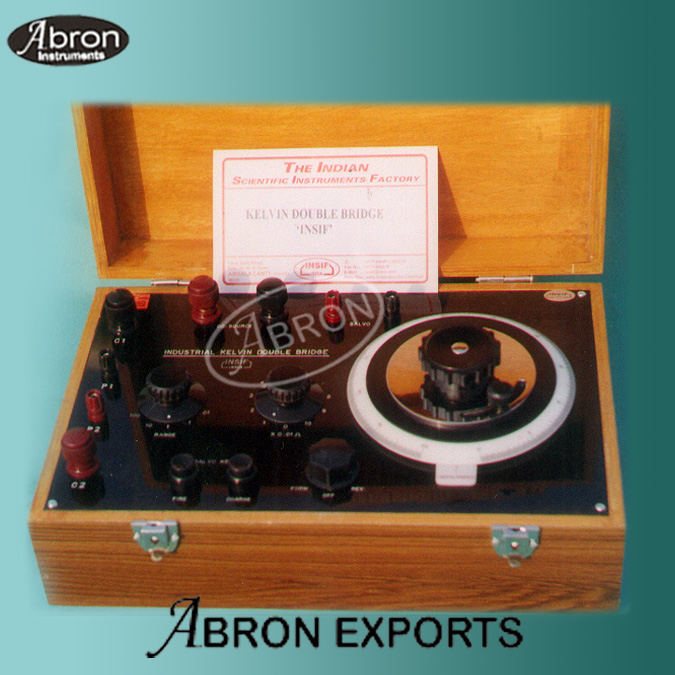
B.Sc 1st year AP-2361-26 To determine the low resistance of a wire by Kelvins double bridge method and to study its temperature dependence.

B.Sc 1st year AP-2361-26 To determine the low resistance of a wire by Kelvins double bridge method and to study its temperature dependence.

B.Sc Ist year IInd Sem. Apparatus : Kalvin's double bridge, ballstic galvanometer, given wire whose resistance is to be determined, stem boiler (or beaker), thermometer, heater, a wooden rod, lamp and scale arrangement.

B.Sc 1st year AP-2361-25 To determine the resistance per unit length of the wire of Carey Foster's bridge and hence to determine a low resistance with its help

B.Sc 1st year AP-2361-25 To determine the resistance per unit length of the wire of Carey Foster's bridge and hence to determine a low resistance with its help

B.Sc Ist year IInd Sem. Apparatus : Carey Foster's bridge, decimal resistance box, leclanche cell, galvanometer, thick copper strip, plug key, rheostat of nearly 10ohm, given wire and connection wires.

B.Sc 1st year AP-2361-24 To Study the variation of magnetic field along the axis of a current carrying circular coil. Stewart and Gees apparatus AP-733CK

B.Sc 1st year AP-2361-24 To Study the variation of magnetic field along the axis of a current carrying circular coil. Stewart and Gees apparatus AP-733CK

B.Sc Ist year IInd Sem. Apparatus : Stewart and Gee's

tangent galvanometer,

accumulator( Power supply ), Rheostat,

commutator, plug key and

connection wires.

B.Sc 1st year determine absolute values of bar magnet and the horizontal component of earths magnetic field with deflection vibration magnetometer AP-2361P23

B.Sc 1st year determine absolute values of bar magnet and the horizontal component of earths magnetic field with deflection vibration magnetometer AP-2361P23

B.Sc Ist year IInd Sem. Apparatus : Deflection magnetometer, vibration magnetometer, bar, magnet, brass rod, compass box, stop watch, spirit level, vernier callipers and digi balance

B.Sc 1st year AP-2361-22 To adjust a qyadrant electrometer and hence (i) to measure the a.c. and d.c. voltages, (ii) to determine the capacity of a capacitor and (iii) to measure a very feeble current

B.Sc 1st year AP-2361-22 To adjust a qyadrant electrometer and hence (i) to measure the a.c. and d.c. voltages, (ii) to determine the capacity of a capacitor and (iii) to measure a very feeble current

B.Sc Ist year IInd Sem. Apparatus : Quadrant electrometer, extremely sensitive a.c. and d.c.. voltmeter, two d.c. voltage sources (batteries), a.c. voltage source, rheostat, a capacitor of known capacity and a capacitor of unknown capacity, lamp and scale arrangement, high resistance, connection wires and two tapping keys.

B.Sc 1st year APP-2361P21 To determine the characteristic canstant or ballistic constant of a Ballistic Galvanometer AP-730R

B.Sc 1st year APP-2361P21 To determine the characteristic canstant or ballistic constant of a Ballistic Galvanometer AP-730R

B.Sc Ist year Ist Sem. Apparatus : Ballisitic galvanometer, damping key, lamp and scale arrangement, rheostat, morse key, accumulator, capacitor of known capacity, voltmeter and connection wires.

B.Sc 1st year AP-2361-20 To determine the confficient of viscosity of a liquid (glycerine) by stokes method. AP966K

B.Sc 1st year AP-2361-20 To determine the confficient of viscosity of a liquid (glycerine) by stokes method. AP966K

B.Sc Ist year Ist Sem. Apparatus : Stoke's viscometer, experimental liquid (glycerine), five or six small steel balls of different diameters, stop watch, screw gauge, watch glass, thermometer and metre scale.

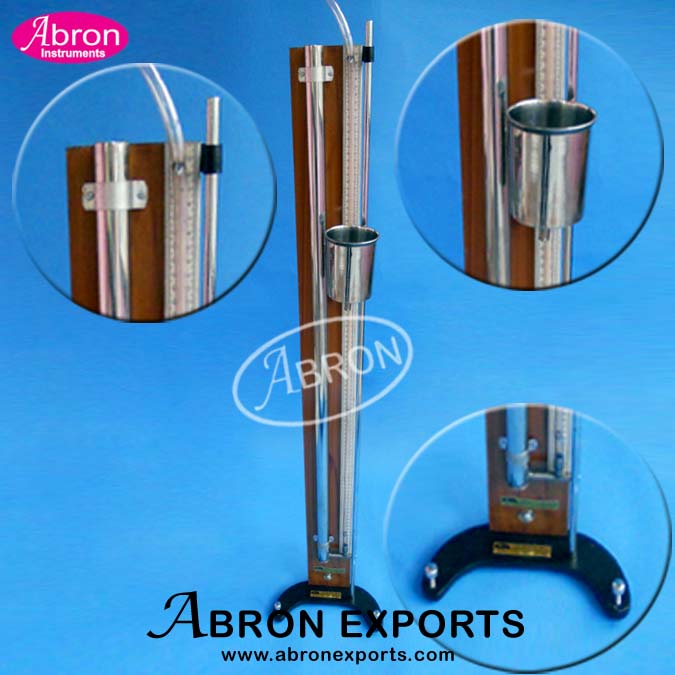
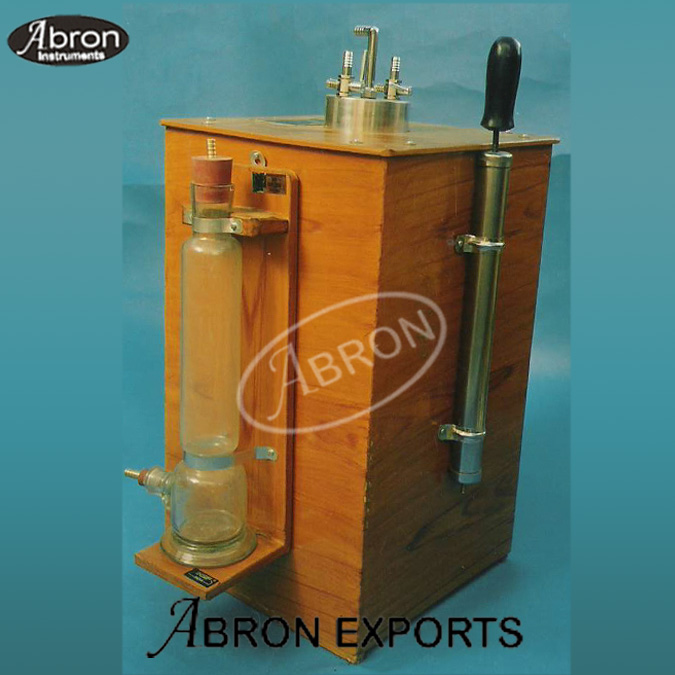
B.Sc 1st year APP-2361-19 To determine the coefficient of viscocity of a liquid say, water by variable pressure method

B.Sc 1st year APP-2361-19 To determine the coefficient of viscocity of a liquid say, water by variable pressure method

B.Sc Ist year Ist Sem. Apparatus : Burette, vertical stand, rubber tube, cappilary of given radius, metre scale, stop watch, beaker or graduate cylinder, two blocks of some dimensions and liquid.

B.Sc 1st year AP-2361K18 To determine the surface tension of a liquid (say, water) with the help of Jaegers apparatus AP-932K

B.Sc 1st year AP-2361K18 To determine the surface tension of a liquid (say, water) with the help of Jaegers apparatus AP-932K

B.Sc Ist year Ist Sem. Apparatus : Jaeger's apparatus, capillary tube, beaker, the given liquid (say, water), travelling microscope, metre scale and thermometer.

B.Sc 1st year APP-2361-17 To determine the surface tension of water by capillary rise method. AP-932K

B.Sc 1st year APP-2361-17 To determine the surface tension of water by capillary rise method. AP-932K

B.Sc Ist year Ist Sem. Apparatus : Travelling microscope, capillary tube, beaker, water, a long pin (or needle), a rubber ring, thermometer and vertical stand.

ap-932k-surface-tension-by-capillary-rising-table-metalic-with-platform-capillary-holder-set-abron1

B.Sc 1st year APP-2361-16 To study the flow of liquid through different capillaries and to determine the coefficient of viscosity of a liquid say, water by Poiseuilles method.AP-965A  AP-965

B.Sc 1st year APP-2361-16 To study the flow of liquid through different capillaries and to determine the coefficient of viscosity of a liquid say, water by Poiseuilles method.AP-965A AP-965

B.Sc Ist year Ist Sem. Apparatus : Two capillaries of uniform area of cross- section, and of given radius, constant level waterreservoir attached on a vertical stand, manometer, stop watch, thermometer, metre scale and a measuring cylinder.

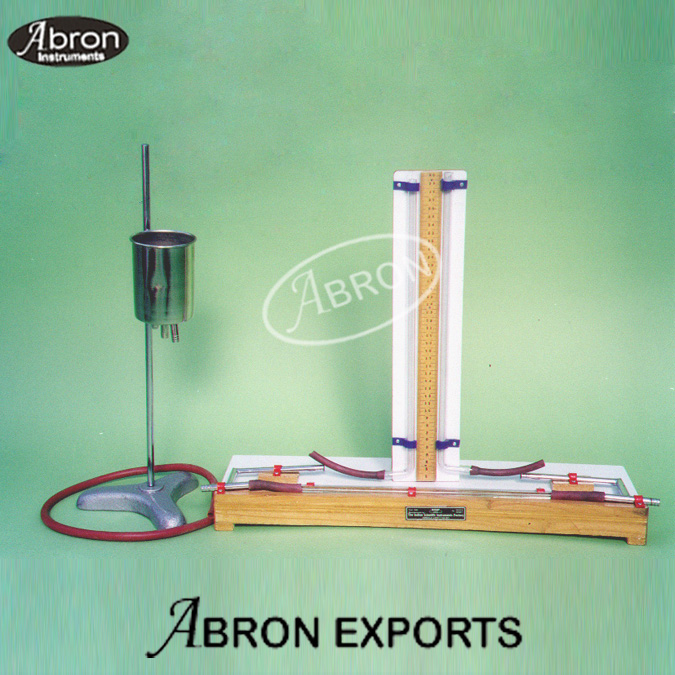
Viscosity Apparatus By Capillary Flow

Setup with Manometer capillary, constant level tank. To find the co-efficient of viscosity of water by nothing its flow through a capillary tube of uniform bore. A capillary tube of fine bore is fitted on a wooden board. Then two ends are joined by rubber tubing and it joints to two upright glass L-shaped tubes forming the manometer with scale. With the help of a pinch cock, a steady flow of water is maintained complete with a three limbed constant level tank of brass on stand with rubber tube glass parts are made of Borosilicate glass

B.Sc 1st year AP-2361-15 To determine the value young's modulus, modulus of rigidity and poisson's ratio for the material of a wire by Searle's method.

B.Sc 1st year AP-2361-15 To determine the value young's modulus, modulus of rigidity and poisson's ratio for the material of a wire by Searle's method.

B.Sc Ist year Ist Sem. Apparatus : Seaarle's apparatus (vertical stand and two identical bars), experimental wire, stop watch, screw gauge, vernier callipres, meter scale, physical balnce or spring balance, candle, thread and match box.

B.Sc 1st year APP-2361-14 To study the twist of a wire and hence to determine the modulus of rigidity of the material of wire with the help of torsional pendulum

B.Sc 1st year APP-2361-14 To study the twist of a wire and hence to determine the modulus of rigidity of the material of wire with the help of torsional pendulum

B.Sc Ist year Ist Sem. Apparatus : Torsional pendulum, experimental wire, metre scale, screw gauge, vernier calliper, stop watch, a heavy sphere or a solid cylinder, physical balance and weight box.

B.Sc 1st year APP-2361-13 To study the twist in a wire and hence to determine the modulus of rigidity of material of wire with the help of Maxwells needle dynamical Mathod

B.Sc 1st year APP-2361-13 To study the twist in a wire and hence to determine the modulus of rigidity of material of wire with the help of Maxwells needle dynamical Mathod

B.Sc Ist year Ist Sem. Apparatus : Maxwell's needle, experimental wire (long and thin), stop watch, screw gauge, metre scale, Digital Balance lamp and scale arrangement.

B.Sc 1st year APP-2361-12b To study the twist of a thin rod and hence to determine the modulus of rigidity of the material of rod with Bartons vertical apparatus statical mathod

B.Sc 1st year APP-2361-12b To study the twist of a thin rod and hence to determine the modulus of rigidity of the material of rod with Bartons vertical apparatus statical mathod

B.Sc Ist year Ist Sem. Apparatus : Borton's vertical apparatus, metre scale, screw gauge, vernier callipers, several weights each of half kg.

B.Sc 1st year AP2361E11K To Study the depression of a beam and hence to determine the youngs modulus of the material of beam using Keonigs arrangement or optical lever arrangment AP-688K

B.Sc 1st year AP2361E11K To Study the depression of a beam and hence to determine the youngs modulus of the material of beam using Keonigs arrangement or optical lever arrangment AP-688K

B.Sc Ist year Ist Sem. Apparatus : The experimental beam (i.e., a metalic beam of uniform rectangular cross-section and 1 m length), two knife edges on rigid supports in a horizontal plane, hanger, several weights each of half kg, optical lever,

OPTIONAL

telescope-scale arrangement, metre scale, vernier callipers and screw gauge.

B.Sc 1st year AP2361K11a To Study the depression of a beam and hence to determine the youngs modulus of beam using a spherometer

B.Sc 1st year AP2361K11a To Study the depression of a beam and hence to determine the youngs modulus of beam using a spherometer

B.Sc Ist year Ist Sem. Apparatus : The given beam (a rectangular metalic beam of length 1m and of uniform thikness), two knief edges on rigid supports in a horizontal plane, spherometer, hanger, several weights each of half kg, Leclanche cell or a dry cll, plug key, rheostat, shunted galvanometer (or an electric bulb), vernier callipers, metre scale, screw gauge etc.

B.Sc 1st year APP-2361-10 To Study the depression of a cantilever and hence to determine the youngs modulus of material of beam

B.Sc 1st year APP-2361-10 To Study the depression of a cantilever and hence to determine the youngs modulus of material of beam

B.Sc Ist year Ist Sem. Apparatus : Cantilever, metre scale, screw guage and several weights each of mass 200 gm

B.Sc 1st year APP-2361-09 To study the oscillations of a mass in a combination of two springs i in series and ii in parallel and hence to determine the force connstant.

B.Sc 1st year APP-2361-09 To study the oscillations of a mass in a combination of two springs i in series and ii in parallel and hence to determine the force connstant.

B.Sc Ist year Ist Sem. Apparatus : Two springs of nearly equal lengths, two half kg weights, one pan and stop watch.

B.Sc 1st year APP-2361-08 To Study the oscillations of rubber band and hence to draw a potential energy curve from it.

B.Sc 1st year APP-2361-08 To Study the oscillations of rubber band and hence to draw a potential energy curve from it.

B.Sc Ist year Ist Sem. Apparatus : A Rubber band of nearly 20-30cm length which is suspended by means of a rigid support, pan, few weights of 50-50gm, a pin or a poiner, a meter scale attached on a vertical stand and a stop watch

BSc 1st year APP-2361-07 To study the oscillations under bifilar suspension

BSc 1st year APP-2361-07 To study the oscillations under bifilar suspension

B.Sc Ist year Ist Sem. Apparatus : Bifilar suspension system, some weights of 1-1 kg and 1/2 - 1/2 kg, a meter scale, stop watch etc.

B.Sc 1st year APP-2361-06 To Study the damping of bar pendulum

B.Sc 1st year APP-2361-06 To Study the damping of bar pendulum

B.Sc Ist year Ist Sem. Apparatus : A bar pendulum which is attached with a pin at its one end, stop watch, a metre scale fixed at the end of a stool or on a vertical stand, two knief edges, spirit level,spring balance etc.

B.Sc 1st year AP-2361-05 To Study a Compound pendulum Katers reversible acceleration due to gravity G

B.Sc 1st year AP-2361-05 To Study a Compound pendulum Katers reversible acceleration due to gravity G

B.Sc Ist year Ist Sem. Apparatus : Kater's pendulum, sharp knife edge, stop watch and metre scale

(Katers reversible pendulum) and to determine the value of acceleration due to gravity G in laboratory

B.Sc 1st year APP-2361-04 To Study a Compound pendulum or bar pendulum hence to determine the radius of gyration with respect to the centre of gravity and to determine the accele

B.Sc 1st year APP-2361-04 To Study a Compound pendulum or bar pendulum hence to determine the radius of gyration with respect to the centre of gravity and to determine the accele

B.Sc Ist year Ist Sem. Apparatus : Bar pendulum, stop watch, metre scale, knife edge fixed to a rigid support, spirit level.

B.Sc 1st year APP-2361-03 To study the conservation of momentum in two dimensional collision

B.Sc 1st year APP-2361-03 To study the conservation of momentum in two dimensional collision

B.Sc Ist year Ist Sem. Apparatus : Apparatus of two dimensional collision, steel balls, plain paper, carbon paper, drawing board and board pins, plumbline, metre scale, protactor and phys

B.Sc 1st year APP-2361-02 To Study the theorem of perpendicular axis of moment of inertia

B.Sc 1st year APP-2361-02 To Study the theorem of perpendicular axis of moment of inertia

B.Sc Ist year Ist Sem. Apparatus : Inertia table, uniform metallic block, stop watch and spirit level

B.Sc 1st Year APP-2361-01 To Study the theorem of Parallel axis of moment of inertia

B.Sc 1st Year APP-2361-01 To Study the theorem of Parallel axis of moment of inertia

B.Sc Ist year Ist Sem. Apparatus : A light inertial table attached with 50cm long alluminim channel on either side of it, few weights, meter scale and stop watch.

A Mechnical  APP-030 To Draw Velocity and Momention Vectors in case of Two Dimensional Collision

A Mechnical APP-030 To Draw Velocity and Momention Vectors in case of Two Dimensional Collision

BSc Apparatus Required : A collision apparatus, two steel balls of different mass and radii, sheets of paper and carbon paper of large size.

A Mechnical Exp APP-029 To Study the Flow Rate of a Liquid Through a Capillary Tube

A Mechnical Exp APP-029 To Study the Flow Rate of a Liquid Through a Capillary Tube

BSc Apparatus Required: Capillary tubes having different radii and lengths ( some of same length but different radii, while other of same radii but different length), graduated flask manometer, reservoir.

Class XII-exp APP-29 To observe refraction and lateral deviation displacement of a beam of light incident obliquely on a glass slab Glass Block

Class XII-exp APP-29 To observe refraction and lateral deviation displacement of a beam of light incident obliquely on a glass slab Glass Block

Class XII-exp APP-29 To observe refraction and lateral deviation displacement of a beam of light incident obliquely on a glass slab Glass Blockr.

APP-12B38P51 To study various factors on which the internal resistance emf of a depends AP-943S

APP-12B38P51 To study various factors on which the internal resistance emf of a depends AP-943S

APP-12b38-50 To investigate the force of attaction between a solenoid and a bar magnet when the current through the solenoid is changed.

APP-12b38-50 To investigate the force of attaction between a solenoid and a bar magnet when the current through the solenoid is changed.

Class XII Apparatus : A Solenoid, a beam balance, a bar-magnet, weight-box, an ammeter, key connecting wires, sandpaper, rheostat.

APP-12b38-48 To make a dry cell charger

APP-12b38-48 To make a dry cell charger

APP-12b38-47 To Make a Fire Alarm

APP-12b38-47 To Make a Fire Alarm

APP-12b38-14 To Find the Focal Length of a Concave Lens Using a Convex Lens

APP-12b38-14 To Find the Focal Length of a Concave Lens Using a Convex Lens

Class XII Apparatus : Optical bench, four uprights, two optical needles, concave lens with lens holder, a convex lens with lens holder, a knitting needle and a half-meter rod.

APP-12b38-06 To Determine the Resistance of a Galvanometer by Half Deflction Method and to find its Figure a Merit

APP-12b38-06 To Determine the Resistance of a Galvanometer by Half Deflction Method and to find its Figure a Merit

Class XII Apparatus : A weston type galvanometer, one resistance box of range 0 to 500 ohm, one resistance box of range 0 to 5000 ohm, a 3V battery, voltmeter, two one-way key, connecting wires and a piece of sand paper.

APP-12b38-04 To Compare e.m.f. of Two Given Primary Cells using a Potentiometer

APP-12b38-04 To Compare e.m.f. of Two Given Primary Cells using a Potentiometer

Class XII Apparatus : A potentiometer, a Leclanche cell E1, a Danial cell E2, an ammmeter, a low resistance rheostat, one-way key, a galvanometer, a voltmeter, a resistance box, a battaery of 2 to 3 accumulators, connecting wires and a piece of sand paper, etc.

BSc. Second Year 4th Semester

BSc. Second Year 4th Semester

4th Semester
1 Exprimental Study Of Probalithy Sdistribution for a two -0option system using a coloured dice
2 Study of Staistical on nucler disntegration data
3 Study of interfrence using biprism
4 Study of diffraction at straight Edge
5 Use of diffration grating and itds resovling limit
6 Resolving power of tescope
7 Ploarisatiuon by rerflection.
8 Study of optical rotation
9 Percentage of absorption of light by photometer
10 Refractive index and display power of prism usibnng spectrometer

BSc. Second Year 3rd Semester

BSc. Second Year 3rd Semester

3rd Semester
1 Study Of coonversion of Mechanical Energy into heat
2 Heating Effciency of electricall Kettle with spectral Density of Radiation
3 Stuudy of temperature depndence of Spectral density of radiation
4 Resistance therometery
5 Thermo E.M F Thermometery
6 Conduction of heat through poor conductor of different geonetries
7 Speed of Waves on a stertched string
8 Measuremrnt of Sound intensities H- Lousdper System
9 Charaterister of a microphone H- Lousdpeaker sustem
10 Study of Laser as a Monochromatic coherence source

Computer BSc-Ist Year To obtain the roots of a quadratic equation To construct algorithm flow chart and FORTRAN program find the roots of a quatdratic equattion ax2 + bx + c =0.

Computer BSc-Ist Year To obtain the roots of a quadratic equation To construct algorithm flow chart and FORTRAN program find the roots of a quatdratic equattion ax2 + bx + c =0.

Computer BSc-Ist Year To determine the motion of particle under a central force field To construct a FORTRAN program for the motion of a particle oscillating under a central force F(x) =-- 9.6

Computer BSc-Ist Year To determine the motion of particle under a central force field To construct a FORTRAN program for the motion of a particle oscillating under a central force F(x) =-- 9.6

BSc 1st Year Experiment -10 Apparatus DeskTop Computer with monitor key board Mouse, Power cable etc with Language FORTRAN and other Languages and Free software etc

Computer BSc-Ist Year To find numerical solution of equations of motion. (a) To construct FORTRAN program of motion under a uniform acceleration

Computer BSc-Ist Year To find numerical solution of equations of motion. (a) To construct FORTRAN program of motion under a uniform acceleration

BSc 1st Year Experiment -9 Apparatus DeskTop Computer with monitor key board Mouse, Power cable etc with Language FORTRAN and other Languages and Free software etc

Computer BSc-Ist Year To obtain solution of projectile  motion by computer simulation To contruct FORTRAN program for the motion of projectile to a drag force defined by the function F(x) =g -- bv2 wi

Computer BSc-Ist Year To obtain solution of projectile motion by computer simulation To contruct FORTRAN program for the motion of projectile to a drag force defined by the function F(x) =g -- bv2 wi

BSc 1st Year Experiment -8 Apparatus DeskTop Computer with monitor key board Mouse, Power cable etc with Language FORTRAN and other Languages and Free software etc

Computer BSc-Ist Year To obtain prime numbers and fibonacci series (a) To write a program whether a number is prime

Computer BSc-Ist Year To obtain prime numbers and fibonacci series (a) To write a program whether a number is prime

BSc 1st Year Experiment -7 Apparatus DeskTop Computer with monitor key board Mouse, Power cable etc with Language FORTRAN and other Languages and Free software etc

Computer BSc-Ist Year To determine the product of two matrices. The product AB of two matrices A and B is possible only when the number of columns of have the number of  columns equal to that of matri

Computer BSc-Ist Year To determine the product of two matrices. The product AB of two matrices A and B is possible only when the number of columns of have the number of columns equal to that of matri

BSc 1st Year Experiment -6 Apparatus DeskTop Computer with monitor key board Mouse, Power cable etc with Language FORTRAN and other Languages and Free software etc

Computer BSc-Ist Year To determine the sum of a finite series and to find the area enclosed by a curve (a) To write the algorithm, flow chart and program that reads in a series of number and then dete

Computer BSc-Ist Year To determine the sum of a finite series and to find the area enclosed by a curve (a) To write the algorithm, flow chart and program that reads in a series of number and then dete

BSc 1st Year Experiment -5 Apparatus DeskTop Computer with monitor key board Mouse, Power cable etc with Language FORTRAN and other Languages and Free software etc

Computer BSc-Ist Year To write frequency distribution and hence from it to determine the mean and standard deviation (a) To write algrorithm, flow chart and program that reads in a list of numbers fro

Computer BSc-Ist Year To write frequency distribution and hence from it to determine the mean and standard deviation (a) To write algrorithm, flow chart and program that reads in a list of numbers fro

BSc 1st Year Experiment -4 Apparatus DeskTop Computer with monitor key board Mouse, Power cable etc with Language FORTRAN and other Languages and Free software etc

Computer BSc-Ist Year To determine the maximun/minimum values and range for a given set of numbers (a) To write a program that reads in a list of values from the terminal stores them in an array and r

Computer BSc-Ist Year To determine the maximun/minimum values and range for a given set of numbers (a) To write a program that reads in a list of values from the terminal stores them in an array and r

BSc 1st Year Experiment -3 Apparatus DeskTop Computer with monitor key board Mouse, Power cable etc with Language FORTRAN and other Languages and Free software etc

Computer BSc-Ist Year To point all natural even/odd numbers between the given limits (a) To construct an algorithm, a flow chart and a fortran program to determine if three whole numbers are all even

Computer BSc-Ist Year To point all natural even/odd numbers between the given limits (a) To construct an algorithm, a flow chart and a fortran program to determine if three whole numbers are all even

BSc 1st Year Experiment -2 Apparatus DeskTop Computer with monitor key board Mouse, Power cable etc with Language FORTRAN and other Languages and Free software etc

Computer BSc-Ist Year To construct algorithm and flow chart and hence to write FORTRAN program for some elementary problems such as (a) to calculate the area and circumference of a circle of radius r

Computer BSc-Ist Year To construct algorithm and flow chart and hence to write FORTRAN program for some elementary problems such as (a) to calculate the area and circumference of a circle of radius r

BSc 1st Year Experiment -1 Apparatus DeskTop Computer with monitor key board Mouse, Power cable etc with Language FORTRAN and other Languages and Free software etc

BSc-I-To study the Lorentz force and hence to determine the specific charge (e/m) of electron by thomson's method

BSc-I-To study the Lorentz force and hence to determine the specific charge (e/m) of electron by thomson's method

BSc-Ist year Apparatus required-Cathode ray tube, power supply,a pair of bar magnets compass box, a wooden stand provided with scale

BSc-Ist year Apparatus To determine the self inductance of a given coil by Rayleigh method

BSc-Ist year Apparatus To determine the self inductance of a given coil by Rayleigh method

BSc-Ist year Apparatus required-The coil of which self inductance is to be determined, post-office box, ballistic galvanometer with lamp and scale sliding contact copper sulphate solution in a U-tube in form of resistance, accumulator tapping key stop watch digital and connection wires

BSc-I-To determine the resistance reactance self inductance impedance and power factor of a choke coil

BSc-I-To determine the resistance reactance self inductance impedance and power factor of a choke coil

BSc-Ist year Apparatus required-Step down transformer with potential divider, choke coil, a c voltmeter a c milli-ammeter , Leclanche cell, galvanometer

BSc-Ist year To determine the sensitivity of a cathode ray oscilloscope

BSc-Ist year To determine the sensitivity of a cathode ray oscilloscope

BSc-Ist year Apparatus required-Cathode ray oscilloscope (CRO) power supply procided with a potential divider and connection wires

BSc-Ist year Apparatus To draw the reponse curve for series L-C-R circuit and hence to determine the resonant frequency and quality factor

BSc-Ist year Apparatus To draw the reponse curve for series L-C-R circuit and hence to determine the resonant frequency and quality factor

BSc-Ist year Apparatus required-Variablestep down transformer inductive coil (self inductance = 1 henry) ten condensers (capacity = 0.01 F, 0.02 F, 0.04 F,) of working voltage 500 volt (or the variable voltage box), resistance (= 1kΩ), four a c voltmeters (or one v t v m) flexible connection wires

BSc-I-To study the growth and decay of current in L-R circuit

BSc-I-To study the growth and decay of current in L-R circuit

BSc-Ist year Apparatus required-Inductive coil (Self inductance L = 200 mH, resistance r =13Ω), resistance (= 50 ohm), battery of e m f 12 volf key digital time and connection wires

BSc-I-To study the charge and discharge of a condenser through a high resistance and hence to determine the time constant of C-R circuit

BSc-I-To study the charge and discharge of a condenser through a high resistance and hence to determine the time constant of C-R circuit

BSc-Ist year Apparatus required-A

Complete electronic setup kit with power supply ,

condensers and capacitors resistance

stop watch digital connection wires

BSc-Ist year AP-BSc-1 To determine the capacity of  the give capacitor by Wien bridge

BSc-Ist year AP-BSc-1 To determine the capacity of the give capacitor by Wien bridge

BSc-Ist year Apparatus required-Experimental capacitor, a standard capacitor, four resistance boxes, head phone, audio frequaency oscillator and connection wires

BSc-Ist year To determine the capacity of a condenser with the help of Schering bridge

BSc-Ist year To determine the capacity of a condenser with the help of Schering bridge

BSc-Ist year Apparatus required-Experimental condenser of low capacity staned condenser, condenser, variable air condenser, two resistance boxes (in which one is decimal resistance box), audio frequency oscillator, head phone and connection wires

BSc-Ist year To determine self inductance of the give coil by owens bridge

BSc-Ist year To determine self inductance of the give coil by owens bridge

BSc-Ist year Apparatus required-The coil of unknow inductance, post-office box, audio frequency oscillator, two standard capacitors (C1=0.3 F,C2 = 0.3 F), head phone, galvanometer, leclanche cell etc

BSc-Ist year To determin self inductance of a given coil by maxwells bridge

BSc-Ist year To determin self inductance of a given coil by maxwells bridge

BSc-Ist year Apparatus required-Post office box, three resistance boxes, a standard inductance an audio frequency oscillator head phone, given coil and connection wires

BSc-Ist year To determine the self inductance of a given coil by Andersons bridge

BSc-Ist year To determine the self inductance of a given coil by Andersons bridge

BSc-Ist year Apparatus required-Post-office box, inductive coil, dial type decimal resistance box, condenser (capacity = 0.2 F to 0.5 F), a streched resistance wire on a wooden strip with sliding contact, galvanometer, audio frequency oscillator, heas phone, accumulator, two two-way keys, connection wires

BSc-Ist year To determine the resistance per unit length of  the wire of carey fostters bridge and hence to determice a low resisitance withits help

BSc-Ist year To determine the resistance per unit length of the wire of carey fostters bridge and hence to determice a low resisitance withits help

BSc-Ist year Apparatus required-Caray Foster's bridge, decimal resistance box leclanche cell, galvanometer thick copper strip, plug key rheostat of nearly 10ohm, given wire and connection wires

BSc-I-To study the variation of magnetic field along the axis of a current carrying circular coil

BSc-I-To study the variation of magnetic field along the axis of a current carrying circular coil

BSc-Ist year Apparatus required-

Steewart and Gee's tangent galvanometer,

accumulator ( or Eliminator , rheostat,

commutator, plug key and connection wires

BSc-Ist year To determine the absolute values of magnetic moment of a bar magnet and the  horizontal of component of earths magnetic field with the help of deflection and vibration magnetometers

BSc-Ist year To determine the absolute values of magnetic moment of a bar magnet and the horizontal of component of earths magnetic field with the help of deflection and vibration magnetometers

BSc-Ist year Apparatus required-Deflection magnetometer vibration magnetometer, bar magnet brass rod, compass box, stop watch digital, spirita level, vernier callipers balance

BSc-Ist year Apparatus To adjust a quadrant eletrometer and hence  to measure the a c and d c voltages, ii to determine the capacity of a capacitor and iii to measure a very feeble current from

BSc-Ist year Apparatus To adjust a quadrant eletrometer and hence to measure the a c and d c voltages, ii to determine the capacity of a capacitor and iii to measure a very feeble current from

BSc-Ist year Apparatus required-Quadrant electrometer, extremely sensitive a c and d c voltmeter, two d c voltage sources (batteries) a c voltage source rheostat, a capacitor of known capacity and a capacitor of unknown capacity, lamp and scale arrangement high resistance, connection wires and two tapping keys

BSc-Ist year To determine the characteristic constant or ballistic constant of a ballistic galvanometer

BSc-Ist year To determine the characteristic constant or ballistic constant of a ballistic galvanometer

BSc-Ist year Apparatus required-Ballistic galvanometer, damping key, lamp and scale arrangement,rheostat, morse key, accumulator, caoacitor of know capaccity voltmeter and connection wires

BSc-Ist year To determine the coefficient of viscosity of a liquid glycerine by Stokes method

BSc-Ist year To determine the coefficient of viscosity of a liquid glycerine by Stokes method

BSc-Ist year Apparatus required-Stoke's viscometer experimental liquid (glycerine), five or six small steel balls of different diameters, stop watch digital, screw gauge, watch glass, thermometer and meter scale

BSc-Ist year To determine the coefficient of viscosity of a liquid say, water by variable pressure method

BSc-Ist year To determine the coefficient of viscosity of a liquid say, water by variable pressure method

BSc-Ist year Apparatus required-Burette vertical stand rubber tube, capillary of given radius metre scale, stop watch digital, Beaker or graduated cylinder,two blocks of same dimensions and liquid

BSc-I-To determine the surface tension of a liquid say water with the help of jaegers apperatus AP-932A

BSc-I-To determine the surface tension of a liquid say water with the help of jaegers apperatus AP-932A

BSc-Ist year Apparatus required-Jaeger's apperatus capillary tube, beaker, the given liquid (say water), travelling microscope, metre scale and thermometer

BSc-I-To determine the surface tension of water by capillatry rise method

BSc-I-To determine the surface tension of water by capillatry rise method

BSc-Ist year Apparatus required-Travelling microscope capillary tube beaker, water, a long pin (on needle), a rubber ring, thermometer and vertical stand

BSc-I-To study the flow of liquid throgh different capilleries and to determine the coefficient of viscosity of a liquid say, water by Poiseuille s method

BSc-I-To study the flow of liquid throgh different capilleries and to determine the coefficient of viscosity of a liquid say, water by Poiseuille s method

BSc-Ist year Apparatus required-Two capillaries of uniform area of cross-section-and of given radius constant level water reservoir attached on a vertical stand manometer, stop watch digital, thermometer, metre scale and a measuring cylindeer

BSc-I-To determine the value of Youngs modulus, modulus of rigidity and Poissions ratio for the material of a wire by searles method

BSc-I-To determine the value of Youngs modulus, modulus of rigidity and Poissions ratio for the material of a wire by searles method

BSc-Ist year Apparatus required-

Searle's apparaus (vertical stand and two identical bars), experimiental wire,

stop watch digital, screw gauge,

vernier callipers ,meter scale,

Optional -physical balance or spring balance

BSc-I-APP-BSc-216 To study the twist of a wire and hence to determine the modulus of rigidity of the material of wire with the help of torsional pendulum

BSc-I-APP-BSc-216 To study the twist of a wire and hence to determine the modulus of rigidity of the material of wire with the help of torsional pendulum

BSc-Ist year Apparatus required-Torsional pendulum, experimental wire, metre scale, screw gauge, vernier callipers, stop watch digital, a heavey sphere or a solid cylinder,  Aluminium plate + bridge with mirror pin vice  and disc ,rings  cut at 3-4 places with wire and wall bracket


BSc-I-APP-BSc-214 To study the twist of a thin rod and hence to determin modulus of rigidity of the material of rod by bartons vertical apparatus statical method

BSc-I-APP-BSc-214 To study the twist of a thin rod and hence to determin modulus of rigidity of the material of rod by bartons vertical apparatus statical method

BSc-Ist year Apparatus required-Barton's vertical apparatus's metre scale, screw gauge, vernier callipers, seceral weights each of half kg

BSc-I-APP-BSc-213 To study the twist of a thin rod and hence to determin modulus of rigidity of the material of rod by bartons horizontal apparatus statical method

BSc-I-APP-BSc-213 To study the twist of a thin rod and hence to determin modulus of rigidity of the material of rod by bartons horizontal apparatus statical method

BSc-Ist year Apparatus required-Borton's horizontal apparatus's metre scale, screw gauge, vernier callipers, seceral weights each of half kg

BSc-I-To study the depression of  a beam and hence to determine the Youngs modulus of the material of beam using  koenigs arrangermernt or optical lever arrangement

BSc-I-To study the depression of a beam and hence to determine the Youngs modulus of the material of beam using koenigs arrangermernt or optical lever arrangement

BSc-Ist year Apparatus required-The expermiental beam (i.e a a metallic beam of unifrom rectangular cross-section and 1m length), two knife edges on rigid supports in a horizontal plane, hanger, several weights each of half kg, optical lever, talescope-scale arrangerment, metre scale.vernier caillpers and screw gauge

APP-961B BSc-I-To study the depression of  a beam and hence to determine Youngs modulus of the material of beam using a spherometer

APP-961B BSc-I-To study the depression of a beam and hence to determine Youngs modulus of the material of beam using a spherometer

BSc-Ist year Apparatus required-The given beam (a rectangular metallic beam of length 1m and of uniform thickness),two knife edges on rigid supports in a horizontal plane,spherometer, hanger weights set slotted 500gm 4+1 hanger , several weights each of half kg,Leclanche cell or a dry cell, plug key, rheostat,an electric bulb),vernier callipers, metre scle, screw gauge etc

BSc-I-To study the depression of a cantilever and hence to determice the Youngs modulus of material of beam

BSc-I-To study the depression of a cantilever and hence to determice the Youngs modulus of material of beam

BSc-Ist year Apparatus required-Cantilever,meter scale, screw gauge and several waights each of mass 200gm

BSc-I-To study the oscillations of a mass in a combination of two springs i  in series and ii in parallel and hence to determine the force constant  APP-BSc-209

BSc-I-To study the oscillations of a mass in a combination of two springs i in series and ii in parallel and hence to determine the force constant APP-BSc-209

BSc-Ist year Apparatus required-Two springs of equal lenghts, two half kg weights, one pan and stop watch digital

BSc-I-To study ther oscillations of a rubber band and hence to draw a potential enrve curve from it

BSc-I-To study ther oscillations of a rubber band and hence to draw a potential enrve curve from it

BSc-Ist year Apparatus required-

A rubber band of nearly 20-30 cm length which is supended

by means of a rigid support, pan, few weights of 50-50gm,

a pin or a pointer, a metre scale atteched on a vertical stand

and a stop watch digital.

BSc-I-APP-BSc-207 To study oscillations under bifilar pendulum with suspention stand-with-wires stopwatch digital setup

BSc-I-APP-BSc-207 To study oscillations under bifilar pendulum with suspention stand-with-wires stopwatch digital setup

BSc-Ist year Apparatus required-Bifilar suspension system, some weights of 1-1kg and kg, a meter scale, stop watch digital etc

a

BSc-I-To study the damping of a bar pendulum

BSc-I-To study the damping of a bar pendulum

BSc-Ist year Apparatus required-A bar pendulum which is attached with a pin at its one end, stop watch digital, a meter scale fixed at the end of a stool or on a vertical stand, two knife edges, spirit level, spring balance etc

BSc-I-To study a compound pendulum Katers reversible pandulum and to determine the value of accelleration due to gravity g in laboratory

BSc-I-To study a compound pendulum Katers reversible pandulum and to determine the value of accelleration due to gravity g in laboratory

BSc-Ist year Apparatus required-Kater's pendulum, sharp knife edge, stop watch digital and metre scale

BSc-I-To study the compound Pendulum or bar pendulam hence to dectermine the radius of gyration with respect to the centre of gravity and to determine the accleration due to gravity g in laboratory

BSc-I-To study the compound Pendulum or bar pendulam hence to dectermine the radius of gyration with respect to the centre of gravity and to determine the accleration due to gravity g in laboratory

BSc-Ist year Apparatus required-Bar pendulum stop watch digital meter scale, knife edge fixed to a rigid support, spirit level

BSc-I-To study the conservation of momectum in two dimensional collision.

BSc-I-To study the conservation of momectum in two dimensional collision.

BSc-Ist year Apparatus required-Apparatus of two dimemsional collision steel balls, plain paper, carbon pape, drawing board and board pins, plumblinc, metre scale, protactor and physical balence

BSc-I-To study the theorem of perpendiculars of axis moment of inertia

BSc-I-To study the theorem of perpendiculars of axis moment of inertia

BSc-Ist year Apparatus required-Inertia table, uniform metallic block, stop watch digital and spirit level

BSc-Ist year Apparatus The study the theorem of parallel axis of moment of inertia APP-BSc-201

BSc-Ist year Apparatus The study the theorem of parallel axis of moment of inertia APP-BSc-201

BSc-Ist year Apparatus required-A light inertial table attached with 50 cm long aluminium channal on either side of it, few weights, meter scale and stop watch digital.

Young s Modulus Iron abron

Young s Modulus Iron abron

Substance x 1010 Nm-2

Engg BE Btech 1st Year Using PN Junction Diode abron AR-1020C or AE-1358A

Engg BE Btech 1st Year Using PN Junction Diode abron AR-1020C or AE-1358A

Engineering-BE Btech 1st Year- Apparatus Reqiuired-A PN Junction diode a DC supply,a micro ammeter a beaker a thermometer heater connecting wires water liquid paraffin etc

AR-1020d Engg BE Btech 1st Year-Post Office Box Method Galvanometer abron

AR-1020d Engg BE Btech 1st Year-Post Office Box Method Galvanometer abron

Engineering-BE Btech 1st Year- Apparatus Reqiuired-A post office box a table galvanometer, a thermometer Leclenche cell beaker water heater, connecting wires, the given semiconductor semiconductor (a thermistor) etc

Engg-BE Btech 1st Year-Band Gap four 4 probe method Determination of a Semiconductor

Engg-BE Btech 1st Year-Band Gap four 4 probe method Determination of a Semiconductor

Engineering-BE Btech 1st Year- Apparatus Reqiuired-Four ponit probe arrangement, a measuring unit (consisting of three subunits 1. multrirange digital voltmeter, 2. Constant current generator and 3. oven power supply) a thermometer,an oven ther given sample etc

Band gap of Semi-conductor Energy Gap in Ge Crystal 4 Probe Resistivity Method Electronic Trainer setup kit with power supply

Built in constant current source and Milli-voltmeter Easy change of sample With mini Heating Oven complete in all respect.

The Four Probe Method is one of the standard and most widely used methods for the measurement of resistivity of semi-conductors. effective resistance of the voltage measuring device

Probe Arrangement        Four individually spring loaded

Sample : Germanium crystal in the form of a chip.

Oven : It is a small oven for the variation of temperature.

Four Probe Set-up          : Set-up consists units

(i)  Digital Voltmeter       0-200mV) & 0-2Vx10x

Display 3-1/2 digit,            7 segment LED (12.5 mm height)

auto polarity and decimal     Overload Indicator

(ii) Constant Current Generator    Specifications:

    Open Circuit Voltage        18 V

    Current Range                  0 - 20 mA

    Resolution                        10 uA

    Accuracy                           + 0.25% of the reading + 1 digit

    Load Regulation               0.03% for 0 to full load

    Line Regulation                0.05% for 10% changes

(iii) Oven Power Supply

Glowing LED indicates when the oven power supply is 'ON'.

*  Complete with Manual and Connection Wire.

Cat No        Item           with Power Supply                       meters

AE-1204R   Band Gap of GE Crystal semi-conductor diode digital

                    4 four probe method mini oven temp controlled

                    power supply electronic trainer set up kit abron


AR-1020-B multi Engg-BE Btech 1st Year-Ultrasonic Interferometer Compressibility of a Liquid abron

AR-1020-B multi Engg-BE Btech 1st Year-Ultrasonic Interferometer Compressibility of a Liquid abron

Engineering-BE Btech 1st Year- Apparatus Reqiuired-Ultrasonic interferometer (includes hing frequency ganerator and measuring cell) and the given liquid

AR-1020-B Engg-BE Btech 1st Year-Ultrasonic Interferometer Compressibility of a Liquid abron

AR-1020-B Engg-BE Btech 1st Year-Ultrasonic Interferometer Compressibility of a Liquid abron

Engineering-BE Btech 1st Year- Apparatus Reqiuired-Ultrasonic interferometer (includes hing frequency generator and measuring cell) and the given liquid

AR-1020g Engg-BE Btech 1st Year Potentiometer Thermo EMF Galvanometer abron AP_943M

AR-1020g Engg-BE Btech 1st Year Potentiometer Thermo EMF Galvanometer abron AP_943M

Engineering-BE Btech 1st Year- Apparatus Reqiuired-Poteniometer resistance boxes lead lead acid accumulator daniel cell table galvanometer high resistance (HR), thermocouple thermometer, water bath heater ice cubes jockey connecting wires etc

Engg-BE Btech 1st Year Numerical Aperture and Acceptance Angle Determination

Engg-BE Btech 1st Year Numerical Aperture and Acceptance Angle Determination

Engineering-BE Btech 1st Year- Apparatus Reqiuired- A laser source mumerical aperture apparatus,the optical fiber cable a screen with coeenti circles of different diameter drawn over it etc

Engg-BE Btech 1st Year Particle Size Determination

Engg-BE Btech 1st Year Particle Size Determination

Engineering-BE Btech 1st Year- Apparatus Reqiuired-A laser source lycopodium powder or any fine particle powder,a glass plate screen scale etc

Engg-BE Btech 1st Year-Wavelength Determination

Engg-BE Btech 1st Year-Wavelength Determination

Engg-BE Btech 1st Year-Laser

Engg-BE Btech 1st Year-Laser

Engineering-BE Btech 1st Year- Apparatus Reqiuired- A Laser Source, Laser Grating, Screen Scale etc

Engg-BE Btech 1st Year Spectrometer Wavelength of Mercury Source Using Grating

Engg-BE Btech 1st Year Spectrometer Wavelength of Mercury Source Using Grating

Engineering-BE Btech 1st Year- Apparatus Reqiuired-Spectrometer plane transmission grating a reading lens, a spirit level mercury vapour lamp etc.

Engg-BE Btech 1st Year-Spectrometer Dispersive Power of a Prism

Engg-BE Btech 1st Year-Spectrometer Dispersive Power of a Prism

Engineering-BE Btech 1st Year- Apparatus Reqiuired-Spectrometer, glass prism mercury lamp, reading lens spirit level, etc.

Engg-BE Btech 1st Year Lees Disc Charlton apparatus Thermal Conductivity of a Bad Conductor Vernier Calipers abron

Engg-BE Btech 1st Year Lees Disc Charlton apparatus Thermal Conductivity of a Bad Conductor Vernier Calipers abron

Engineering-BE Btech 1st Year-

Apparatus Reqiuired-

Lee's disc apparatus, bad conductor (card board, glass or mica)

vernier calipers, screw gauge

thermometer stem boiler ,

hot plate heater etc

Engg-BE Btech 1st Year Poiseuille s Method Viscosity of a Liquid Travelling Microscope abron

Engg-BE Btech 1st Year Poiseuille s Method Viscosity of a Liquid Travelling Microscope abron

Engineering-BE Btech 1st Year- Apparatus Reqiuired-A graduated burette, a small rubber tube, capillary tube beaker, liquid pinch clip a meter scale, travelling mircroscope, a reading lens a retort stand etc

Engg-BE Btech 1st Year Non uniform Bending Young s Modulus

Engg-BE Btech 1st Year Non uniform Bending Young s Modulus

Engineering-BE Btech 1st Year- Apparatus Reqiuired-Travelling microscope two knife edges one set of slotted weights, pin with wax, meter scale vernier calipers screw gauge reding lens, a uniform beam (brass or copper or a wooden scale) etc

Engg-BE Btech 1st Year Torsional Pendulum Rigidity Modulus disc-bridge with stand Screw Gauge abron

Engg-BE Btech 1st Year Torsional Pendulum Rigidity Modulus disc-bridge with stand Screw Gauge abron

Engineering-BE Btech 1st Year- Apparatus Reqiuired-A circular metallic disc,stop clock, screw gauge, a pair of symmetrical objects of know masses, a long thin wire, a meter scale etc Aluminium plate + bridge with mirror pin vice  and disc ,rings  cut at 3-4 places with wire and wall bracket


Engg-BE Btech 1st Year-To determine the transmission coefficient of given transmitting plate using a photometer

Engg-BE Btech 1st Year-To determine the transmission coefficient of given transmitting plate using a photometer

Apparatus Required for Engineering-BE Btech 1st Year-Transmitting plate, Lummer-Brodhum or photometer, two light sources

Engg-BE Btech 1st Year To determine the height of a object with the help of a sextant

Engg-BE Btech 1st Year To determine the height of a object with the help of a sextant

Apparatus Required for Engineering-BE Btech 1st Year-Sexant, chalk of two different colours, a rigid clamp stand measuring tape, spirit lamp

Polaroid Pair 25mm with 360’scale pointe to study polarization of light Physics Abron AP-853-C

Polaroid Pair 25mm with 360’scale pointe to study polarization of light Physics Abron AP-853-C

Apparatus Required for Engineering-BE Btech 1st Year-Photoelectric cell, light soure, soubly-refracting plate, a pair of polaroids (or nicols) sensitive dead-beat galvanometer lamp and scale arrangements slit optical with suitable uprights etc

Engg-BE Btech 1st Year-To determine the wavelength of sodium light with the help of Michelson Interferometer Abron AR-1015K

Engg-BE Btech 1st Year-To determine the wavelength of sodium light with the help of Michelson Interferometer Abron AR-1015K

Apparatus Required for Engineering-BE Btech 1st Year-

Michelson's interferometer, sodium lamp,

condensing lens, a tin sheet having a fine pin-hole setup

Precisely to find wave length of Monochromatic light on Calibrated scale, L.C. 0.0001 mm. with Telescope. Precisely to find wave length of Monochromatic light on Calibrated scale.
CONSTRUCTION : Base : The whole assembly is mounted on a triangular heavy cast iron painted base. It is divided into two parts : (i) Mechanical (ii) Optical Precisely developed, with all perfect Optical, Mechanical components in our Research Laboratory, mainly used to find the wavelength of monochromatic light or the calibration of scales and the standard experiments.
(i) Bed : Bed is optically ground, Length 250 mm with a metallic knob in front of the instrument to facilitate movement.
(ii) Lead Screw : Lead screw is optically ground with its nut, Length 200 mm, Pitch 1 mm.
(iii) Optical Mirror Mount : Round shape (2 nos.) to hold the mirror which may be aligned in to orthogonal direction by means of screws provided at the rear side of the both of mounts.
The Nomenclature is given below :
1.Moveable Surface Coated Mirror.
2.Fixed Surface Coated Mirror loaded with springs.
3.Compensator : Compensating plate. Size 45 mm x 32 mm x 8 mm.
Surface Flatness: Lemda / 10 (both faces)
Parallelism: 5 arc sec.
LC. of Instrument: 0.0001 mm
Telescope: For looking FRINGES of Monochromatic light.
B Michelson INterferometer wihSV almp box and transformer complete set up
4. Splitter.
5. Universal adjustable Telescope with cross line graticule.
6. Diffused Glass Screen : A circular metallic plate dia 6" fitted with an arm having a pin hole to facilate Sodium / Mercury Light to fall on Prism.
7. Main knob for moving Mirror No.1, least count 0.01 mm.
8.Slow motion drum for moving Mirror No. 2, least count 0.0001 mm.
9.Screw with nut and spring to adjust the view of pin hole in horizontal position.
10.- do- in vertical position.
11.Base on stand for interferometer.
12.Knurlled Heads for adjusting the Mirror No. 2
parallel to No. 1.
13.Mirror No. 1, parallel to No. 2.
14.Well Grounded Lead Screw with pitch 1 mm.
15Pin Hole Disc.
16.Condenser Unit (adjustable).
17.Eyepiece (adjustable).
18.Spring knob for adjusting the lead screw.
19.Viewing Window to read main scale.
20.Telescope holding clamp (Universal Type).
21.Complete in Wooden/Thermocole box.

Engg-BE Btech 1st Year To determine the resolving power of a telescope abron ap-877R telescope-reading-scale-slite-setup-abron AP-938K

Engg-BE Btech 1st Year To determine the resolving power of a telescope abron ap-877R telescope-reading-scale-slite-setup-abron AP-938K

Apparatus Required for Engineering-BE Btech 1st Year-Telescope with a rectangular adjustable slit, a black cardboard with narrow white strips on it travelling microscope and meter scale

ap-877r-resolving-power-of-telescope-reading-scale-slite-setup-abron

Engg-BE Btech 1st Year-To determine the wavelength of prominent lines of mercury by plane diffraction grating abron

Engg-BE Btech 1st Year-To determine the wavelength of prominent lines of mercury by plane diffraction grating abron

Apparatus Required for Engineering-BE Btech 1st Year- A Diffiraction grating, spectrometer, mercury lamp prism reading lens

Engg-BE Btech 1st Year-To deterine the specific rotation of glucose sugar solution using a polarimeter AP-2362-51

Engg-BE Btech 1st Year-To deterine the specific rotation of glucose sugar solution using a polarimeter AP-2362-51

Apparatus Required for Engineering-BE Btech 1st Year-(i) Polarimeter, (ii) active subtstance (iii) balance and weights (iv) measuring cylinder, (v) flask (vi) distilled water, (vii) scale (viii) sodium light source etc

AP-851-A

Polarimeter Half shade with 200mm tube with graduated scale with vernier Abron

For determining the specific rotation of optically active substances. A corning glass tube (size 200 mm) is enclosed in a circular aluminum tube with top door for access and exclusion of external light. The circular scale is attached near to analyzer and a range of measurement is 0 - 360° Vernier moveable on the scale enables reading of optical rotation to 60 seconds. Rough and fine adjustment, provided with HALF WAVE MICA PLATE giving three parts field for easy setting adjustable half shadow angles. The instrument can be used on monochromatic light. The light when passes through a polarized sheet and then through the solution. The emerging light is then observed through a rotatable polarized lens analyzer which is used as eye piece. The angle of light is rotated and read directly of the circular scale. Supplied on the the adjustable stand, packed in cardboard box.

AP-851A    Polarimeter Half Shade Type 

AP-851B    Polarimeter Bi Quartz Type

AP-851C    Polarimeter Spare Tubes 200mm

To determine wavelength of sodium light by Newtons ring method Sodium Lamp Abron engineering BE Btech 1st Year-APP-2362-44

To determine wavelength of sodium light by Newtons ring method Sodium Lamp Abron engineering BE Btech 1st Year-APP-2362-44

Apparatus Required for Engineering-BE Btech 1st Year-Sodium lamp, short focal length lens, travelling microscope, newton's rings apparatus having a plano-convex lens of focal length about about 100cm two glass plates and a spherometer

Microscope : A standard Microscope having 30x magnification is  with rotatable cross line, Ramsden eye piece can be focused per your eye * Focusing tube can be raised or lowered focusing by rack and pinion arrangement * Front to back by rack and pinion

*Longitudinal Movement : for Rings by rotating drum about 25mm can be read by scale and on divided drum to Least count 0.001 cm.   * Newton rings Lens Set : consisting of one for creating pressure optical flat glass and one Plano-convex lens about 60 mm radius with built special holder with round ring screw for creating Newton Rings also have Reflector and Condenser in front one adjustable reflector glass to adjust angle to see through microscope and send SV lamp light to newton rings for viewing and easy setting

AP-833-B      Newton’s ring Microscope special easy setup

AP-833-K      Newton’s ring Microscope with SV lamp setup

AP-833-L      Newton’s rings lens spare set for above

Engg-BE Btech 1st Year-To determine the wavelength of a mono-chromatic light with the help of Fresnels

Engg-BE Btech 1st Year-To determine the wavelength of a mono-chromatic light with the help of Fresnels

Apparatus Required for Engineering-BE Btech 1st Year-(i) A Fresnel biprism, (ii) a source of monochromatic light, (iii) a source of white light (iv) a slit, (v) a micrometer eye-piece, (vi) a convex lens of suitable focal length (vii) an optical bench with four stands, (viii) a plumb line, and (ix) an inbex rod (if required)

AP-689    Bi-Prism Assembly Abron

Bi-Prism Holder, Slit, Micrometer Eye Piece assembly only.

 (i) Bi-Prism Holder : Has fine radial motion by a fine pitch screw.

(ii) Auto Action Lens Holder : With automatic spring action for equal opening and closing of both sides.

(iii) Micrometer Eye Piece : Ramsden Eye Piece, 10 x moves along a micrometer screw, perfectly made.

(iv) Optical Slit : Optical true, precision ground stainless jaws, spring action for opening of jaws eliminated to ensure, original accuracy even after prolonged use. Jaws open uniformly all along through a milled head. Jaw alignment tested for optical accuracy. Made for a lifetime of accurate use.


AP-689A Bi-Prism Assembly Complete with 1 meter rod

AP-689B Bi-Prism Assembly Complete with 1.5 meter Optical Bench having two C. P. rods with accessories.

AP-689C Mica Sheet assorted sizes pack of 1 doz ( 12pc)

AP-726a  Fresnel Biprism 40 mm x 32 mm in box     

AP-726b  Fresnel Biprism 50 mm x 40 mm in box


Engg-BE Btech 1st Year-To determine the dispersive power of material for a prism for violet and yellow colours of mercury light with the help of spectrometer

Engg-BE Btech 1st Year-To determine the dispersive power of material for a prism for violet and yellow colours of mercury light with the help of spectrometer

Apparatus Required for Engineering-BE Btech 1st Year-Spectrometer, prism, sodium light, discharge tube spirit level, mercury light source

To demonstrate the working of logic gates using torch bulb, battery and switches

To demonstrate the working of logic gates using torch bulb, battery and switches

5 logic gates with power supply  LED truth tables

with banana sockets and wire


To demonstrate the variation in focal length of a lens by changing medium of its surrounding

To demonstrate the variation in focal length of a lens by changing medium of its surrounding

To observe diffraction of light due to a thin slit

To observe diffraction of light due to a thin slit

Class XII-exp-51 To Demonstrate the Phenomenon of Total Internal Reflection

Class XII-exp-51 To Demonstrate the Phenomenon of Total Internal Reflection

Class XII Apparatus: A cylindrical glass trough,water in a jug a cirular palstic disc which can float in water, an alluminating torch bulb which can be placed at the bottom centre of the trough

To demonstrate (i) the principle of a transformer by winding primary and secondary on a steel rod ; and (ii) removal of eddy currents by using a laminated core

To demonstrate (i) the principle of a transformer by winding primary and secondary on a steel rod ; and (ii) removal of eddy currents by using a laminated core

Demonstration Transformer transformer on base with two coil 6v 12v step up down abron

To demonstrate the linear and angular range of a given remote

To demonstrate the linear and angular range of a given remote

To demonstrate the working of a simple a.c. generator AP-800A

To demonstrate the working of a simple a.c. generator AP-800A

To demonstrate the production of induced emf in a coil due to the movement of (i) a magnet towards and away from it. (ii) a similar coil carrying current and away from it. AP-783FMS

To demonstrate the production of induced emf in a coil due to the movement of (i) a magnet towards and away from it. (ii) a similar coil carrying current and away from it. AP-783FMS

To demonstrate repulsion/attraction between two conductors carrying current in opposite/same direction.

To demonstrate repulsion/attraction between two conductors carrying current in opposite/same direction.

To study the factors affecting the strength of a bar magnet. line of force

To study the factors affecting the strength of a bar magnet. line of force

To study the effect produced on the magnetic field pattern by bringing various materials in its surrounding space of a bar magnet.

To study the effect produced on the magnetic field pattern by bringing various materials in its surrounding space of a bar magnet.

Class XII-exp-43 To Demonstrate the Effect on Resistance of Distilled Water on Adding Sodium Chloride.

Class XII-exp-43 To Demonstrate the Effect on Resistance of Distilled Water on Adding Sodium Chloride.

Class XII Apparatus: Same as in Expt.5

Class XII-exp-42 To Demonstrate Electrostatic Shielding

Class XII-exp-42 To Demonstrate Electrostatic Shielding

Class XII Apparatus:Resistance measuring apparatus (Expt .2) 1.2 meter long resistance of uniform material density and thickness, a half meter scale

Class XII-exp-41 To demonstrate that there are two kinds of charges and that like charges repel and unlike charges attracts each other

Class XII-exp-41 To demonstrate that there are two kinds of charges and that like charges repel and unlike charges attracts each other

Class XII Apparatus: 1 meter long piece of resistance wire, a bettery, an ammeter, a rheostat, and one way key, a water bath (water heated in a beaker kept over burner), a thremometer hanging hanging inside the heated water

Class XII-exp-34 To obtain a lens combination with the specified focal length by using two lenses from the given set of lenses.

Class XII-exp-34 To obtain a lens combination with the specified focal length by using two lenses from the given set of lenses.

Class XII Apparatus: No particular apparatus is needed

To study the nature and size of the image formed by a convex lens on a screen by using a candle and a screen for different distances of the candle from the lens. Class XII experiment 33

To study the nature and size of the image formed by a convex lens on a screen by using a candle and a screen for different distances of the candle from the lens. Class XII experiment 33

Class XII Apparatus: An optical bench with three upright, a concave mirror with holder with holder, a burrning candle, a card-board screen

Class XII-exp-32 To observe diffraction of light due to a thin slit between sharp edges of razor blades

Class XII-exp-32 To observe diffraction of light due to a thin slit between sharp edges of razor blades

Class XII Apparatus: Two razor blades, adhesive tapes, a screen a source of monochromatic light (laser pencil) black paper and a glass plate

Class XII-exp-31 To observe polarization of light using two polaroid The sheet used in front of panel of a calculator is a polaroid AP-853A

Class XII-exp-31 To observe polarization of light using two polaroid The sheet used in front of panel of a calculator is a polaroid AP-853A

Class XII Apparatus:Thin glass sheet, a source giving monochromatic light beam with parallel ray, a polaroid

Class XII-exp-30 To observe polarization of light using two polaroid AP-853A

Class XII-exp-30 To observe polarization of light using two polaroid AP-853A

Class XII Apparatus: Glass slab, drawing board, white paper sheet, drawing pins, protractor.

Class XII-exp-28 To use a multimeter to digital

Class XII-exp-28 To use a multimeter to digital

Class XII Apparatus:Multimeter.

(a) identify base of transistor

(b) distinguish between n-p-n and p-n-p type transistors

(c ) see the unidirectional flow of current in case of a diode and L.E.D.

(d) check whether a given electronic component (e.g., diode, transistor or IC) is in working order.

Class XII Apparatus:Multimeter.

Class XII-exp-27 To identify a diode, an LED a transistor, an IC, a resistor and a capacitor from a mixed collection of such items

Class XII-exp-27 To identify a diode, an LED a transistor, an IC, a resistor and a capacitor from a mixed collection of such items

Class XII Apparatus: Multimeter, battery, eliminator, reversing key

Class XII-exp-26 To study effect of intensity of light by varying distance of the source on an L.D.R. light dependent resistor

Class XII-exp-26 To study effect of intensity of light by varying distance of the source on an L.D.R. light dependent resistor

Class XII Apparatus: Light source, light dependent resistors (L.D.R.s) of different variety, resistance measuring arrangement

Class XII-exp-25 To draw the diagram of a given open circuit comprising at least of battery, resistor/rheostat.key, ammeter and voltmeter. Mark the components that are not connected in proper order an

Class XII-exp-25 To draw the diagram of a given open circuit comprising at least of battery, resistor/rheostat.key, ammeter and voltmeter. Mark the components that are not connected in proper order an

Class XII Apparatus: Same as in Activity 3

Class XII-exp-24 To study the variation in potential drop with length of a wire for a steady current.

Class XII-exp-24 To study the variation in potential drop with length of a wire for a steady current.

Class XII Apparatus: Potentiometer

Class XII-exp-23 To assemble a household circuit, comprising three bulbs, three (on/off) switches,a fuse and a power source

Class XII-exp-23 To assemble a household circuit, comprising three bulbs, three (on/off) switches,a fuse and a power source

Class XII Apparatus: A voltmeter and an ammeter of appropriate range, a battery, a rheostat, one way key.

Class XII-exp-21 To measure the resistance and impedance of an inductor with or without iron core.

Class XII-exp-21 To measure the resistance and impedance of an inductor with or without iron core.

Class XII Apparatus: A battery, a high resistance rheostat, D.C. ammeter, D.C. voltmeter, one way key, variable A.C. source (variac), A.C. ammeter, A.C. Voltmeter, connecting wires

Class XII-exp-19 Semiconductor Diodes and Transistor To study the characteristics of a common emitter n-p-n(or p-n-p) transistor and to find out the values of current and voltage gains.

Class XII-exp-19 Semiconductor Diodes and Transistor To study the characteristics of a common emitter n-p-n(or p-n-p) transistor and to find out the values of current and voltage gains.

Semiconductor Diodes and Transistors

Class XII Apparatus: An n-p-n transtor, a three volt battery, a 30 volt battery, two high resistance rheostats, one 0-3 volt voltmeter, one 0-30 volt voltmeter, one 0-500 A micro-ammeterd, one 0-50 mA milli-ammeter, two one way keys, connecting wires.

Class XII-exp-18 Semiconductor Diodes and Transistor To draw the characteristic curve of a Zener diode and to determine its reverse breakdown voltage.

Class XII-exp-18 Semiconductor Diodes and Transistor To draw the characteristic curve of a Zener diode and to determine its reverse breakdown voltage.

Semiconductor Diodes and Transistors

Class XII Apparatus: A Zener diode (with reverse breakdown voltage of about 6 volts), [i.e.,Vz = 6v], a ten volt battery, a high resistance rheostat, two 0-10V voltmeter, one 0-100 mA ammeter one 20 ohm resistance one way key, connecting wires

Class XII-exp-17 Semiconductor Diodes and Transistor To draw the I-V characteristic curve of a p-n junction in forward-bias and reverse-bias

Class XII-exp-17 Semiconductor Diodes and Transistor To draw the I-V characteristic curve of a p-n junction in forward-bias and reverse-bias

Semiconductor Diodes and Transistors

Class XII Apparatus:A p-n junction (semi-conductor) diode, a 3 volt battery, a 30 volt battery, a hight resistance rheostat one 0-3 volt voltmeter, one 0-30 volt voltmeter, one 0-100 mA ammeter, one 0-100 A ammeter, one way key, connecting wires and pieces of sand paper

Class XII-exp-16 Refractive Index of Prism Material, Glass Slab Glass Block and Transparent Liquid  To find the refractive index of a liquid by using convex lens and plance mirror.

Class XII-exp-16 Refractive Index of Prism Material, Glass Slab Glass Block and Transparent Liquid To find the refractive index of a liquid by using convex lens and plance mirror.

Refractive Index of Prism Material, Glass Slab Glass block and Transparent Liquid

Class XII Apparatus: A convex lens, a plane mirror, clean transparent liquid in a beaker, an optical needle, (a thick knitting needle passed through a rubber cork), an iron stand with base and clamp arragement, plumb line, plane glass slab, a spherometer, half metre scale etc

Class XII-exp-15 Refractive Index of Prism Material, Glass Slab Glass block  and Transparent Liquid To find refractive index of a liquid by using concave mirror

Class XII-exp-15 Refractive Index of Prism Material, Glass Slab Glass block and Transparent Liquid To find refractive index of a liquid by using concave mirror

Refractive Index of Prism Material, Glass Slab Glass Block and Transparent Liquid

Class XII Apparatus: A concave mirror, a transperent liquid an optical needle, an iron stand with base and clamp arrangement, a plumpb line, a half metre scale.

Class XII-exp-14 Refractive Index of Prism Material Glass Slab Glass Block and Transparent Liquid To determine refractive index of a glass slab, using a travelling micro scope

Class XII-exp-14 Refractive Index of Prism Material Glass Slab Glass Block and Transparent Liquid To determine refractive index of a glass slab, using a travelling micro scope

Refractive Index of Prism Material, Glass Slab Glass Block and Transparent Liquid

Class XII Apparatus: Three glass slabs of different thickness but same material, a travelling microscope, lycopodium power. A slab is a piece of transperent material with rectangular faces. all faces are transperent and opposite faces are parallel. the dimension alongwith the light travels inside the slab is called its thickness

Class XII-exp-13 Refractive Index of Prism Material, Glass Slab Glass Block and Transparent Liquid (ii) To determine the refractive index of material (glass) of the prism.

Class XII-exp-13 Refractive Index of Prism Material, Glass Slab Glass Block and Transparent Liquid (ii) To determine the refractive index of material (glass) of the prism.

Refractive Index of Prism Material, Glass Slab Glass Block and Transparent Liquid

Class XII Apparatus: Drawing board, a white sheet of peper, prism, drawing pins, pencil half meter scale, office pins, graph peper and a protractor.

Refractive Index of Prism Material, Glass Slab Glass Block and Transparent Liquid(i) To determine angle of minimum deviation for a given prism by plotting a graph between angle of incidence and the an

Refractive Index of Prism Material, Glass Slab Glass Block and Transparent Liquid(i) To determine angle of minimum deviation for a given prism by plotting a graph between angle of incidence and the an

Refractive Index of Prism Material, Glass Slab Glass Block and Transparent Liquid(i) To determine angle of minimum deviation for a given prism by plotting a graph between angle of incidence and the angle of devia

Class XII-exp-11 Focal Length of Spherical Lenses To find the focal length of a convex lens by plotting graphs between u and v or between 1/u and 1/v

Class XII-exp-11 Focal Length of Spherical Lenses To find the focal length of a convex lens by plotting graphs between u and v or between 1/u and 1/v

Focal Length of Spherical Lenses

Class XII Apparatus: An optical bench with three uprights (central upright fixed, two outer upright with lateral movement), a convex lens with lens holder, two optical needles, (one thin, one thick) a knitting needle and a half metre scale

Class XII-exp-10 Focal Length of Spherical Mirrors To find the focal length of a convex mirror using a convex lens

Class XII-exp-10 Focal Length of Spherical Mirrors To find the focal length of a convex mirror using a convex lens

Focal Length of Spherical Mirrors

Class XII Apparatus: An optical bench with four uprights (two fixed uprights in middle, two outer uprights with lateral movement), convex lens (20 cm focal length), convex mirror, a lens holder, a mirror holder, two optical needles, (one thin one thick) a knitting needle, and a half metre scale

Class XII-exp-09 Focal Length of Spherical Mirrors To find the value of v for different values of u in case of a concave mirror and to find the focal length by plotting graphs between u and v

Class XII-exp-09 Focal Length of Spherical Mirrors To find the value of v for different values of u in case of a concave mirror and to find the focal length by plotting graphs between u and v

Focal Length of Spherical Mirrors

Class XII Apparatus: An optical bench with three uprights (zero end upright fixed, two outer uprights with lateral movement), concave mirror, a holder, two optical needles (one thin, one thick), a knitting needle and a half meter scale

Class XII-exp-08 Frequency of A.C Alternating Current Mains To find the frequency of the A.C. mains with a sonometer and an electromagnet  abron Electro magnet and stand AP-913K
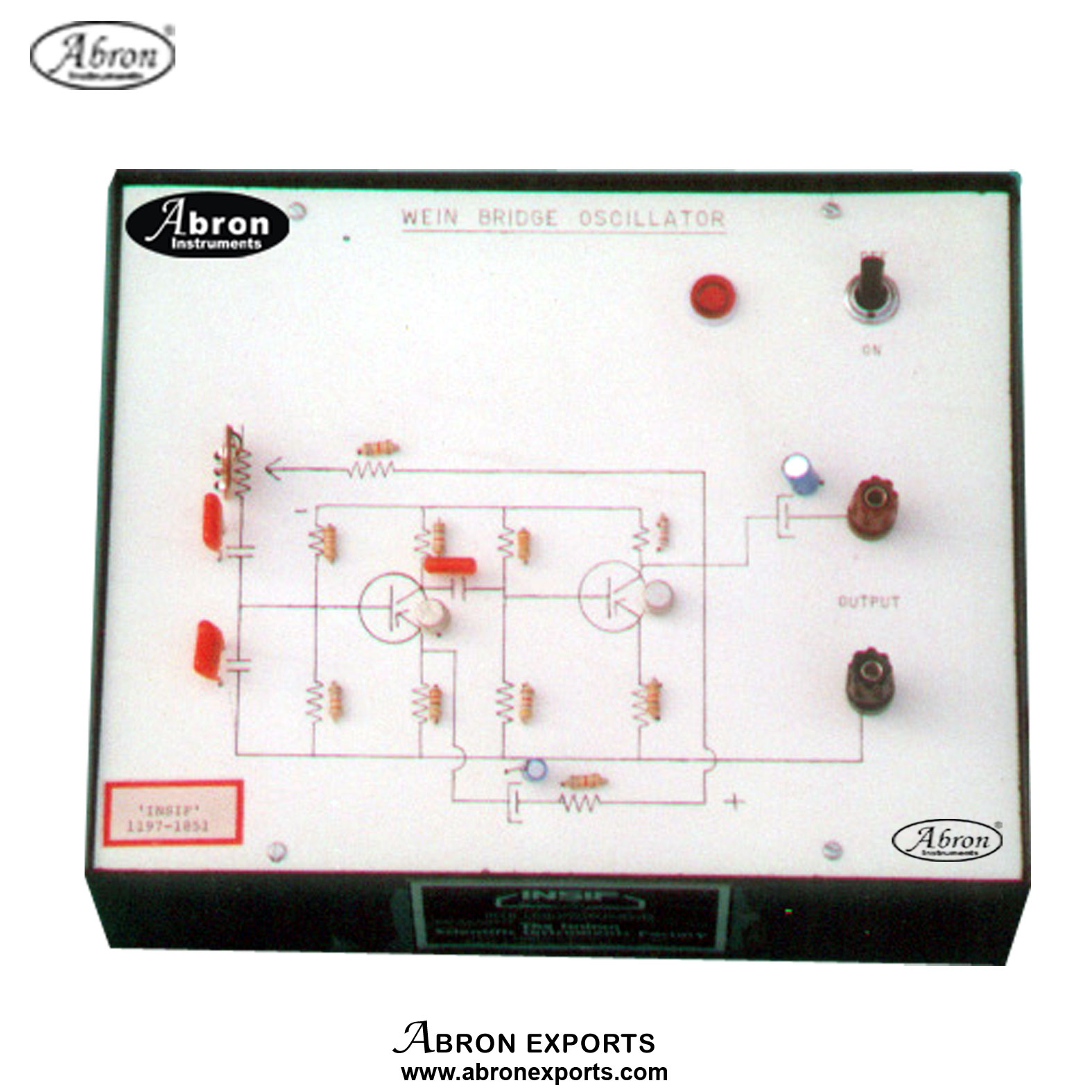
Class XII-exp-08 Frequency of A.C Alternating Current Mains To find the frequency of the A.C. mains with a sonometer and an electromagnet abron Electro magnet and stand AP-913K
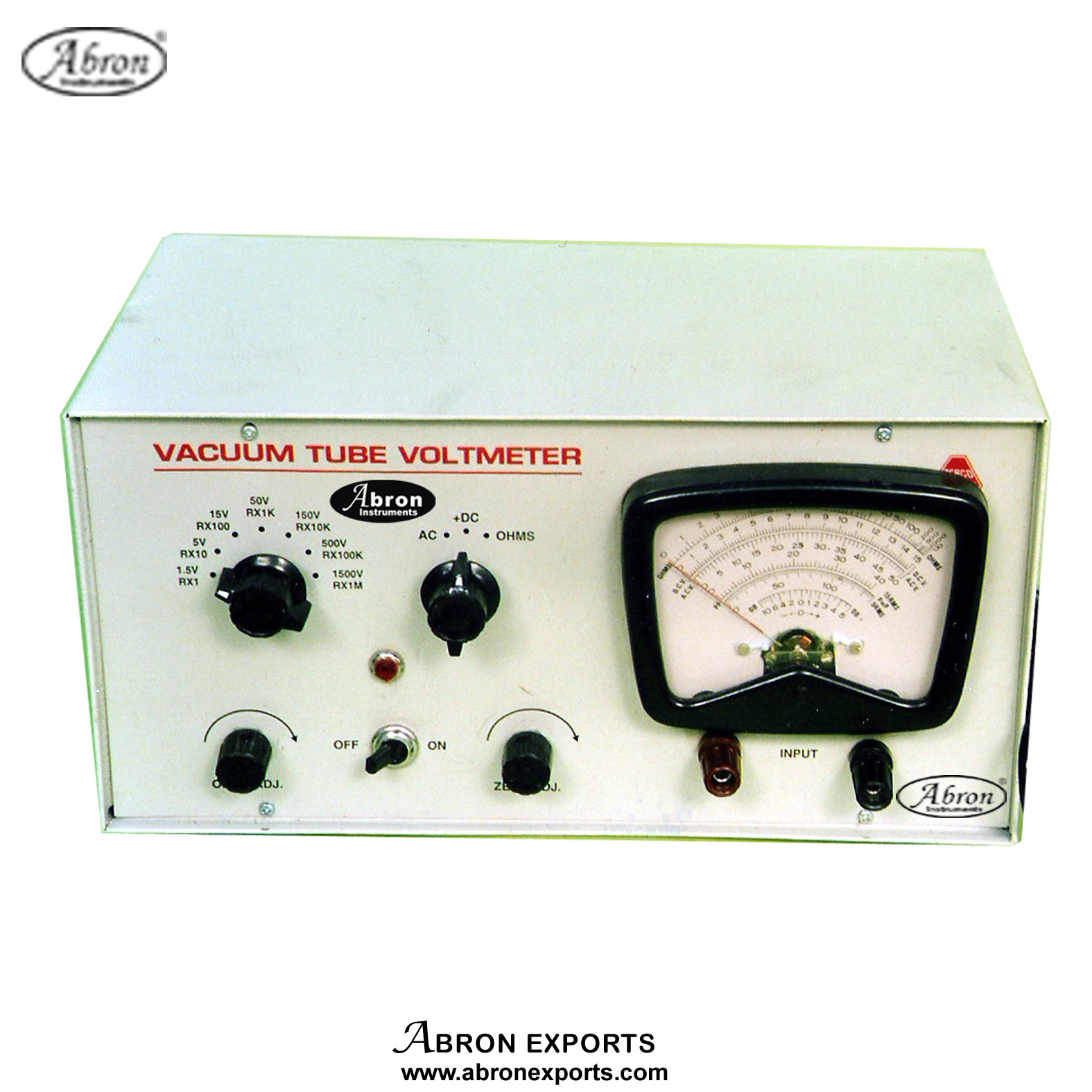
Frequency of A.C. (Alternating Current) Mains

Class XII Apparatus: A sonometer (with soft iron wire), a set of eight tuning forks, kg hanger, seven kg slotred weights, an electromagnet with a step-down transformer, clam, clam, stand, rubber pad, paper rider, metre scale

Class XII-exp-07 Galvanometer Ammeter and Voltmeter To determine resistance of a galvanometer by half deflection method and to find its figure of merit.

Class XII-exp-07 Galvanometer Ammeter and Voltmeter To determine resistance of a galvanometer by half deflection method and to find its figure of merit.

Galvanometer Ammeter and Voltmeter

To determine resistance of a galvanometer by half deflection method and to find its figure of merit. To convert it into a voltmeter of desired range and to verify the same.

Class XII Apparatus: A weston type galvanometer, a voltmeter of 0-3 volt rang, a battery of two cells or battery eliminator, two (5000 Ω and 500 Ω) resisitance boxes, two one way keys, a rheostat, connecting wires and a piece of sand paper.

Class XII-exp-05 Measurement of Electromotive Force and Potential Difference To determine the internal resistance of a given primary cell using poten-tiometer.

Class XII-exp-05 Measurement of Electromotive Force and Potential Difference To determine the internal resistance of a given primary cell using poten-tiometer.

Measurement of Electromotive Force and Potential Difference

Class XII Apparatus: A potentiometer, a battery (or battery eliminatr), two one-way keys, a rheostat of low resistance, a galvanometer, a high resisitance box, a fractional resistance box, an ammeter, a voltmeter, a cell (say Leclanche cell), a set connecting wires and a piece of sand paper

APP-11b39-29-B Class XI-exp-29B Vibration of Strings and Air Columns (b) To study the relation between the length of a given wire and tension for constant frequency using sonometer To plot a graph bet

APP-11b39-29-B Class XI-exp-29B Vibration of Strings and Air Columns (b) To study the relation between the length of a given wire and tension for constant frequency using sonometer To plot a graph bet

Wave Motion and Velocity of sound Vibration of Strings 

(b) To study the relation between the length of a given wire and tension for constant frequency using sonometer. To plot a graph between I2 and T(indirect verification of law of tension).

APP-11b39-29A Class XI-exp-29A Vibration of Strings and Air Columns (a) To study the relation between frequency and length of a given wire under constant tension using sonometer

APP-11b39-29A Class XI-exp-29A Vibration of Strings and Air Columns (a) To study the relation between frequency and length of a given wire under constant tension using sonometer

Wave Motion and Velocity of Waves

Vibration of Strings and Air Columns

Class XI Apparatus: A sonometer, a set of eight tuning forks, kg hanger seven kg slotted weights, rubber pad, paper rider, meter scale, screw gauge

APP-11B39-28 Class XI-exp-28 Thermal Radiation To study the factors affecting the rate of loss of heat rate of cooling of a liquid

APP-11B39-28 Class XI-exp-28 Thermal Radiation To study the factors affecting the rate of loss of heat rate of cooling of a liquid

Thermal Radiation

Class XI Apparatus: Same as in Expt. 26, plus calorimeters of different materials, cross-section and nature of outer surface (polished and black painted)

APP-11B39-27 Class XI-exp-27 Thermal Radiation To study the relationship between the temperature of a hot body and time by plotting a cooling curve

APP-11B39-27 Class XI-exp-27 Thermal Radiation To study the relationship between the temperature of a hot body and time by plotting a cooling curve

Thermal Radiation

Class XI Apparatus: Newton's law of cooling apparatus (a thin-walled copper calorimeter suspended in a double walled enclosure), two thermometers, clamp and stand, stop clock/watch

APP-11B39-26 Class XI-exp-26 Thermal Radiation To study relationship between temperature of a hot body plotting a cooling curve

APP-11B39-26 Class XI-exp-26 Thermal Radiation To study relationship between temperature of a hot body plotting a cooling curve

Thermal Radiation Class XI Apparatus: Newton's law of cooling apparatus (a thin-walled copper calorimeter suspended in a double walled enclosure), two thermometers, clamp and stand, stop clock/watch

APP-11b39-25 Class XI-exp-25 Thermal Expansion of Liquids To note the change in level of liquid in a container on heating and interpret the observations.

APP-11b39-25 Class XI-exp-25 Thermal Expansion of Liquids To note the change in level of liquid in a container on heating and interpret the observations.

Thermal Expansion of Liquids

Class XI Apparatus: A round bottom glasss flask with volume graduations in the neck, Liquid (having boiling point above 100 C), water bath, heating arrangement, thermometer with hanging arrangement

APP-11b39-24 Class XI-exp-24 Thermal Expansion of Solids To observe and explain the effect of heating on a bimetallic strip

APP-11b39-24 Class XI-exp-24 Thermal Expansion of Solids To observe and explain the effect of heating on a bimetallic strip

Thermal Expansion of Solids

Class XI Apparatus: A bimetallic strip (made of iron and brass bars), a board with clamp screw on one side and vertical scale on the other side, heating arrangement, thermometer

APP-11B39-23 Class XI-exp-23 Elasticity To find the force constant of a helical spring by plotting graph between load and extension

APP-11B39-23 Class XI-exp-23 Elasticity To find the force constant of a helical spring by plotting graph between load and extension

Elasticity

Class XI Apparatus: Spring, a rigid support, a 50 g hanger and six 50 g slotted weights,a vertical wooden scale, a fine pointer, a hook

APP-11b39-22 Class XI-exp-22 Elasticity To determine Young s Modulus of elasticity of the material of a given wire using Searle s apparatus

APP-11b39-22 Class XI-exp-22 Elasticity To determine Young s Modulus of elasticity of the material of a given wire using Searle s apparatus

Elasticity

Class XI Apparatus: Searle's apparatus, two long steel wires of same and diameter, a metre scale, a screw gauge, eight kg slotted weights and a1 kg hanger

APP-11b39-21 Class XI-exp-21 To determine the coefficient of viscosity of a given viscous liquid by measuring terminal velocity of a given spherical body

APP-11b39-21 Class XI-exp-21 To determine the coefficient of viscosity of a given viscous liquid by measuring terminal velocity of a given spherical body

Viscosity

Class XI Apparatus: A half meter high, 5 cm broad glass cylindrical jar with millimeter graduations along its height, transparent viscous liquid, one steel ball, screw gauge, stop clock/watch, thermometer, clamp with stand

APP-11b39-20 Class XI-exp-20 Surface Tension To Study the effect of detergent on surface tension by observing capillary rise

APP-11b39-20 Class XI-exp-20 Surface Tension To Study the effect of detergent on surface tension by observing capillary rise

Surface Tension

Class XI Apparatus: Set up of experiment-Three capillery tubes of different radii and a tipped pointer clamped in a metallic plate with a handle, travelling microscope, clamp and stand, a fine motion adjustable height stand, a flat bottom open, dish, clean water in a beaker, thermometer

APP-11b39-19 Class XI-exp-19 Surface Tension To determine the surface tension of water by capillary rise method  spare capillary AP-923C

APP-11b39-19 Class XI-exp-19 Surface Tension To determine the surface tension of water by capillary rise method spare capillary AP-923C

Surface Tension

Class XI Apparatus: Three capillery tubes of different radii and a tipped pointer clamped in a metallic plate with a handle, travelling microscope, clamp and stand, a fine motion adjustable height stand, a flat bottom open, dish, clean water in a beaker, thermometer

APP-11b39-18 Class XI-exp-18 To Study the variation in volume with pressure for a sample of an air at constant temperature by plotting a graph between P and V and between P and 1/V

APP-11b39-18 Class XI-exp-18 To Study the variation in volume with pressure for a sample of an air at constant temperature by plotting a graph between P and V and between P and 1/V

Atmospheric Pressure

Class XI Apparatus: Boyle's law apparatus, plumb line, a pair of set-squareS

APP-11b39-17 Class XI-exp-17 Motion under Gravity and Acceleration due to Gravity To study the variation in range of a jet of water with the angle of projection

APP-11b39-17 Class XI-exp-17 Motion under Gravity and Acceleration due to Gravity To study the variation in range of a jet of water with the angle of projection

Motion under Gravity and Acceleration due to Gravity

Class XI Apparatus: A plyboard protractor with radius of about 30 cm and making 0 and 90 with an interval of 15 each, a 10 meter long measuring tape, A constant level reservior under pressure (a tap connected to a tank or water supply line), a water pipe with a metallic nozzle (narrow opening)

APP-11b39-16 Class XI-exp-16 Motion under Gravity and Acceleration due to Gravity To study the conservation of energy of a ball rolling down on an inclined plane, (using a double inclined plane)

APP-11b39-16 Class XI-exp-16 Motion under Gravity and Acceleration due to Gravity To study the conservation of energy of a ball rolling down on an inclined plane, (using a double inclined plane)

Motion under Gravity and Acceleration due to Gravity

Class XI Apparatus: A double inclined plane (track), a ball of diameter about 20 cm, two wooden blocks (2.5 cm length), two weights of one kg each. stop clock/watch plumb line, meter scale

APP-11b39-15 Class XI-exp-15 Motion under Gravity and Acceleration due to Gravity To study dissipation of energy of a simple pendulum, by plotting a graph between square of amplitude and time. (To inv

APP-11b39-15 Class XI-exp-15 Motion under Gravity and Acceleration due to Gravity To study dissipation of energy of a simple pendulum, by plotting a graph between square of amplitude and time. (To inv

Motion under Gravity and Acceleration due to Gravity

Class XI Apparatus: A simple pendulum having for its string a 2 metre long thin wire with upper and screwed in a torsion screw fixed to a rigid support and a 2 kg rectangular metallic block as its bob suspended from its lower end, ticker- timer, paper tape, spring balance of range 2.5 kg, metre scale and thread

APP-11b39-14 Class XI-exp-14 Motion under Gravity and Acceleration due to Gravity Using a simple pendulum plot J T and J T2 graphs Hence find the effective length of a seconds s pendulum using appro

APP-11b39-14 Class XI-exp-14 Motion under Gravity and Acceleration due to Gravity Using a simple pendulum plot J T and J T2 graphs Hence find the effective length of a seconds s pendulum using appro

Motion under Gravity and Acceleration due to Gravity

Class XI Apparatus: A clamp with stand, split cork, thread, bod, vernier callipers, stop clock/watch, metre scale

APP-11b39-13 Class XI-exp-13 Laws of Motion Friction To Measure the Force of Limiting Friction for Rolling of Rollers on a Horizontal Plane

APP-11b39-13 Class XI-exp-13 Laws of Motion Friction To Measure the Force of Limiting Friction for Rolling of Rollers on a Horizontal Plane

Laws of Motion

Friction

Class XI Apparatus: Some as in Experiment 12 and lead shots as rollers

APP-11b39-12 Class XI-exp-12 Laws of Motion Friction To study the relationship between force of limiting friction and normal reaction and to find the coefficient of friction between a block and a hori

APP-11b39-12 Class XI-exp-12 Laws of Motion Friction To study the relationship between force of limiting friction and normal reaction and to find the coefficient of friction between a block and a hori

Laws of Motion

Friction

Class XI Apparatus: wooden block (with a hook on one side), 50 g weghts, horizontal plane (table top) fitted with a frictionless pulley at one end, pan spring balance, thread, spirit level

APP-11b39-11 Class XI-exp-11 Motion of a Body Down an Inclined Plane To find the downward force along an inclined plane acting on a roller due to gravitational pull of the earth and study its relation

APP-11b39-11 Class XI-exp-11 Motion of a Body Down an Inclined Plane To find the downward force along an inclined plane acting on a roller due to gravitational pull of the earth and study its relation

Motion of a Body Down an Inclined Plane

Class XI Apparatus: An inclined plane, A trolley or roller, pen, weight box, spring balance, spirit level, strong thread, half meter scale

APP-11b39-10 Class XI-exp-10 Measurement of Time Vector Addition To find the weight of a given body using parallelogram law of vectors

APP-11b39-10 Class XI-exp-10 Measurement of Time Vector Addition To find the weight of a given body using parallelogram law of vectors

Measurement of Time

Class XI Apparatus: Parallelogram law of forces apparatus (Gravesand's apparatus), plumb line, two hangers with slotted weights, a body (a wooden block) whose weight is to be determined, thin strong thread, white drawing paper sheet, drawing pins, mirror strip, sharp pencil, half meter scalls, set squares, protractor

APP-11b39-09 Class XI-exp-09 Measurement of Mass To determine mass of a given body using a metre scale by principle of moments.

APP-11b39-09 Class XI-exp-09 Measurement of Mass To determine mass of a given body using a metre scale by principle of moments.

Measurement of Mass

Class XI Apparatus: A meter scale, a broad heavy wedge with sharp edge, a weight box, a body of unknown mass

APP-11b39-08 Class XI-exp-08 Measurement of Length To determine radius of curvature of a given spherical convex surface by a spherometer

APP-11b39-08 Class XI-exp-08 Measurement of Length To determine radius of curvature of a given spherical convex surface by a spherometer

Measurement of Length

Class XI Apparatus: Spherometer, convex surface (it may be unpolished convex mirror), a big size plane glass slab

APP-11b39-07 Class XI-exp-07 Measurement of Length To measure volume of an irregular lamina using a screw gauge

APP-11b39-07 Class XI-exp-07 Measurement of Length To measure volume of an irregular lamina using a screw gauge

Measurement of Length

Class XI Apparatus: Screw gauge, an irregular lamina (it must be of uniform thickness), a centimeter graph paper, a pointed pencil

APP-11b39-06 Class XI-exp-06 Measurement of Length To Measure Thickness of a Given Sheet Using a Screw Gauge

APP-11b39-06 Class XI-exp-06 Measurement of Length To Measure Thickness of a Given Sheet Using a Screw Gauge

Measurement of Length

Class XI Apparatus: Screw gauge, sheet (it must be rigid)

APP-11b39-05 Class XI-exp-05 Measurement of Length To measure diameter of a given wire using a screw gauge and find its volume

APP-11b39-05 Class XI-exp-05 Measurement of Length To measure diameter of a given wire using a screw gauge and find its volume

Measurement of Length Class XI Apparatus: Screw gauge,

APP-11b39-04 Class XI-exp-04 Measurement of Length To Make a Paper Scale of Given Least Count (0.2cm)

APP-11b39-04 Class XI-exp-04 Measurement of Length To Make a Paper Scale of Given Least Count (0.2cm)

Measurement of Length

Class XI Apparatus: A thick white paper sheet, a half meter scale

APP-11b39-03 Class XI-exp-03 Measurement of Length To measure internal diameter and depth of a given beaker/ calorimeter using a vernier calipers and hence find its volume

APP-11b39-03 Class XI-exp-03 Measurement of Length To measure internal diameter and depth of a given beaker/ calorimeter using a vernier calipers and hence find its volume

Measurement of Length

Class XI Apparatus: Vernier callipers, a beaker or a calorimeter

APP-11b39-02 Class XI-exp-02 Measurement of Length To measure dimensions of a given regular body of known mass using a vernier calipers and hence find its density

APP-11b39-02 Class XI-exp-02 Measurement of Length To measure dimensions of a given regular body of known mass using a vernier calipers and hence find its density

Measurement of Length

Class XI Apparatus: Vernier callipers, a small rectangular metallic block of known mass

APP-11b39-01 Class XI-exp-01 Measurement of Length To measure diameter of a small spherical/cylindrical body, using vernier calipers

APP-11b39-01 Class XI-exp-01 Measurement of Length To measure diameter of a small spherical/cylindrical body, using vernier calipers

Measurement of Length

Class XI Apparatus: Vernier callipers, a spherical body (pendulum bod) or a cylinder

Eng APP-23b31-21 To find the capacity of condenser using flashing and quenching of a agron bulb

Eng APP-23b31-21 To find the capacity of condenser using flashing and quenching of a agron bulb

Class B.Tech. Apparatus : A Condenser of unknown capacity, 3 condensers of known capacity ,resistance of the order of few mege-ohm, an agron flashing bulb, DC power supply, one way keys.

Eng APP-23b31-20 To Study Intensity response of cadmium sulphide cell or to verify inverse square law

Eng APP-23b31-20 To Study Intensity response of cadmium sulphide cell or to verify inverse square law

Class B.Tech. Apparatus : Cadmium sulphide cell, light source slit, battary for cadmium sulphide cell, etc.

Eng APP-23b31-19 To measure the velocity of Ultrasonic waves in organic Liquid  (Kerosene Oil)

Eng APP-23b31-19 To measure the velocity of Ultrasonic waves in organic Liquid (Kerosene Oil)

Class B.Tech. Apparatus : R.F. oscillator, piezo electric crystal, spectrometer (ultrasonic), glass cell, light source (sodium lamp).

Ultrasonic diffraction apparatus abron ae-1442  The instrument is designed to give accurate and best results keeping in view the various difficulties faced by the institutions. A proper R. F. Oscillator is designed for this experiment and special type of High Resolving Spectrometer with Micrometer Eyepiece in manufactured for this experiment. It is fully tested and nice fringes are formed with the help of R. F. Oscillator. Specifications R. F. Oscillator Input :  230 Volts AC 50 c/s Frequency :    2.5 - 6.5 Mc/s calibrated for different set of crystal frequencies and is continuously variable. R. F. Output :      The output is brought out on the terminals. Built-in a nicely polished box with ON / OFF switch, jewel light etc. Leads : Connecting leads are provided with the instrument.

Eng APP-23b31-18 (b) To find value of Cauchy s constant A and B for the material of the given Prism.

Eng APP-23b31-18 (b) To find value of Cauchy s constant A and B for the material of the given Prism.

Class B.Tech. Apparatus : A spectrometer, source of white light (sodium lamp), a glass prism, electric lamp, reading lens

To verify the Newton s formula and hence to find focal length of the given convex lens Engineering Experiment

To verify the Newton s formula and hence to find focal length of the given convex lens Engineering Experiment

Class B.Tech. Apparatus : An optical bench with three uprights, a given lens two needles and a plane mirror.

Eng APP-23b31-16(b) To find the frequency of A.C mains using Sonometer and Electromagnet Electro magnet and stand AP-913K

Eng APP-23b31-16(b) To find the frequency of A.C mains using Sonometer and Electromagnet Electro magnet and stand AP-913K

Class B.Tech. Apparatus : A sonometer with magnetic wire stretched over it, an electromagnet, step down transformer,a hanger with weights.

Eng APP-23b31-16(A) To find frequency of AC mains using sonometer and Horse shoe or bar magnet. Determination of M & H Coils AE-913K

Eng APP-23b31-16(A) To find frequency of AC mains using sonometer and Horse shoe or bar magnet. Determination of M & H Coils AE-913K

Class B.Tech. Apparatus : A sonometer, a wire of magnetic material, step down transformer (200-6 volt) horse shoe magnet or two bar magnet of equal strength, hanger with slotted weights, screw guage meter scale, a sensitive balance.

Eng APP-23b31-15 To Compare the capacities of Two Condensers By De Sauty bridge

Eng APP-23b31-15 To Compare the capacities of Two Condensers By De Sauty bridge

Class B.Tech. Apparatus : Two condensers, two high resistance boxes, a battery, a morse key, a galvanometer, connecting wires, sand paper etc

maximum accuracy * The 1st arm (R1) of 3-decades 10 x 10, 10 x 100 and 10 x 1000 ohms.* The 2nd arm (R2) is also (R1) * An unknown capacitor (C1) of capacity about (0.1 mfd to 1 mfd, to be connected (from outside) to terminals of 3rd arm. (you have to calculate the value of (C1) in the experiment * 4th arm of known standard capacity of 10 x 0.1 mfd (i.e. C2)   

Eng APP-23b31-14 To Convert a given Galvanometer into an ammeter of desired range and verify the same

Eng APP-23b31-14 To Convert a given Galvanometer into an ammeter of desired range and verify the same

Class B.Tech. Apparatus : A galvanometer, a voltmeter, a high resistance box of range (0-10,000 ohms), low resistance box of range (0-200 ohms), two one way keys, screw guage, ammeter of desired range (say 0-3A) connecting wires etc

Eng APP-23b31-13 To find low Resistance by Carey Foster Bridge.

Eng APP-23b31-13 To find low Resistance by Carey Foster Bridge.

Class B.Tech. Apparatus : Caray Foster bridge, Two equal resistances, thick copper strips, a fractional resistance box, cell, sensitive galvanometer, a jockey, unknown low resistance, connecting wires etc.

Eng APP-23b31-12 To find the resistance of a galvanometer by Post Office Box.

Eng APP-23b31-12 To find the resistance of a galvanometer by Post Office Box.

Class B.Tech. Apparatus : P.O. Box, a sensitive galvanometer, a resistance box, cell and connecting wires etc.

Eng APP-23b31-11 To Measure High resistance by substitution method

Eng APP-23b31-11 To Measure High resistance by substitution method

Class B.Tech. Apparatus : A given high resistance, an American type galvanometer, a high resistance box, one way key, battery of about 3 to 4 cells, connecting wires etc.

Eng APP-23b31-11 To Measure High resistance by substitution method

Eng APP-23b31-11 To Measure High resistance by substitution method

Class B.Tech. Apparatus : A given high resistance, an American type galvanometer, a high resistance box, one way key, battery of about 3 to 4 cells, connecting wires etc.

Eng APP-23b31-10 To find high resistance by Lekage Method

Eng APP-23b31-10 To find high resistance by Lekage Method

Class B.Tech. Apparatus : A Ballistic galvanometer, lamp and scale arrangement Morse key, a capacitor (.1 to .5 �F capacity), two-way, one way key , given high resistance rheostat, a standard cell, stop �watch and tapping key�

Eng APP-23b31-09(a)To find temperature coefficient of resistance of platinum using Callendar of Griffiths Bridge.

Eng APP-23b31-09(a)To find temperature coefficient of resistance of platinum using Callendar of Griffiths Bridge.

Class B.Tech. Apparatus : Platinum resistance thermometer, galvanometer, one-way key,callender and Griffith Bridge, connecting wires, thermometer.

* Callender And Griffith Bridge   manganin coil accurately calibrated Vernier is attached to the sliding contact  Length of the slide wire is 30 cm Resistance values are 0.1, 0.2, 0.4, 0.8, 1.6, 3.2, 6.4, 12.8 and 0.15 ohm resistance measurable Accuracy + 0.01%. Optional Accessories: Galvanometer AP-817 ,Abron plug key, single (AP-764-A) platinum thermometer Bridge AP-675a Hypsometer AP-745 thermometer1100C AP-942-b  Abron Hot plate AP-743-c or Abron  stove 743-h Tripod stand AC-626-d wire DCC 5 meter AP-970-c Power supply AE-1375-L

Eng APP-23b31-08 To find wavelength of a Spectral line of white light by using Diffraction Grating

Eng APP-23b31-08 To find wavelength of a Spectral line of white light by using Diffraction Grating

Class B.Tech. Apparatus : A source of mercury light, diffraction grating, spectrometer, spirit level and reading lens.

Eng APP-23b31-07 To Determine the wavelength of Monochromatic Light by diffraction at a straight edge.

Eng APP-23b31-07 To Determine the wavelength of Monochromatic Light by diffraction at a straight edge.

Class B.Tech. Apparatus : An optical bench with three upringht, a straight edge (say razor blade), slit stand travelling �microscope or eye lens with micrometer reading lens etc.

 To find the wave length of sodium Light using Fresnel Bi-Prism.abron

To find the wave length of sodium Light using Fresnel Bi-Prism.abron

Class B.Tech. Apparatus : Optical bench fresenel's bi-prisim, convex lens of short focal length, Ramsden's eye piece, microscope, sodium lamp, a slit etc.

Eng APP-23b31-05To find specific rotation of a Sugar Solution By Using Polarimeter.

Eng APP-23b31-05To find specific rotation of a Sugar Solution By Using Polarimeter.

Class B.Tech. Apparatus : Laurentz's half shade polarimeter, a sodium lamp [or a Biquartz polarimeter and mercury lamp] suger, physical balance, beaker,watch glass etc.

AP-851-A

Polarimeter Half shade with 200mm tube with graduated scale with vernier Abron

For determining the specific rotation of optically active substances. A corning glass tube (size 200 mm) is enclosed in a circular aluminum tube with top door for access and exclusion of external light. The circular scale is attached near to analyzer and a range of measurement is 0 - 360° Vernier moveable on the scale enables reading of optical rotation to 60 seconds. Rough and fine adjustment, provided with HALF WAVE MICA PLATE giving three parts field for easy setting adjustable half shadow angles. The instrument can be used on monochromatic light. The light when passes through a polarized sheet and then through the solution. The emerging light is then observed through a rotatable polarized lens analyzer which is used as eye piece. The angle of light is rotated and read directly of the circular scale. Supplied on the the adjustable stand, packed in cardboard box.

AP-851A    Polarimeter Half Shade Type 

AP-851B    Polarimeter Bi Quartz Type

AP-851C    Polarimeter Spare Tubes 200mm

Eng APP-23b31-04 To study a He-Ne Laser

Eng APP-23b31-04 To study a He-Ne Laser

Class B.Tech. Apparatus : A helium-neon laser, upright, a single slit and other accessories.

APP-11b39-85 To Compare the Young Modulus of Elasticity of Different Speciments of Rubber And Also Draw Their Elastic Hysteresis Curves

APP-11b39-85 To Compare the Young Modulus of Elasticity of Different Speciments of Rubber And Also Draw Their Elastic Hysteresis Curves

Class XI Apparatus : Rubber-O rings of 15 to 20 cm diameter and thickness around 4 to 5 mm (pressure cooker gaskets would serve the purpose), a pair of torsion head vices such as those used to hold the drilling bits, half meter scale, wooden block, travelling block, travelling microscope, sharp razor blade or cutter, a light weight pointer etc

APP-11b39-84 To Compare effectiernet materials as absorbers of sound

APP-11b39-84 To Compare effectiernet materials as absorbers of sound

Class XI Apparatus : Piezoelectric buzzer with inbuilt signal generator circuit, a volt battery, audio amplifier of any type with microphone input jack facility, condenser microphone, AC millivltmeter, a pipe of PVC or paper (in 5 cm diameter and 30 cm length, an empty badminton shuttle cock box can also be used), cotton, polyfill and wood in 250gm each

APP-11b39-83 To Compare effectiveness of different materials as insulotors of heat

APP-11b39-83 To Compare effectiveness of different materials as insulotors of heat

Class XI Apparatus : Mosquito mat heater (like Good-Knight, Allout,etc.) heat insulation materials, e.g. glass wood, asbestos, polyurathane foam (PUF), etc. a block of copper to fit the heating top of the heater with a hole drilled into accommodate a thermometer bullb (e.g. 3 cm x 2 cm x 1 cm block), a half degree mercury thermometer, aluminium foil, clamp stand, stopwatch, hand vice, cutter, etc

APP-11b39-82 To investigate the change in the velocity of a body under the action of a constant force and to deternmibne its acceleration

APP-11b39-82 To investigate the change in the velocity of a body under the action of a constant force and to deternmibne its acceleration

Class XI Apparatus : A ticker timer, a horizontal table having length nearly equal to height, 2 cm thick wooden strip having length equal to width of the table, a wooden trolley, G clamps, frictionless pulley, long paper tape, hanger, slotted weighs, some extra weights, spring balance, strong thread, meter-rod

APP-11b39-81 To Determine the radius of Gyration about Centre of mass of a metre scale used as a bar pendulum

APP-11b39-81 To Determine the radius of Gyration about Centre of mass of a metre scale used as a bar pendulum

Class XI Apparatus : A meter scale having holes drilled at equal intervals along its length. A knife-edge fixed on a wall or on any other rigid support, two sharp wedges, and a spring balance

APP-11B39-80 To Study the effect of load on depression of a suitable clamped metre scale loaded (i( at its (ii) in the middpe

APP-11B39-80 To Study the effect of load on depression of a suitable clamped metre scale loaded (i( at its (ii) in the middpe

Class XI Apparatus : Two metre scales, clamp stand, slotted weights (50 g each) and a pan

APP-11b39-79 To Study Factors Affectiong the Rate Cooling if a Liquid

APP-11b39-79 To Study Factors Affectiong the Rate Cooling if a Liquid

Class XI Apparatus : Newton's law of cooling apparatus with calorimeters of different materials, cross-section and polished and black painted outer surface

APP-11b39-78 To Studay the effect of detergent on surface tension by observing capillary rise AP-932K

APP-11b39-78 To Studay the effect of detergent on surface tension by observing capillary rise AP-932K

Class XI Apparatus : Same as in experiment of surface tension and three commonly used detergents

AP-932-K

Surface Tension By Capillary Rising setup with slow motion platform 4 Capillary tubes &holder stand Water Tank etc+ traveling set

APP-11b39-77 To note the change in level of liquid in a container on heatiing and interpret the observations

APP-11b39-77 To note the change in level of liquid in a container on heatiing and interpret the observations

Class XI Apparatus : A beaker, a round bottom flask with graduations or a container, tripod stand, wire gauge, liquid (having boiling point more than 100 C) clamp stand, burner, thermometer and water

APP-11b39-76 To Study the bending of abimetallic strip on heation and to find which of a metals has larger liner expansion

APP-11b39-76 To Study the bending of abimetallic strip on heation and to find which of a metals has larger liner expansion

Class XI Apparatus : Brass-iron bimetallic strip, clamp stand, a burner or stove and a light hammer

APP-11b39-75 To observe change of state and plot a Colling curve for molten wax

APP-11b39-75 To observe change of state and plot a Colling curve for molten wax

Class XI Apparatus : A beaker, some wax, thermometer, clamp stand, burner, tripod stand, clamp stand and a stopwatch

APP-11b39-74 To Study dissipation of Energy of a simple pendulam by plottting a graph between of a amplitude and atime

APP-11b39-74 To Study dissipation of Energy of a simple pendulam by plottting a graph between of a amplitude and atime

Class XI Apparatus : Ticker timer, paper tape, meter scale, thread, clemp, stand, metallic brick as bob, G -clamps (four), split cork and a spring balance

APP-11b39-73 To study the conservation of energy of ball rolling down an inclined plane (Using a double inclined plane)

APP-11b39-73 To study the conservation of energy of ball rolling down an inclined plane (Using a double inclined plane)

Class XI Apparatus : Double inclined track, a metallic ball of about 1 cm radius,  level, plumbline, meter scale, 

APP-11b39-72 To Study the Variation in the Range of a Jet of Water with the Angle of Projection

APP-11b39-72 To Study the Variation in the Range of a Jet of Water with the Angle of Projection

Class XI Apparatus : A protractor, water pipe with a nozzle, water tap and a measuring tape

APP-11b39-70 To Determine the mass of unknow body by using a metre scale by principal of moments

APP-11b39-70 To Determine the mass of unknow body by using a metre scale by principal of moments

Class XI Apparatus : Uniform meter scale, known standard mass with loop of cotton thread, unknown mass suspended by a cotton loop, knife-edge

APP-11b39-69 To Find the least count of the given app : (i) burette (ii) Sonometer (iii) stopwatch (iv) a measuring tape

APP-11b39-69 To Find the least count of the given app : (i) burette (ii) Sonometer (iii) stopwatch (iv) a measuring tape

Class XI Apparatus : A burette, a thermometer, a stop-watch, measuring tape, magnifier 

APP-11b39-68 To Makes a Paper scale of 0.2 cm and 0.5 cm

APP-11b39-68 To Makes a Paper scale of 0.2 cm and 0.5 cm

Class XI Apparatus : Centimeter graph paper, set square, wooden strip, gum and a blade

APP-11b39-67 To Determine the Specific Heat of a Solid by Method of Mixture

APP-11b39-67 To Determine the Specific Heat of a Solid by Method of Mixture

Class XI Apparatus : Hypsometer, calorimeter with stirrer, two C thermometer, mass box, balance and given solid (in form of pieces)

APP-11b39-66 To Determine the Specific Heat  of savolatile liquid by the method of mistures

APP-11b39-66 To Determine the Specific Heat of savolatile liquid by the method of mistures

Class XI Apparatus : Spirit (given liquid), a copper tube, copper dust, dust, ice, a funnel, two half-degree thermometers, a calorimeter with outer jacket and a lid, a balance, a mass box, and a stopclok

APP-11b39-65 To Study the Relationship between Temperature of a Hot Body  and Time By Plotting a Cooling Curve

APP-11b39-65 To Study the Relationship between Temperature of a Hot Body and Time By Plotting a Cooling Curve

Class XI Apparatus : Newton's law of cooling apparatus, two thermometers, clamp stand, stop watch, stirrer, water source of heat etc

APP-XI-130 Class XI-exp-30 To Find the Speed of Sound in air at room Temperature using resonnace Using Tube by two resonace position Methodes

APP-XI-130 Class XI-exp-30 To Find the Speed of Sound in air at room Temperature using resonnace Using Tube by two resonace position Methodes

Class XI Apparatus : Resonance tube apparatus two tuning forks of different frequenceies, a rubber pad, a beaker, one therometer, set squares and a plump line

APP-11b39-63 To Study the relation between length and tension for a constant frequency of a stretchered string using a sonometer Determination of M & H Coils AP-917K

APP-11b39-63 To Study the relation between length and tension for a constant frequency of a stretchered string using a sonometer Determination of M & H Coils AP-917K

Class XI Apparatus : Same as in Experiment no 20

Sonometer having a copper (or brass) wire steel wire streached on it, a weight slotted of mass 500 gm,  with tuning for set rubber pad etc 

APP-11b39-62 To Study relation between the frequency and length of a given wire under constant tension using a sonometer and plot a graph between frequency 9n(and1/L with tuning fork set pad slotted w

APP-11b39-62 To Study relation between the frequency and length of a given wire under constant tension using a sonometer and plot a graph between frequency 9n(and1/L with tuning fork set pad slotted w

Class XI Apparatus : A sonometer, tuning forks of different known frequencies two knifo edges, a hanger, rubber pad, slotted weights each of 0.5 kg and a spring balance.

APP-11b39-61 To Determine the co-Efficient of Viscosity of Given a Liquid by plotting a graph between terminal velocity an square of the radius of a sphericval body

APP-11b39-61 To Determine the co-Efficient of Viscosity of Given a Liquid by plotting a graph between terminal velocity an square of the radius of a sphericval body

Class XI Apparatus : A tall cylinder about 1 m high, rubber cork a small glass tube lead shot of different sizes or steel balls of different size, stopwatch, gummed paper, metre rod, thermometer, glycerine, screw gauge and cootton thread

APP-11b39-60 To determine the surface tension of water by capillary rise method AP-935K

APP-11b39-60 To determine the surface tension of water by capillary rise method AP-935K

Class XI Apparatus : Capillary tubes, travelling microscope, clamp stand, a needle, thermometer, water, a glass dish, stand for glass dish and a mettalic strip

APP-11b39-59 To Study the variation of volume of a sample of air with perassure at Constant Temperature ( By plottinbg graph betten P and 1/V)

APP-11b39-59 To Study the variation of volume of a sample of air with perassure at Constant Temperature ( By plottinbg graph betten P and 1/V)

Class XI Apparatus : Boyle's law apparatus, fortin's Barometer, thermometer, plumb line, a pair of set squares, clamp with stand

APP-11b39-58 To Find The Sperinbg Constand of A Helical Spring from the load-extension graph

APP-11b39-58 To Find The Sperinbg Constand of A Helical Spring from the load-extension graph

Class XI Apparatus : A helical spring, meter rod, a rigid support, wooden stand to mount the metre rod or clamp stand, pointer having a fine tip, hanger and slotted weights.

APP-11b39-57 To Find the Speing constant of a helical spring by measuring the time period of  vertical oscillactions of a known load and Check it  by measurins its  extension by known force

APP-11b39-57 To Find the Speing constant of a helical spring by measuring the time period of vertical oscillactions of a known load and Check it by measurins its extension by known force

Class XI Apparatus : The given spring, a pointer, a scale, rigid support, a hanger, 8 slotted weights each of 50gram, stopwatch, wooden stand to mount the meter rod or a clamp stand

APP-11b39-56 To Determine Young s Modulus of a Material of a Given Wire using Searles App

APP-11b39-56 To Determine Young s Modulus of a Material of a Given Wire using Searles App

Class XI Apparatus : Searle's apparatus, two exactly similar wires each about 2 metres in length and about 1 mm in diameter, a screw gauge, a meter rod, slotted weights, hanger

APP-11b39-55 To determine masses of two different objected using a physical balance

APP-11b39-55 To determine masses of two different objected using a physical balance

Class XI Apparatus : A physical balance, mass-box and the given objects

APP-11b39-54 To find the downward force along an inclined plane actiing on a roller dua to gravitional of the earth and study its realtions with the angle of inclination by plotting graphy between for

APP-11b39-54 To find the downward force along an inclined plane actiing on a roller dua to gravitional of the earth and study its realtions with the angle of inclination by plotting graphy between for

Class XI Apparatus : An inclined plane, roller, a pan, mass-box, a spring balance, a spirit level, a thread, a thread and a metre scale

APP-11b39-53 To Study the relations between force of limiting friction normal reaction and find the coefficient of friction between a block and horizontal surface

APP-11b39-53 To Study the relations between force of limiting friction normal reaction and find the coefficient of friction between a block and horizontal surface

Class XI Apparatus : A wooden block having a hook on one side, a plane board fitted with glass top, (inclined plane apparatus folded) spirit level, thread. pan, mass-box, spring balance

To find the value of a g at a palce using a simple pendualm and (ii) plot l t and l t2 graphs and hence to determine ther length the length of a second s pendulum AP-731CT  APP-11b39-52

To find the value of a g at a palce using a simple pendualm and (ii) plot l t and l t2 graphs and hence to determine ther length the length of a second s pendulum AP-731CT APP-11b39-52

Class XI Apparatus : A metallic bob with a hook, thread, cork divided into two halves, a clamp stand, a stop clock, a metre rod, a chalk piece or a line marker, and a vernier callipers

APP-11b39-51 To find the weight of a given using parallelogram law of Vectors using Gravesend

APP-11b39-51 To find the weight of a given using parallelogram law of Vectors using Gravesend

Class XI Apparatus : Gravesand's two clamp stands , three hangers with hooks, slotted weights (standard masses), a strip of plane mirror, set squares, a drawing compass, a protractor, a sheet of paper, drawing pins, half metre scale and a plump line

APP-11b39-50 To measuring the radious of curvature of a given spherical surface

APP-11b39-50 To measuring the radious of curvature of a given spherical surface

Class XI Apparatus : Spherometer, glass slab and a given spherical surface (e,g.a watch glass, spherical mirror or a lens, concave mirror,convex mirror, etc.) wooden blocks

APP-11b39-49 To Measuring Thickness of Given Sheet using a spherometer

APP-11b39-49 To Measuring Thickness of Given Sheet using a spherometer

Class XI Apparatus : Spherometer, glass plate and glass slab

APP-11b39-48 To Measure the volume of an irregular using a Screw Gauge and Graph paper

APP-11b39-48 To Measure the volume of an irregular using a Screw Gauge and Graph paper

Class XI Apparatus : Screw gauge, given irregular lamina and a graph paper

APP-11b39-47 To Mesure the Thickness of a given sheet by using scrrew gauge

APP-11b39-47 To Mesure the Thickness of a given sheet by using scrrew gauge

Class XI Apparatus : Screw gauge, given sheet (sunmica sheet or any metal sheet or any glass sheet)

APP-11b39-46 To Measure The diameter of a wire using a screw gauge and ti find its volume

APP-11b39-46 To Measure The diameter of a wire using a screw gauge and ti find its volume

Class XI Apparatus : A screw gauge AP-794A15 , metre rod, piece of wire

Micrometer screw gauge x LC 0.001mm 1 micron brass body steel screw  with Ratchet stop inside outside Thickness measure Abron AP-794A20S

APP-11b39-45 To Determine internal Diameter and Depth of given beaker or Calorimeter with A Vernier Calipers and hence find its Volume

APP-11b39-45 To Determine internal Diameter and Depth of given beaker or Calorimeter with A Vernier Calipers and hence find its Volume

Class XI Apparatus : Given beaker or calorimeter and vernier callipers

APP-11b39-44 To Find The Volume of A Given Metallic Rectangular block  by Measuring its dimensions with vernier caliper and to check up the result by using a graduated cylinder Or  To Measuring Dime

APP-11b39-44 To Find The Volume of A Given Metallic Rectangular block by Measuring its dimensions with vernier caliper and to check up the result by using a graduated cylinder Or To Measuring Dime

Class XI Apparatus : Metallic rectangular block, a vernier callipers, a graduated cylinder, thread, water, container

APP-11b39-43 To Measure the Diameter of A Small Spherical/ Cylindrical body with vernier Calipers

APP-11b39-43 To Measure the Diameter of A Small Spherical/ Cylindrical body with vernier Calipers

Class XI Apparatus : Vernier callipers, a spherical body (pendulum bod) or a cylinder

APP-12b38-55 To make a musical tone generator

APP-12b38-55 To make a musical tone generator

Class XII Apparatus : One transistor (BC 548), one IC (UM 66), one capacitor 100 F, 10V (electrolytic) 3V d.c. supply, a resistor of resistance 1KΩ. One speaker 8Ω, geeneral purpose printed board (PCB), connecting wires, sandpaper and soldering iron, soldering wire etc

APP-12b38-54 To make a water level indicator or rain alarm

APP-12b38-54 To make a water level indicator or rain alarm

Class XII Apparatus : Two metallic probes (aluminium tubes of 5 mm diameter about 6 cm long), p-n-p transistor AC 128, n-p-n transistor BC 107, a loudspeaker 8Ω, a ceramic capacitor 0.1 F, two resistors (R1 = 4kΩ,1/2 W and R2= 10Ω, 1/2W), 3V battery, switch S, connecting wires, wooden booden, terminals, etc

APP-12b38-53 To study infra red rasistance emitted by different soure using photo transistor

APP-12b38-53 To study infra red rasistance emitted by different soure using photo transistor

Class XII Apparatus : A photo-transistor (OCP 71), a carbon resistor of 150 Ω, a cell, a milliammeter (0 to 50 mA range), an infrared lamp, a variable transformer (to vary supply voltage infrared lamp), a mercury thermometer, an insulating screen with a central hole and connecting wires

APP-12b38-52 To construct a time switch and study the dependence of time constant on various factors

APP-12b38-52 To construct a time switch and study the dependence of time constant on various factors

Class XII Apparatus : A.D.C. voltage source (220 V), a capacitor (10 F), a variable resistance (1 to 107 ohm variable in steps of 106 ohm), a Neon lamp (striking potential 140V)

APP-11b39-38 To investigate the force of attaction between a solenoid and a bar magnet when the current through the solenoid is changed

APP-11b39-38 To investigate the force of attaction between a solenoid and a bar magnet when the current through the solenoid is changed

Class XII Apparatus : A Solenoid, a beam balance, a bar-magnet, weight-box, an ammeter, key connecting wires, sandpaper, rheostat

APP-12b38-49 To calibrate a thermocouple and the to determine an unknown temperature using thermocouple

APP-12b38-49 To calibrate a thermocouple and the to determine an unknown temperature using thermocouple

Class XII Apparatus : A thermocouple (Cu-Fe), spirit lamp, a funnel, a funnel stand, thermometer, a beaker, a galvanometer one way key, sandbath, tripodstand, etc

APP-12b38-45 To obtain a lens combination with the specified the specified focal length by using two lenses from the given of lenses

APP-12b38-45 To obtain a lens combination with the specified the specified focal length by using two lenses from the given of lenses

Class XII Apparatus : An optical bench, three upringhts, combination of convex lens and a concave lens, two needles and a knitting needle

 To Study the nature and size of the image formed by a convex lens using a candle and a screen ( for different distances of the candle from lens)

To Study the nature and size of the image formed by a convex lens using a candle and a screen ( for different distances of the candle from lens)

Class XII Apparatus : An optical bench, three upright, one candle, on convex lens, half-meter scale, match box, cardboard screen, lens holder, etc

APP-12b38-43 To study the nature and size of the image of a candle formed by a concave mirror on a screen (for different distances of the candle from the mirror)

APP-12b38-43 To study the nature and size of the image of a candle formed by a concave mirror on a screen (for different distances of the candle from the mirror)

Class XII Apparatus : A concave mirror, an optical bench, three uprights, a piece of cardboard, a sharp cutter, a candle and a spirit level

APP-12b38-42 To observe diffraction of light to a thin slit between sharp edges of razor blades

APP-12b38-42 To observe diffraction of light to a thin slit between sharp edges of razor blades

Class XII Apparatus : Two razor blades and a sodium lamp

APP-12b38-41 To Observe the Polarization of Light Using Two Polaroids abron

APP-12b38-41 To Observe the Polarization of Light Using Two Polaroids abron

Class XII Apparatus : Two polaroids (in the form of plane sheet) transparent colourless plastic sheet, an electric lamp and two clamp stands, etc

APP-12b38-40 To Observe Refraction and Deviation of a Beam of Light Incident Obliquely on a Glass Slab Glass Block

APP-12b38-40 To Observe Refraction and Deviation of a Beam of Light Incident Obliquely on a Glass Slab Glass Block

Class XII Apparatus : The glass slab glass block, drawing board, a sheet of white paper, pins, half-meter scale, protractor, pencil and drawing pins

APP-12b38-39 To identifiy a Diode a l.E.D a Transistor an ic a Resistor a and a Capacitor from Collecting of Such Items

APP-12b38-39 To identifiy a Diode a l.E.D a Transistor an ic a Resistor a and a Capacitor from Collecting of Such Items

Class XII Apparatus : A multimeter and a collection of a junction of a junction diode, L.E.D., a resistor, a capacitor and integrated circuit.

APP-12b38E38 To Study the Effect of Intensity of Light (by varying distance of the sources) on an LDR (light depended resistance) AE-1299K

APP-12b38E38 To Study the Effect of Intensity of Light (by varying distance of the sources) on an LDR (light depended resistance) AE-1299K

Class XII Apparatus : A metre bridge, L.D.R., a resistance box, a galvanometer, a jockey, one way key, a Leclanche cell, a able lamp, sandpeper, piecrs of connecting wire and 100 watt buld

Built in 0-10V DC variables power supply on board moving coil dual range meters 2 nos. on board 4 nos. various coloured LED`s Circuit/ symbols should be printed nicely on the front panel of the black epoxy PCB with 2mm connecting terminals, should be supplied with patch cords and instruction manual.

APP-12b38-37 To draw the diagram of a given  ciruit comprising at last a battery resistor/ rheostat key ammeter and voltmeter mark the components that are not connected in proper order and correct the

APP-12b38-37 To draw the diagram of a given ciruit comprising at last a battery resistor/ rheostat key ammeter and voltmeter mark the components that are not connected in proper order and correct the

Class XII Apparatus : A battery, resistor, an ammeter, a voltmeter, a one-way key and connecting wires

APP-12b38-36 To Study the Potential Drop with the Length of a Wire for Steady Current.

APP-12b38-36 To Study the Potential Drop with the Length of a Wire for Steady Current.

Class XII Apparatus : A potentiometer, an ammeter, a battery of three to four cells, rheostat, voltmeter, jockey, one way key and connecting wires

APP-12b38-35 To Assemble the Components for an Electric Circuit to Measure Internal Resistance of a Cell Using Potentiometer

APP-12b38-35 To Assemble the Components for an Electric Circuit to Measure Internal Resistance of a Cell Using Potentiometer

Class XII Apparatus : A potentiometer auxiliary battery. The given primary cell whose internal resistance is to be measured, two resistance boxes, two one way keys, a rheostat, ammeter jockey galvanometer, sandpaper and pieces of connecting wire

APP-12BE34 To Assemble a House Circuit Comprising Three Bulbs Three (on/off) Switches a Fuse and Power Source

APP-12BE34 To Assemble a House Circuit Comprising Three Bulbs Three (on/off) Switches a Fuse and Power Source

Class XII Apparatus : Three electric bulbs fitted in bulb holders, three (on/off) switches, a safety fuse, power source and flexible wires

Use Of Multimeter to (a) identify base of transistor (b) Distingush between n-p-n and p-n-p type transistor (c) identify terminals of an IC (d) see the unidirectional flow of current in

Use Of Multimeter to (a) identify base of transistor (b) Distingush between n-p-n and p-n-p type transistor (c) identify terminals of an IC (d) see the unidirectional flow of current in

Class XII Apparatus : A multimeter, p-n-p transistor, n-p-n transistor, an IC, junction diode, L.E.D., etc

APP-12b38-31 To Measure the Resistance and Impendance of a Inducator without Iron Core

APP-12b38-31 To Measure the Resistance and Impendance of a Inducator without Iron Core

Class XII Apparatus : An inductor, soft iron core, a.c. Voltmeter, d.c, voltmeter, e.c ammeter, rheostat, connecting wires, volt- battery, step-down transformer, one way key, insulated flexible wires for a.c. connection and sandpaper, etc

APP-12b38-20 To Draw the Characteristic curve of a Zener Diode and to Determine the Reverse Breakdown Voltage AE-1450A

APP-12b38-20 To Draw the Characteristic curve of a Zener Diode and to Determine the Reverse Breakdown Voltage AE-1450A

Class XII Apparatus : A Zener diode, d.c battery of 10V, high resistance rheostat, a microammeter, one way key or a switch, a voltmeter (0-30V), connecting wires. (Usually the entire apparatus in connected on a board and is called Zener diode characteristices apparatus)

APP-12b38-18 To Find the Refractive index of Water Using a Convex Lens and a Plane Mirror

APP-12b38-18 To Find the Refractive index of Water Using a Convex Lens and a Plane Mirror

Class XII Apparatus :A convex lens, a spherometer, an optical needle, a plane mirror, clamp stand, plump line, meter scale and water

APP-12b38-17 To Find Refractive Index of Water Using a Concave Mirror

APP-12b38-17 To Find Refractive Index of Water Using a Concave Mirror

Class XII Apparatus : A concave spherical mirror, clean water, optical needle, metre scale, clamp stand, a plumb line and plane paper

APP-12b38-16 To determine the angle of minium deviation for a given glass prism by plotting a grap between the angle of incidence and the angle of deviation and hence to finmd the refractive  ind

APP-12b38-16 To determine the angle of minium deviation for a given glass prism by plotting a grap between the angle of incidence and the angle of deviation and hence to finmd the refractive ind

Class XII Apparatus : A glass prism, drawing board, drawing pins, sheet of white paper, a protractor and a half-meter scale

APP-12b38-15 To Determine Refractive Index of a Glass Slab Glass Block using Travelling Microscope

APP-12b38-15 To Determine Refractive Index of a Glass Slab Glass Block using Travelling Microscope

Class XII Apparatus : A travelling microscope, a glass slab glass block, lycopodium power, a piece of card- board and spirit level

Class XII-exp-12 To find the focal length of a concave lens using a convex lens

Class XII-exp-12 To find the focal length of a concave lens using a convex lens

Focal Length of Spherical Lenses

Class XII Apparatus : Optical bench, four uprights, two optical needles, concave lens with lens holder, a convex lens with lens holder, a knitting needle and a half-meter rod

APP-12b38-13 To find the Value of v for Different Values of u in Case of a Convex Lens hence Find its Focal Length by Plotting Graphs between 9 i) U and v, (ii) 1/U and 1.V

APP-12b38-13 To find the Value of v for Different Values of u in Case of a Convex Lens hence Find its Focal Length by Plotting Graphs between 9 i) U and v, (ii) 1/U and 1.V

Class XII Apparatus : An optical bench with three uprights, given convex lens with lens holder, two optical needles, a half meter rod, a knitting needle, etc

APP-12b38-12 To Find the Focal Length of a Concave Mirror using a Convex Lens

APP-12b38-12 To Find the Focal Length of a Concave Mirror using a Convex Lens

Class XII Apparatus : An optical bench, four uprights, two optical needles, one knitting needle, half metre scale, convex lens convex mirror, lens holder, mirror holder, etc

APP-12b38-11 To Find the Value of v for Different Values of u in Cases of a Concave Mirror and hence find its Focal Length by Plotting Graphs Betweent : (i) U and v, (ii) 1/ U and 1/V

APP-12b38-11 To Find the Value of v for Different Values of u in Cases of a Concave Mirror and hence find its Focal Length by Plotting Graphs Betweent : (i) U and v, (ii) 1/ U and 1/V

Class XII Apparatus : An optical bench with three uprights, a mirror holder, the given concave mirror, two optical needles, a half metre rod, a knitting needle, etc

APP-12b38-09 To Find the Frequency of the a.c Mains with a Sonometer Determination of M & H Coils  AP-917K AP-913

APP-12b38-09 To Find the Frequency of the a.c Mains with a Sonometer Determination of M & H Coils AP-917K AP-913

Class XII Apparatus :A sonometer with soft iron wire, hanger with slotted weights, step-down transformer electromagnet, connecting wires, physical balance, weight box, stand, paper rider, meter scale

APP-12b38-08 To Convert the Given Galvanometer ( of know resistance and figure of merit) into a Voltmeter of Desired Range and to Verify the same.

APP-12b38-08 To Convert the Given Galvanometer ( of know resistance and figure of merit) into a Voltmeter of Desired Range and to Verify the same.

Class XII Apparatus : A weston type galvanometer, one resistance box of range 0 to 500 ohm, one resistance box of renge 0 to 5000 ohm, two one-way keys, a 3V battary, Voltmeter, rheostat, connecting wires, sand paper, etc

APP-12b38-07 Given the Resistance and Figure of Merit of a Galvanometer Cobvert it into an Ammeter of Desired Range and to Verify the Same

APP-12b38-07 Given the Resistance and Figure of Merit of a Galvanometer Cobvert it into an Ammeter of Desired Range and to Verify the Same

Class XII Apparatus : A galvanometer, an ammeter, a one-way key, a rheostat, a battery, shunt wire, connecting wires,connecting wires, sand pape, screw gauge, meter rod , etc

Class XII-exp-06 To determine resistance of a galvanometer by half deflection method and to find its figure of merit.

Class XII-exp-06 To determine resistance of a galvanometer by half deflection method and to find its figure of merit.

Galvanometer, Ammeter and Voltmeter

To determine resistance of a galvanometer by half deflection method and to find its figure of merit. To convert it into an ammeter of desired range and to verify the same.

Class XII Apparatus : A weston type galvanometer, a voltmeter, a battery or battery eliminator, two (5000 Ω and 500 Ω) resisitance boxes, two one-way keys, a rheostat, a screw gauge, a metre, scale, an ammeter of given range, connecting wires and a piece of sand paper.

APP-12b38-05 To Determine the Internal Resistance of Given Primary Using a Potenimeter

APP-12b38-05 To Determine the Internal Resistance of Given Primary Using a Potenimeter

Class XII Apparatus : A potentiometer, auxiliary battery, primary cell (whose internal resistance is to be determined), a rheostat, two resistance boxes, two one-way keys, jockey, ammeter, glovanometer, connecting wires and sand paper

APP-12b38-03 To verify the Laws of Combination (series and parallel) of Resistance using a Metre Bridge

APP-12b38-03 To verify the Laws of Combination (series and parallel) of Resistance using a Metre Bridge

Class XII Apparatus : A metre-bridge, a resistance box, a galvanometer, two resistance coils, a Lecianche cell, a jockey, one way key, connecting wires and sand paper etc

APP-12b38-02 To Find Resistance of a Given Wire Using Metre Bridge and hence Determine the Specific Resistance of a Material

APP-12b38-02 To Find Resistance of a Given Wire Using Metre Bridge and hence Determine the Specific Resistance of a Material

Class XII Apparatus : A metre-bribge, a Leclanche cell, a resistance box, a galvanometer, a jockey, one-way key, the resistance wire(whose specific resistance is to be determined), a screw gauge, a metre scale, connecting wires and a sand paper.

APP-12b38-01 To Determine Resistance per cm of a Given Wire by Plotting of Difference Versus Current.

APP-12b38-01 To Determine Resistance per cm of a Given Wire by Plotting of Difference Versus Current.

Class XII Apparatus : A given wire whose resistance is to be determined, a d.c, voltmeter (range 0 to 3 V), d.c. ammeter (range about 0 to 1.5 A), a one way key, connecting wires, a battery eliminator or an accumulator or two dry cells (0 to 3 V), sand paper, a rheostat.

To Determine resistance per cm of a given wire by plotting of difference versus current.

To Determine resistance per cm of a given wire by plotting of difference versus current.

Class XII Apparatus : A given wire whose resistance is to be determined, a d.c, voltmeter (range 0 to 3 V), d.c. ammeter (range about 0 to 1.5 A), a one way key, connecting wires, a battery eliminator or an accumulator or two dry cells (0 to 3 V), sand paper, a rheostat.

Reading Telescope Research Type 25MM rod UP down research-abron AP-938C

Reading Telescope Research Type 25MM rod UP down research-abron AP-938C


AP-938C       

Reading Telescope deluxe with 25mm rod heavy castiron base with leveling screws and telescope achromatic lenses and up down movement with scale holder+scale 25-0-25cm 

Electricity Bsc Exp 136 Comparison of capacities by the method of metrix

Electricity Bsc Exp 136 Comparison of capacities by the method of metrix

Comparison of capacities by the method of metrix

Apparatus Required:very dissimilar condenser, two resistance box 10000ohm BG lamp and scale arrangement, two batteries one double pole double throw switch

Electricity Bsc Exp 135 To determine the absolute value of capacity of a capacitor by ballistic galvanometer.

Electricity Bsc Exp 135 To determine the absolute value of capacity of a capacitor by ballistic galvanometer.

To determine the absolute value of capacity of a capacitor by ballistic galvanometer

Apparatus Required:capacitor whose value be determine, ballistic galvanometer, resistance box, morse key, one way key,battery

Electricity Bsc Exp 134 To determine the capacitance of condenser by Wien bridge

Electricity Bsc Exp 134 To determine the capacitance of condenser by Wien bridge

To determine the capacitance of condenser by Wien bridge

Apparatus Required:experimental condenser, standard capacitor, resistance box, head phone, audio frequency oscillator

Electricity Bsc Exp 133 To determine the capacitance of a capacitor by schering bridge

Electricity Bsc Exp 133 To determine the capacitance of a capacitor by schering bridge

To determine the capacitance of a capacitor by schering bridge

Apparatus Required:experimental capacitor of low value, standard capacitor, air capacitor, head phone, two resistance box AF oscillator and connection wires

Electricity Bsc Exp 132B to compare the EMF of two cells by means of a ballistic galvanometer

Electricity Bsc Exp 132B to compare the EMF of two cells by means of a ballistic galvanometer

To comaprte the capacitance of two condenser by d souti method d.c. method

Apparatus Required:Two condenser, two high resistance box accumlator, morse key. Galvanometer, connecting wire

Electricity Bsc Exp 132A To comaprte the capacitance of two condenser by d souti method DC method AP-730S

Electricity Bsc Exp 132A To comaprte the capacitance of two condenser by d souti method DC method AP-730S

To comaprte the capacitance of two condenser by d souti method d.c. method

Apparatus Required:Two condenser, two high resistance box accumlator, morse key. Galvanometer, connecting wire

Electricity Bsc Exp 131 To compare the capacitance of two condenser  by means of a ballistic galvanometer AE-2345P221 AP-

Electricity Bsc Exp 131 To compare the capacitance of two condenser by means of a ballistic galvanometer AE-2345P221 AP-

To compare the capacitance of two condenser by means of a ballistic galvanometer

Apparatus Required:two condenser under experiment, ballistic galvanometer, accumlator, rheostat, tapping key, two way key, connection wires

Electricity BSc APP-Exp 130 To determine coefficient of mutual induction of a pair of coils by deflection method using balllistic galvanometer

Electricity BSc APP-Exp 130 To determine coefficient of mutual induction of a pair of coils by deflection method using balllistic galvanometer

To determine coefficient of mutual induction of a pair of coils by deflection method using balllistic galvanometer

Apparatus Required:pair of coils, stop watch digital, standard low resistance box,BG and lamp and scale arrangement commutator

Electricity Bsc Exp 129 To compare the mutual inductance of two pairs of coil

Electricity Bsc Exp 129 To compare the mutual inductance of two pairs of coil

To compare the mutual inductance of two pairs of coil

Apparatus Required:Two parts of mutual induction coil battery, two resistance boxes commutator

Electricity Bsc Exp 128 To determine the self inductance by using owen's bridge

Electricity Bsc Exp 128 To determine the self inductance by using owen's bridge

to determine the self inductance by using owen's bridge

Apparatus Required:experimental coil inductance L to be found , resistance box AF oscillataor, standard capacitors headphone, galvanometer

Electricity Bsc APP-Exp 127 to determine the self inductance of a given coil by maxwell induction bridge

Electricity Bsc APP-Exp 127 to determine the self inductance of a given coil by maxwell induction bridge

to determine the self inductance of a given coil by maxwell induction bridge

Apparatus Required:Two resistance boxes 0-10000ohm one1000ohm standard variable inductance, unknown inductance audio frequency oscillator, head phone and connection wire

Electricity Bsc Exp 126 To determine the self inductance by Maxwell L/C bridge AP-674D

Electricity Bsc Exp 126 To determine the self inductance by Maxwell L/C bridge AP-674D

To determine the self inductance by Maxwell L/C bridge

Apparatus Required:post office box, three resistance box of range of 0-1000ohm galvanometer, audio oscillator, battery, plug key, inductance coil, variable standard capacitor and connection wire

Electricity Bsc Exp 125 To determine the self inductance of a coil by Anderson method

Electricity Bsc Exp 125 To determine the self inductance of a coil by Anderson method

To determine the self inductance of a coil by Anderson method

Apparatus Required:anderson bridge , small variable resistance, galvanometer, audo oscillator, head phone, battery, plug keys, inductance box and connection wire

Electricity BSc Exp 124 To determine the self inductance of a coil by Rayleigh method.

Electricity BSc Exp 124 To determine the self inductance of a coil by Rayleigh method.

To determine the self inductance of a coil by Rayleigh method.

Apparatus Required: Rayleigh bridge   null point digital , stop watch digital, given inductance, rheostat, tapping key, double key rayleigh key, streched resistance wire connection wire

Electricity Bsc Exp 123 To determine using Kelvins double bridge the following

Electricity Bsc Exp 123 To determine using Kelvins double bridge the following

To determine using Kelvin's double bridge the following

Apparatus Required:kelvin double bridge, balllistic galvanometer, metal strip, copper wire whoes specific resistance is found thermometer, steam boiler heater screw guage

Electricity Bsc Exp 122 To determine the temperature coefficient of resistance for platinum using a platinum resistance thermometer and a Callendar and Griffiths bridge.

Electricity Bsc Exp 122 To determine the temperature coefficient of resistance for platinum using a platinum resistance thermometer and a Callendar and Griffiths bridge.

To determine the temperature coefficient of resistance for platinum using a platinum resistance thermometer and a Callendar and Griffith’s bridge.Apparatus Required: callender and griffith bridge, platimium resistance, thermometer, galvanometer, hypsometer, cell, plug key and connection wire

* Callender And Griffith Bridge   manganin coil accurately calibrated Vernier is attached to the sliding contact  Length of the slide wire is 30 cm Resistance values are 0.1, 0.2, 0.4, 0.8, 1.6, 3.2, 6.4, 12.8 and 0.15 ohm resistance measurable Accuracy + 0.01%. Optional Accessories: Galvanometer AP-817 ,Abron plug key, single (AP-764-A) platinum thermometer Bridge AP-675a Hypsometer AP-745 thermometer1100C AP-942-b  Abron Hot plate AP-743-c or Abron  stove 743-h Tripod stand AC-626-d wire DCC 5 meter AP-970-c Power supply AE-1375-L

Electricity Bsc Exp 121B To measure high resistance by subsitution method

Electricity Bsc Exp 121B To measure high resistance by subsitution method

To determine the high resistance by the method of leakage of condenser

Apparatus Required:Ballistic galvanometer, accumlator, morse key, two way key, standard condenser resistor, stop watch digital, connction wire

Electricity Bsc Exp 121A To determine the high resistance by the method of leakage of condenser

Electricity Bsc Exp 121A To determine the high resistance by the method of leakage of condenser

To determine the high resistance by the method of leakage of condenser

Apparatus Required:Ballistic galvanometer, accumlator Power supply , morse key, two way key, standard condenser , resistor box , stop watch digital, connction wire

Electricity Bsc Exp 120 To determine the resistance of a suspended type moving coil galvanometer by Kelvins method using a post office box.

Electricity Bsc Exp 120 To determine the resistance of a suspended type moving coil galvanometer by Kelvins method using a post office box.

To determine the resistance of a suspended type moving coil galvanometer by Kelvins method using a post office box.

Apparatus Required:Post office box, galvanometer, variable high resistance, copper sulphate, solution placed inside, U tube, leclanche cell, connection wire

Electricity Bsc Exp 119 To determine the resistance of a suspended type moving coil galvanometer by Kelvins method

Electricity Bsc Exp 119 To determine the resistance of a suspended type moving coil galvanometer by Kelvins method

To determine the resistance of a suspended type moving coil galvanometer by Kelvins method using a post office box.

Apparatus Required:post office box, leclanche cell, high resistance, moving coil, galvanometer, and connection wire

Electricity Bsc Exp 118 To determine the resistance per unit length of a Carey Foster's bridge and (i) to prepare one ohm coil and (ii) to determine the specific resistance of a given wire

Electricity Bsc Exp 118 To determine the resistance per unit length of a Carey Foster's bridge and (i) to prepare one ohm coil and (ii) to determine the specific resistance of a given wire

To determine the resistance per unit length of a Carey Foster’s bridge and (i) to prepare one ohm coil and (ii) to determine the specific resistance of a given wire.

Apparatus Required: carey's foster bridge, decimal ohm box, leclanche cell, galvanometer, thick copper strip, plug key,.sliding rheostat, small resistance 10-20 ohm connection wire jockey, and given wire

Electricity Bsc Exp 117 To calibrate bridge wire (which is non-uniform) in a carey foster bridge.

Electricity Bsc Exp 117 To calibrate bridge wire (which is non-uniform) in a carey foster bridge.

To calibrate bridge wire (which is non-uniform) in a carey foster bridge.

Apparatus Required:Bridge wire 100cm apporximate average value of resistance per unit is0.2=2ohm take s0=0.2ohm wire may be calibrated into 10 parts, standard resistance of 2 ohms rheostat 6ohms slide wire, battery, galvanometer, key

Helmholtz galvanometer Electricity Bsc Exp 116 To determine the electro-chemical equivalent of copper and reduction factor of a Helmholtz galvanometer.

Helmholtz galvanometer Electricity Bsc Exp 116 To determine the electro-chemical equivalent of copper and reduction factor of a Helmholtz galvanometer.

To determine the electro-chemical equivalent of copper and reduction factor of a Helmoholtz galvanometer.

Apparatus Required:Digi-balance, copper voltmeter, test plate, helmholtz galvanometer, accumalator, commulator, connection wire

Electricity Bsc Exp 115 To determine the mass susceptibility of NiSO4 solution

Electricity Bsc Exp 115 To determine the mass susceptibility of NiSO4 solution

To determine the mass susceptibility of NiSO4 solution

Apparatus Required:Ballistic galvanometer, electro magnet, search coil, standard solenoid, battery, ammeter, rheostat key, travellling microscpe, commulator

Electricity Bsc Exp 113 To plot graph showing the variation of magnetic field with distance along the ax;s of a circular coil carrying current and to estimate from it the radius of the coil.

Electricity Bsc Exp 113 To plot graph showing the variation of magnetic field with distance along the ax;s of a circular coil carrying current and to estimate from it the radius of the coil.

To plot graph showing the variation of magnetic field with distance along the ax;s of a circular coil carrying current and to estimate from it the radius of the coil.

Apparatus Required:Tangent galvanometer of stewart and gee type, strong battery, rheostat commulator, plug key connection wire

Electricity Bsc Exp 112 To study the variation of the thermo electric emf with temperature for a copper-iron thermocouple by means of a potentiometer

Electricity Bsc Exp 112 To study the variation of the thermo electric emf with temperature for a copper-iron thermocouple by means of a potentiometer

To study the variation of the thermoelectric e.m.f. with temperature for a copper-iron thermo-couple by means of a potentiometer and (i) to determine the neutral temperature (ii) melting point of naphthalene.

Apparatus Required:Potentiometer, standard cadmium cell, battery, copper iron, thermo couple, high resistance box, rheostat, one way key two way and connection wires  or box set uo with power supply digital 

Electricity Bsc Exp 111 To calibrate ballistic galvanometer with the help of earth inductor.AP_720A Abron AP-730R AP-2345P23

Electricity Bsc Exp 111 To calibrate ballistic galvanometer with the help of earth inductor.AP_720A Abron AP-730R AP-2345P23

To calibrate ballistic galvanometer with the help of earth inductor.

Apparatus Required:Ballistic galvanometer, earth inductor, rheostat, tapping key,

Electricity Bsc Exp 110 To determine current sensitivity, ballistic constant using current sensitivity and voltage sensitivity of a moving coil ballistic galvanometer. Abron AP-730R AP-2345P23

Electricity Bsc Exp 110 To determine current sensitivity, ballistic constant using current sensitivity and voltage sensitivity of a moving coil ballistic galvanometer. Abron AP-730R AP-2345P23

To determine current sensitivity, ballistic constant using current sensitivity and voltage sensitivity of a moving coil ballistic galvanometer

Apparatus Required:ballistic galvanometer, shunt resistance high resistance box commulator, key and battery

Electricity BSc Exp 109B To determine the galvanometer resistance.

Electricity BSc Exp 109B To determine the galvanometer resistance.

To calibrate a ballistic galvanometer with a standard solenoid and then to find ballistic constant.

Apparatus Required:ballistic galvanometer, standard solenoid,commutator, battery, ammeter, rheostat

Electricity BSc Exp 109A To calibrate a ballistic galvanometer with a standard solenoid and then to find ballistic constant Abron AP-730R AP-2345P23

Electricity BSc Exp 109A To calibrate a ballistic galvanometer with a standard solenoid and then to find ballistic constant Abron AP-730R AP-2345P23

To calibrate a ballistic galvanometer with a standard solenoid and then to find ballistic constant.

Apparatus Required:ballistic galvanometer, standard solenoid,commutator, battery, ammeter, rheostat

Electricity BSc Exp 108 To determine ballistic constant K of a moving coil ballistic galvanometer with a standard condenser of known capacity AP-730S AE-2345P23.

Electricity BSc Exp 108 To determine ballistic constant K of a moving coil ballistic galvanometer with a standard condenser of known capacity AP-730S AE-2345P23.

To determine ballistic constant K of a moving coil ballistic galvanometer with a standard condenser of known capacity.

Apparatus Required:ballistic galvanometer, damping key, rheostat, morse key accumlator a condenser known capacity, voltmeter, connection wire

Electricity BSc Exp 107 Electricity To compare two resistances by means of a potentiometer.

Electricity BSc Exp 107 Electricity To compare two resistances by means of a potentiometer.

To compare two resistances by means of a potentiometer.

Apparatus Required:potentiometer, two resistance compared galvanometer, two storage batteries,two rheostat, two single way key,six terminal key, two way key connection wire

Electricity BSc Exp 106 Electricity To determine the internal resistance of Leclanche cell by means of potentiometer.

Electricity BSc Exp 106 Electricity To determine the internal resistance of Leclanche cell by means of potentiometer.

To determine the internal resistance of Leclanche cell by means of potentiometer.

Apparatus Required:Potentiometer, storage battery, rheostat resistance box high resistance galvanometer two plug key connection wires

Electricity BSc Exp 105 To determine the internal resistance of an accumulator.

Electricity BSc Exp 105 To determine the internal resistance of an accumulator.

To determine the internal resistance of an accumulator.

Apparatus Required:Two simillar acummlator, milivoltmeter, rheostat tapping key ammeter, connection wire

Electricity BSc Exp 104 To convert Weston galvanometer into a voltmeter of the given range.

Electricity BSc Exp 104 To convert Weston galvanometer into a voltmeter of the given range.

To convert Weston galvanometer into a voltmeter of the given range.

Apparatus Required:western galvanometer, acummlator, high resistance box, voltmeter,ammeter of the same range as given for conversion. Plug key, resistance wire and apparatus for determining the galvanometer resistance by kelvin's method

Electricity BSc Exp 103 Electricity To convert a Weston galvanometer into an ammeter of a given range.

Electricity BSc Exp 103 Electricity To convert a Weston galvanometer into an ammeter of a given range.

To convert a Weston galvanometer into an ammeter of a given range.

Apparatus Required: western galvanometer, acummlator, high resistance box, voltmeter,ammeter of the same range as given for conversion. Plug key, resistance wire and apparatus for determining the galvanometer resistance by kelvin's method

Electricity BSc Exp 102 Electricity To calibrate a given ammeter by means of potentiometer seup

Electricity BSc Exp 102 Electricity To calibrate a given ammeter by means of potentiometer seup

To calibrate a given ammeter by means of potentiometer.

Apparatus Required:Potentiometer, two storage batteries, two rheostat, a standard cell galvanometer, two one way key,one two way key,and connection wire one ohm resistance

Light BSc Exp 097 Laser as a coherent source : To measure the wedge angle of a glass plate using interference AR-1032R

Light BSc Exp 097 Laser as a coherent source : To measure the wedge angle of a glass plate using interference AR-1032R

Ionization potential To determine ionization potential of the Mercury Valve Thyratron AE-1292M Light BSc Exp 096

Ionization potential To determine ionization potential of the Mercury Valve Thyratron AE-1292M Light BSc Exp 096

To determine the ionization potential of the Mercury filler Valve thyratron.

Apparatus required:Thyratron tube two grid bias supply, microammeter ,rheostats s etup complete with power supply etc 

Ionisation Potential of mercury Thyratron
Valve trainer kit with panel sockets 2meters
with power supplyAE-1292-M
To plot the grid control characteristics.
The phase firing characteristics of gas filled.
Gas filled Thyratron its grid is used to trigger it.
LT Fixed AC 6.3V AC
HT DC 0-15V DC Volts Variable knob Milli Ammeter 30 mA Dial 65mm Thyratron Valve mounted on panel schematic diagram
Complete with Manual and Connection Wire

AE-1292-M Ionisation Potential of mercury Filled Valve
trainer kit LT HT Variable panel sockets 2meters
With power supply

Light BSc Exp 095 To determine the absorption coefficient of a liquid or solution wih the help of voltaic cell

Light BSc Exp 095 To determine the absorption coefficient of a liquid or solution wih the help of voltaic cell

To determine the absorption coefficient of a liquid or solution wih the help of voltaic cell

Apparatus required:photo volataic cell, rectangular glass, vessel graduated in MM experimental liquid moving coil galvanometer, lamp scale arrangement, source of light convex lens

Light BSc Exp 094 To verify the inverse square law and to determine the ratio of illuminating powers of two electric bulbs with the help of photo voltaic cell

Light BSc Exp 094 To verify the inverse square law and to determine the ratio of illuminating powers of two electric bulbs with the help of photo voltaic cell

To verify the inverse square law and to determine the ratio of illuminating powers of two electric bulbs with the help of photovoltaic cell.

Apparatus required: photo voltaic cell, optical bench with two upright,two electric bulbs, moving coil galvanometer, lamp and scale arrngement

Light BSc Exp 093 To determine the refractive index of a liquid using Pulfrich refractometer

Light BSc Exp 093 To determine the refractive index of a liquid using Pulfrich refractometer

To determine the refractive index of a liquid using Pulfrich refractometer

Apparatus required:Pull frich refrectrometer, glass cell, liquid, source of light, right angled prism

Light BSc Exp 092 To determine the refractive index of the material of a concave lens.

Light BSc Exp 092 To determine the refractive index of the material of a concave lens.

To determine the refractive index of the material of a concave lens.

Apparatus required:Optical bench pins,concave lens meter scale, plane mirror, spherometer

Light BSc Exp 091 To determine the radii of curvature of the surfaces of a convergent lens and hence to calculate its refractive index

Light BSc Exp 091 To determine the radii of curvature of the surfaces of a convergent lens and hence to calculate its refractive index

To determine the radii of curvature of the surfaces of a convergent lens and hence to calculate its refractive index.

Apparatus required:Convergent lens, pins, stand, clean mercury shallow dish, screw guage

Light BSc Exp 090 To locate the cardinal points of a system of two thin convergent lenses separated by a distance and then to verify the formulae

Light BSc Exp 090 To locate the cardinal points of a system of two thin convergent lenses separated by a distance and then to verify the formulae

To locate the cardinal points of a system of two thin convergent lenses separated by a distance and then to verify the formulae

Apparatus required:Nodal slide assembly and two thin convergent lens

Light BSc Exp 089 To verify the Newton's formula x1x2=f2 for lenses separated by a given distance.

Light BSc Exp 089 To verify the Newton's formula x1x2=f2 for lenses separated by a given distance.

To verify the Newton’s formula x1x2=f2 for lenses separated by a given distance.

Apparatus required:Optical bench, two convex lens of nearly equal focal lenghths plane mirror, two pins and uprights

Light BSc Exp 088 To determine the focal length of the combination of two lenses separated by a distance

Light BSc Exp 088 To determine the focal length of the combination of two lenses separated by a distance

To determine the focal length of the combination of two lenses separated by a distance with the help of nodal slide and to verify the formula Nodal slide arrangement

optical bench, plane mirror, cross slit,and two convex lens

Light BSc Exp 087A To determine the transmission coefficient of a given transmitting plate. Lummer Brodhun photometer AP_779B

Light BSc Exp 087A To determine the transmission coefficient of a given transmitting plate. Lummer Brodhun photometer AP_779B

To compare the illuminating powers of two given sources of light with a Lummer-Brodhum photometer and to study the variation of illuminating power of a filament lamp with applied voltage.

Apparatus required:Lummer broadhome photometer, optical bench, two source of light and auto transformer

Light BSc APP-Exp 087 To compare the illuminating powers of two given sources of light with a Lummer Brodhun photometer

Light BSc APP-Exp 087 To compare the illuminating powers of two given sources of light with a Lummer Brodhun photometer

To compare the illuminating powers of two given sources of light with a Lummer-Brodhum photometer and to study the variation of illuminating power of a filament lamp with applied voltage.

Apparatus required:Lummer broadhome photometer, optical bench, two source of light and bulb

Light BSc Exp 086C To determine the angular diameter of sun.

Light BSc Exp 086C To determine the angular diameter of sun.

Light BSc Exp 086B To determine the altitude of sun.

Light BSc Exp 086B To determine the altitude of sun.

Light BSc Exp 086A To determine the height of a distant object with the help of a sextant by artificial horizon with stand

Light BSc Exp 086A To determine the height of a distant object with the help of a sextant by artificial horizon with stand

Apparatus required: Sextant with telescope filter setup

stand for esextant and measuring tape

To determine the height of a distant object with the help of a sextant by artificial horizon with stand

Light BSc Exp 176 To determine the height of a tower with the help of a sextant.

Light BSc Exp 176 To determine the height of a tower with the help of a sextant.

To determine the height of a tower with the help of a sextant.

Apparatus required:Sextant and measuring tape

Light BSc Exp 084 To study elliptically polarized light by means of a photo-electric cell.

Light BSc Exp 084 To study elliptically polarized light by means of a photo-electric cell.

To study elliptically polarized light by means of a photo-electric cell.

Apparatus required:Photo electric cell,optical bench with suitable uprights,dead beat galvanometer,source of light,doubly reflacting plate,polaroids or nicols,lamp and scale arrangemets,slit etc

Elliptically Polarized Light Photo Voltaic cell Meter Micro Amp Using Polaroid Pair setup using optical bench AE-1257A

      Optical Bench         Set up with riders 2 rod bench

      Polarizer Analyser   in rig set with 360’ scale pointer

      Photo cell                with Meter u Amp Micro Amp 72mm

Cat No      Item          Specifications                         Unit

AE-1257a     Elliptically Polarized Light by Photo Voltaic cell

                    Meter Micro Amp Using Polaroid Pair with 360’

                    scale setup using optical bench lamp house

Light BSc Exp 083 To verify Fresnel's formulae for the reflection of light.

Light BSc Exp 083 To verify Fresnel's formulae for the reflection of light.

To verify Fresnel’s formulae for the reflection of light.

Apparatus required:Spectrometer,Prism, sodium lamp,pair of polaroid fitted inside circular stands provided with circular scales which may be clamped on the telescope and collimator tubes, reading lens

Light BSc Exp 082 To analyzer elliptically polarized light by means of Babinets compensator. AP-622k

Light BSc Exp 082 To analyzer elliptically polarized light by means of Babinets compensator. AP-622k

To analyse elliptically-polarised light by means of Babinet’s compensator

Apparatus required:Babinet compensator, white light source, quarter wave plate, chock power supply, box polariod eye piece, reding lens, plumb line.


Light BSc Exp 080B To determine Brewsters angle for a glass surface and hence to determine the refractive index of glass AP-799S AE-1215A

Light BSc Exp 080B To determine Brewsters angle for a glass surface and hence to determine the refractive index of glass AP-799S AE-1215A

To determine Brewsters angle for a glass surface and hence to determine the refractive index of glass phenomenon and the polarization of reflected light 

Apparatus required:Spectrometer, monochromatic source of light glass prism and polaroid attachment to telescope objective

Light BSc Exp 080 To study the polarization of light by simple reflection

Light BSc Exp 080 To study the polarization of light by simple reflection

To study the polarization of light by simple reflection

Apparatus required:simple glass plate, photo voltaic cell,60 watt incandescent lamp, micrometer, polaroid, convex lens

Light BSc Exp 079 To determine the specific rotation of cane sugar solution with the help of a polarimeter. AP-851-K AP-2362-50

Light BSc Exp 079 To determine the specific rotation of cane sugar solution with the help of a polarimeter. AP-851-K AP-2362-50

To determine the specific rotation of cane sugar solution with the help of a polarimeter

Apparatus required:Polarimeter,balance, measuring cylinder,beaker and source of light

Polarimeter Half shade with 200mm tube with graduated scale with vernier and Sodium vapour lamp set

Light BSc Exp 078 To determine the resolving power of a grating Spectrometer Mercury Lamp Grating  AP-922KG EXP-078

Light BSc Exp 078 To determine the resolving power of a grating Spectrometer Mercury Lamp Grating AP-922KG EXP-078

To determine the resolving power of a grating

Apparatus required:Plane diffrection grating,spectrometer,mercury lamp,prism,rectangular aprature of adjustable width,reading lens

Light BSc Exp 076 To determine the wavelength of monochromatic light by diffraction at a straight edge.

Light BSc Exp 076 To determine the wavelength of monochromatic light by diffraction at a straight edge.

To determine the wavelength of monochromatic light by diffraction at a straight edge

Apparatus required:optical bench,straight edge,slit,stand and travelling microscope

Light BSc Exp 075 To determine the diameter of lycopodium particles by forming diffraction fringes

Light BSc Exp 075 To determine the diameter of lycopodium particles by forming diffraction fringes

To determine the diameter of lycopodium particles by forming diffraction fringes.

Apparatus required:optical bench, glass plate,lycopodium powder,sodium lamp,metal plate having small hole at center and provide with pin holes along two perpendicular lines passing through center of hole

Light BSc Exp 074B To determine the dispersive power of a plane transmission diffraction grating

Light BSc Exp 074B To determine the dispersive power of a plane transmission diffraction grating

To determine the dispersive power of a plane transmission diffraction grating

Apparatus required:Spectrometer, sodium lamp, grating and reading lens

Light BSc Exp 074 To determine the wavelength of prominent lines of mercury by plane diffraction grating AC-799M

Light BSc Exp 074 To determine the wavelength of prominent lines of mercury by plane diffraction grating AC-799M

To determine the wavelength of prominent lines of mercury by plane diffraction grating.

Apparatus required:diffraction gritting,spectrometer,mercury lamp, prism,reading lens

Light BSc Exp 073 To determine the Youngs modulus Y of glass by Cornus method

Light BSc Exp 073 To determine the Youngs modulus Y of glass by Cornus method

To determine the Young’s modulus Y of glass by Carnu’s method

Apparatus required:Wooden frame carry the experimental glass beam, small rectangular glass plate, glass plate fitted in a stand and inclined at an angle of 45 sodium lamp, hangers, weight, travelling microscope screw guage, and vernier calliper

Light BSc Exp 072 To determine the value of Young's modulus Y for the material of a rod by Searle's optical interference method

Light BSc Exp 072 To determine the value of Young's modulus Y for the material of a rod by Searle's optical interference method

To determine the value of Young’s modulus Y for the material of a rod by Searle’s optical interference method

Apparatus required:Searle's apparatus, convex lens of large focal length, 50 gm weight,vernier calliper, screw guage, sodium lamp

Light BSc Exp 071 To determine the thickness of the given wire by Wedge method

Light BSc Exp 071 To determine the thickness of the given wire by Wedge method

To determine the thickness of the given wire by Wedge method

Apparatus required: Two opticaly glass plates same size, black paper sodium lamp, microscope, wooden frame, one glass plate

Light BSc Exp 070 To determine the separation between plates of a Fabry-Perot Etalon

Light BSc Exp 070 To determine the separation between plates of a Fabry-Perot Etalon

To determine the separation between plates of a Fabry-Perot Etalon.

Apparatus required:Fabry perot etalon michelsoninterferometer ,condensing lens,reading lamp sodium lamp

Light BSc Exp 069 Michelson interferometer To determine  i a the wavelength of sodium yellow light ii a1 a2  the difference between the wavelengths of two sodium D lines with the help of ab AR-1015A+B

Light BSc Exp 069 Michelson interferometer To determine i a the wavelength of sodium yellow light ii a1 a2 the difference between the wavelengths of two sodium D lines with the help of ab AR-1015A+B

To determine (i) a, the wavelength of sodium yellow light , (ii) (a1-a2) the difference between the wavelengths of two sodium D-lines, with the help of Michelson interferometer

Apparatus required:Micheleson interferometer,sodium lamp condensing lens pin

Light BSc Exp 068C To determine the radium of curvature of the given concave lens by forming Newton's rings with the combination of convex and concave lenses

Light BSc Exp 068C To determine the radium of curvature of the given concave lens by forming Newton's rings with the combination of convex and concave lenses

To determine the radium of curvature of the given concave lens by forming Newton’s rings with the combination of convex and concave lenses

Apparatus required:Newton's Ring Arrangement,convex lens concave lens,microscope reading lens sodium lamp

Light BSc Exp 068B To determine the refractive index of a liquid by Newton's rings

Light BSc Exp 068B To determine the refractive index of a liquid by Newton's rings

To determine the refractive index of a liquid by Newton’s rings.

Apparatus required:Optical arrangement for newton rings planeglass plate,plano convex lens,large radius curvature, experimental liquid metal container travelling microscope

Light BSc Exp 068A To determine the wavelength of sodium light by Newtons rings - liquid container

Light BSc Exp 068A To determine the wavelength of sodium light by Newtons rings - liquid container

To determine the wavelength of sodium light by Newton’s rings.

Apparatus required:Optical arrangement for newton rings planeglass plate,plano convex lens,large radius curvature, experimental travelling newton ring microscope  

Light BSc Exp 067 To find the thickness of a wire using optical bench AP-2157

Light BSc Exp 067 To find the thickness of a wire using optical bench AP-2157

To find the thickness of a wire using optical bench. AP-2157 

Apparatus required: optical bench and riders and wire setup

Optional - travellling microscope

Light BSc Exp 066 To determine the wavelength of sodium light using Lioyd's mirror.

Light BSc Exp 066 To determine the wavelength of sodium light using Lioyd's mirror.

To determine the wavelength of sodium light using Lioyd’s mirror.

Apparatus required:Optical bench with upright,sodium lamp,Lloyd's mirror,micrometer eye piece, slit,convex lens20fl

Light BSc Exp 065 To determine the wavelength of sodium light (monochromatic source) with the help of a Fresnel's Bi-prism.

Light BSc Exp 065 To determine the wavelength of sodium light (monochromatic source) with the help of a Fresnel's Bi-prism.

To determine the wavelength of sodium light (monochromatic source) with the help of a Fresnel’s Bi-prism.

Apparatus required:Optical bench with upright,sodium lamp,Biprism,convex lens,slit and micrometer eye piece

Light BSc Exp 064 To determine the refractive indices u0 and ue fo calcite (or quartz) for the ordinary and extra ordinary rays using a spectrometer and sodium light

Light BSc Exp 064 To determine the refractive indices u0 and ue fo calcite (or quartz) for the ordinary and extra ordinary rays using a spectrometer and sodium light

To determine the refractive indices u0 and ue fo calcite (or quartz) for the ordinary and extra ordinary rays using a spectrometer and sodium light

Apparatus required:spectrometer prism, calcite quartz prism

Light BSc Exp 063 To determine the angle between crystal surfaces by a spectrometer.

Light BSc Exp 063 To determine the angle between crystal surfaces by a spectrometer.

To determine the angle between crystal surfaces by a spectrometer.

Apparatus required: spectrometer crystal and source

Light BSc Exp 062 To determine the dispersive power of the material of the prism for violet and yellow colours of mercury light with the help of a spectrometer.

Light BSc Exp 062 To determine the dispersive power of the material of the prism for violet and yellow colours of mercury light with the help of a spectrometer.

To determine the dispersive power of the material of the prism for violet and yellow colours of mercury light with the help of a spectrometer.

Apparatus required:Spectrometer , mercury source,prism,reading lens

Light BSc Exp 061E To calibrate the drum of a constant deviation spectrometer.

Light BSc Exp 061E To calibrate the drum of a constant deviation spectrometer.

To calibrate the drum of a constant deviation spectrometer.

Apparatus required:constant deviation speectrometer, condensing lens,mercury lamp. Reading lens, and reading lamp

Light BSc Exp 061D To verify hartmann's formula using a grating

Light BSc Exp 061D To verify hartmann's formula using a grating

To verify hartmann’s formula using a grating.

Apparatus required: Spectrometer,plane transmission grating,mercury lamp, magnifying glass,small mirror,and telescope and scale arrangement

Light BSc Exp 061C To verify Hartmanns formula using a prism spectrometer AP-2505h

Light BSc Exp 061C To verify Hartmanns formula using a prism spectrometer AP-2505h

(1-3) To verify Hartmann’s formula using a prism spectrometer.

Apparatus required:spectrometer, mercury lamp, prism, reading lens

Light BSc Exp 061B To study the variation of refractive index of the material of the prism with wavelength and to verify Cauchy's disperson formula

Light BSc Exp 061B To study the variation of refractive index of the material of the prism with wavelength and to verify Cauchy's disperson formula

(1-2) To study the variation of refractive index of the material of the prism with wavelength and to verify Cauchy’s disperson formula.

Apparatus required:spectrometer, mercury lamp, prism, reading lens

Light BSc Exp 061A To study the variation of angle of deviation with angle of deviation with angle of incidence

Light BSc Exp 061A To study the variation of angle of deviation with angle of deviation with angle of incidence

(1-1) To study the variation of angle of deviation with angle of deviation with angle of incidence for a prism and to determine the refractive index of the material of the prism using (i-8) curve for a given wavelength using prism spectrometer

Apparatus required:Spectrometer, prism, source of light spirit lamp, reading lens

Light BSc Exp 061 To determine the refractive index of the material of the prism for the given colours of mercury light with the help of a spectrometer AP-922sk

Light BSc Exp 061 To determine the refractive index of the material of the prism for the given colours of mercury light with the help of a spectrometer AP-922sk

To determine the refractive index of the material of the prism for the given colours of mercury light with the help of a spectrometer.

Apparatus required: Spectrometer, given prism, mercury source and reading lens

Heat BSc Exp 059 To determine power factor of an a.c. circuit using Joules calorimeter AP-698K

Heat BSc Exp 059 To determine power factor of an a.c. circuit using Joules calorimeter AP-698K

Joules Calorimeter Joules copper pot with heater terminals stirrer thermometer holder in wooden Box 2x3 inch 50x75mm 

Heat BSc Exp 058 To measure temperature with the help of Jolly's constant volume air thermometer.

Heat BSc Exp 058 To measure temperature with the help of Jolly's constant volume air thermometer.

Heat BSc Exp 057 To determine the critical temperature and critical pressure of a gas

Heat BSc Exp 057 To determine the critical temperature and critical pressure of a gas

To determine the critical temperature and critical pressure of a gas.

Apparatus Required: jolly's constant volume air thermometer

Heat BSc Exp 056 To determine Planck's constant, h by measuring radiation in fixed spectral range.

Heat BSc Exp 056 To determine Planck's constant, h by measuring radiation in fixed spectral range.

To determine Planck’s constant, h by measuring radiation in fixed spectral range.

Apparatus Required: Hard glass tube, in which liquid under test is filled, a manometer, thermostat

Heat BSc Exp 055 Study of variation total thermal radiation with temperature : To verify Stefan's law

Heat BSc Exp 055 Study of variation total thermal radiation with temperature : To verify Stefan's law

Study of variation total thermal radiation with temperature : To verify Stefan’s law.

Apparatus Required:6v battery, dc voltmeter, 10v dc ammeter, electric bulb tungstun filament 6v 6w rheostat 100ohm

Heat BSc Exp 054 To determine the value of Stefan's constant.

Heat BSc Exp 054 To determine the value of Stefan's constant.

To determine the value of Stefan’s constant.

Apparatus Required:Stefan's apparatus, two thermometers, sensitive galvanometer, stop watch digital, copper flask and heater

Heat BSc Exp 053 To determine the temperature coefficient of resistance for platinum using a platinum resistance thermometer and a Callender and Griffiths bridge.

Heat BSc Exp 053 To determine the temperature coefficient of resistance for platinum using a platinum resistance thermometer and a Callender and Griffiths bridge.

To determine the temperature coefficient of resistance for platinum using a platinum resistance thermometer and a Callendar and Griffith’s bridge. Apparatus Required:callender and Griffith's beidge, platinum resistanc thermometer, galvanometer, connection wires

* Callender And Griffith Bridge   manganin coil accurately calibrated Vernier is attached to the sliding contact  Length of the slide wire is 30 cm Resistance values are 0.1, 0.2, 0.4, 0.8, 1.6, 3.2, 6.4, 12.8 and 0.15 ohm resistance measurable Accuracy + 0.01%. Optional Accessories: Galvanometer AP-817 ,Abron plug key, single (AP-764-A) platinum thermometer Bridge AP-675a Hypsometer AP-745 thermometer1100C AP-942-b  Abron Hot plate AP-743-c or Abron  stove 743-h Tripod stand AC-626-d wire DCC 5 meter AP-970-c Power supply AE-1375-L

Heat BSc APP-Exp 052 To determine the coefficient of thermal conductivity of glass in the form of tube

Heat BSc APP-Exp 052 To determine the coefficient of thermal conductivity of glass in the form of tube

To determine the coefficient of thermal conductivity of glass in the form of tube. Apparatus Required:Given glass tube, wider tube or serve as a steam jacket, constant level water arrangement, two sensitive thermometer, boiler, graduated jar, stop watch digital

Heat BSc APP_ Exp 051 To determine the thermal conductivity of glass in the form of tube

Heat BSc APP_ Exp 051 To determine the thermal conductivity of glass in the form of tube

To determine the thermal conductivity of glass in the form of tube.

Apparatus Required:calorimeter,balance with weight box, stop watch digital, thermometer, steam boiler, graduated cylinder,rubber tubing, wooden screen vernier calliper

Heat BSc APP-Exp 050 To determine the thermal conductivity of a nonmetallic solid (bad conductor) by Lees disc method.

Heat BSc APP-Exp 050 To determine the thermal conductivity of a nonmetallic solid (bad conductor) by Lees disc method.

To determine the thermal conductivity of a nonmetallic solid (bad conductor) by Lee’s disc method.

Apparatus Required:Lee's apparatus, two sensitive thermometer stop watch digital

Heat BSc Exp 049 To determine the coefficient of thermal conductivity of a metal by using Searles apparatus

Heat BSc Exp 049 To determine the coefficient of thermal conductivity of a metal by using Searles apparatus

To determine the coefficient of thermal conductivity of a metal by using Searle’s apparatus.

Apparatus Required:Searle's conductivity apparatus, four senstivity thermometer, constant pressure water flow arrangement, measuring flask, stop watch digital arrangement for generating stem

Heat BSc Exp 048A To calibrate a given energy meter with joules calorimeter. A-698A 2x3inch AP-698K

Heat BSc Exp 048A To calibrate a given energy meter with joules calorimeter. A-698A 2x3inch AP-698K

To determine the mechanical equivalent of heat (J) with the help of Joule’s calorimeter.

Apparatus Required:step down transformer, rheostat, Joules calorimeter, ammeter, voltmeter, sensitive thermometer, physical balance, weight box, plug key and connection wires

Heat BSc Exp 048 To determine the mechanical equivalent of heat (J) with the help of Joules calorimeter. AP-698D

Heat BSc Exp 048 To determine the mechanical equivalent of heat (J) with the help of Joules calorimeter. AP-698D

To determine the mechanical equivalent of heat (J) with the help of Joule’s calorimeter

Apparatus Required:step down transformer, rheostat, Joules calorimeter, ammeter, voltmeter, sensitive thermometer,plug key and connection wires

need optional physical balance, weight box, 

Heat BSc Exp 047 To determine the mechanical equivalent of heat by using Calendar and Barnes constant flow stand

Heat BSc Exp 047 To determine the mechanical equivalent of heat by using Calendar and Barnes constant flow stand

To determine the mechanical equivalent of heat by using Callender and Barne’s constant flow calorimeter

Apparatus Required:Callender and barne's apparatus, constant heat water arrangement, AC transformer, ac voltmeter, ammeter, two mercury thermometer, stopwatch, graduated cylinder, beaker, weight box, physical balance, connection wire

Heat BSc Exp 045 To Determine the Value of (the Ratio of Two Specific Heats of Gas) for Air by Clement and Desormes method

Heat BSc Exp 045 To Determine the Value of (the Ratio of Two Specific Heats of Gas) for Air by Clement and Desormes method

Clement And Desormes Apparatus wooden box manometer air pump stopcock Study Volume Of Y For Air setup abron To determine the value of (the ratio of two specific heats of gas) for air by Clement and Desorme’s method

Apparatus Required:Large flask of capacity, 5 liters,liquid manometer, and a compression pump


Heat BSc Exp 044 latent heat of steam To determine latent heat of steam by jollys steam calorimeter. AP-771A

Heat BSc Exp 044 latent heat of steam To determine latent heat of steam by jollys steam calorimeter. AP-771A

To determine the latent heat of steam by jollys steam calorimeter.

Apparatus Required:Jolley's Steam Calorimeter,chemical balance, thermometer,small copper piece,piece of fine copper wire and boiler

Heat BSc Exp 043 To determine the specific heat of liquid (glycerine) by the method of cooling.

Heat BSc Exp 043 To determine the specific heat of liquid (glycerine) by the method of cooling.

To determine the specific heat of liquid (glycerine) by the method of cooling.

Apparatus Required:double walled vessel with liquid,two small calorimeter, identical in all respects two thermometer, physical balance with weight box,glycerin and heating arrangement

Heat BSc Exp 042 To determine the coefficient of real expansion of liquid (water) by upthrust method.

Heat BSc Exp 042 To determine the coefficient of real expansion of liquid (water) by upthrust method.

To determine the coefficient of real expansion of liquid (water) by upthrust method.

Apparatus Required: A chemical balance with weight box, glass bulb,thin thread,thermometer, beaker and small bench

Heat BSc Exp 041 To determine the coefficient of apparent expansion of a liquid (water) with a weight thermometer.

Heat BSc Exp 041 To determine the coefficient of apparent expansion of a liquid (water) with a weight thermometer.

To determine the coefficient of apparent expansion of a liquid (water) with a weight thermometer.

Apparatus Required:Weight Thermometer balance with weight box, beaker containing water, arrangement of heating

Sound BSc APP-Exp 038 To determine the frequency of an electrically maintained tuning fork by stroboscopic method.

Sound BSc APP-Exp 038 To determine the frequency of an electrically maintained tuning fork by stroboscopic method.

To determine the frequency of an electrically maintained tuning fork by stroboscopic method. :

Apparatus Required : Electrically maintained tunning frok with two thin aluminium foils attached to its prongs having a slit cut in one foil, telescope, a disc having equally spaced dots on its circumference which is driven by an eletric motor and stop watch digital

Sound BSc Exp 037 To show that the frequency of a resonator varies inversely as the square root of its volume and to determine the neck correction of the resonator

Sound BSc Exp 037 To show that the frequency of a resonator varies inversely as the square root of its volume and to determine the neck correction of the resonator

To show that the frequency of a resonator varies inversely as the square root of its volume and to determine the neck correction of the resonator. :

Apparatus Required : A resonator, rubber tubing, pinch cock, clamp stand, a set of tunning forks and a graduated cylinder

Sound BSc Exp 036A To compare the velocities of sound in two gases at room temperature

Sound BSc Exp 036A To compare the velocities of sound in two gases at room temperature

To determine the velocity of sound in air at room temperature with Kundt’s tube. :

Apparatus Required : Kundt's tube, lycopodium powder, resined leather or piece of wet cloth and meter scale

Sound BSc Exp 036 To determine the velocity of sound in air at room temperature with Kundts tube

Sound BSc Exp 036 To determine the velocity of sound in air at room temperature with Kundts tube

To determine the velocity of sound in air at room temperature with Kundt’s tube. : Apparatus Required : Kundt's tube, lycopodium powder, resined leather or piece of wet cloth and meter scale

Sound BSc Exp 035 To determine the frequency of tuning fork by falling plate method AP_729FP

Sound BSc Exp 035 To determine the frequency of tuning fork by falling plate method AP_729FP

To determine the frequency of tuning fcrk by falling plate method. :

Apparatus Used : Falling plate apparatus, tunning frok with stylus, travelling microscope and smoky lamp

Sound BSc Exp 033 To determine the frequency of an electrically maintained tuning fork by Meldes method using 6vdc with pulley pan stand AP-789k APP-exp-033

Sound BSc Exp 033 To determine the frequency of an electrically maintained tuning fork by Meldes method using 6vdc with pulley pan stand AP-789k APP-exp-033

To determine the frequency of an electrically maintained tuning fork by Melde’s method using :

Apparatus Required : Electrically, maintained tunning frok, accumulator, frictionless pulley,  scale pan, set of weights, power supply scale

Sound BSc Exp 032 To determine the frequency of AC mains with a sonometer using non-magnetic wire

Sound BSc Exp 032 To determine the frequency of AC mains with a sonometer using non-magnetic wire

To determine the frequency of A.C. mains with a sonometer using non-magnetic wire. :

AP-721B solenoid electromagnet with AC mains-transformer for frequency-of-ac-mains-by-sonometer Abron Sound

Apparatus Required : Sonometer with non-magnetic wire (brass wire) stretched over it, step down transformer of 6-8 volts, horse shoe magnet, meter scale, screw gauge and half kg weights

Sound BSc Exp 031 To determine the frequency of a tuning fork with the help of a sonometer AP-917KF

Sound BSc Exp 031 To determine the frequency of a tuning fork with the help of a sonometer AP-917KF

To determine the frequency of a tuning fork with the help of a sonometer.

Apparatus Required : Sonometer, given tunning fork and slotted kgm. Weights

A Mechanics BSc Exp 028 To determine the coefficient of viscosity of air method Abron

A Mechanics BSc Exp 028 To determine the coefficient of viscosity of air method Abron

To determine the coefficient of viscosity of air by Anderson’s method.

Apparatus Required : Anderson's apparatus, compression pump, stop watch digital, travelling microscope and meter scale

A Mechanics BSc Exp 027 To determine terminal velocity of a body in a viscous medium (e.g. glycerine) by Stokes Law AP-966A

A Mechanics BSc Exp 027 To determine terminal velocity of a body in a viscous medium (e.g. glycerine) by Stokes Law AP-966A

To determine terminal velocity of a body in a viscous medium (e.g. glycerine) by Stoke’s Law.

Apparatus Required : Stoke's Viscometer, visous liquid, steel balls of different sizes, stop watch digital screw gauge, thermometer and meter scale

A Mechanics BSc Exp 026 To determine the coefficient of viscosity of a liquid (e.g., glycerine or castor oil) by Stokes method

A Mechanics BSc Exp 026 To determine the coefficient of viscosity of a liquid (e.g., glycerine or castor oil) by Stokes method

To determine the coefficient of viscosity of a liquid (e.g., glycerine or castor oil) by Stoke’s method.

Apparatus Required : Stoke's Viscometer (Failing sphere viscometer), experimental liquid, steel balls of different sizes, stop watch digital, screw gauge, thermometer and meter scale

A Mechanics BSc Exp 025 To determine the coefficient of viscosity by rotating cylinder method.

A Mechanics BSc Exp 025 To determine the coefficient of viscosity by rotating cylinder method.

To determine the coefficient of viscosity by rotating cylinder method. :

Apparatus Required : Rotating Cylinder arrangment, stop watch digital, meter scale amd water

A Mechanics BSc Exp 024 To determine the coefficient of viscosity of water by Poiseuilles method. with traveling AP-965K

A Mechanics BSc Exp 024 To determine the coefficient of viscosity of water by Poiseuilles method. with traveling AP-965K

To determine the coefficient of viscosity of water by Poiseuille’s method.

Apparatus Required : A Capillary tube of uniform bore and a constant level reservoir fitted on a board, a manometer, travelling microscope, stop watch digital and graduated jar

A Mechanics BSc Exp 023 To determine the surface tension of a liquid by Ferguson method capillary rise method AP-932K

A Mechanics BSc Exp 023 To determine the surface tension of a liquid by Ferguson method capillary rise method AP-932K

To determine the surface tension of a liquid by Ferguson method

Apparatus Required : Ferguson apparatus, clen glass tube with a small capillary portion (if not fitted with the apparatus) lamp and travelling microscope

A Mechanics BSc Exp 022 To determine the surface tension of a liquid (water) by Ripples method AP-722A

A Mechanics BSc Exp 022 To determine the surface tension of a liquid (water) by Ripples method AP-722A

To determine the surface tension of a liquid (water) by Ripple’s method.

Apparatus Required :

A set of electrically maintaned tunning forks Battery eliminator, Scale to measure wavelength

A Mechanics BSc Exp 021 To determine the surface tension of water by Searles apparatus.

A Mechanics BSc Exp 021 To determine the surface tension of water by Searles apparatus.

To determine the surface tension of water by Searle’s apparatus.

Apparatus Required : Searle's Apparatus surafe tenston cappilar mathodm, , a petri dish, screw gauge, thermometer and clip holder for capillary

A Mechanics BSc Exp 020 To determine the surface tension of a liquid (water) by Jaeger's method

A Mechanics BSc Exp 020 To determine the surface tension of a liquid (water) by Jaeger's method

To determine the surface tension of a liquid (water) by Jaeger’s method. Jaeger's apparatus , travelling microscope, scale , beaker, capillary Jets and thermometer

A Mechanics BSc Exp 019 To determine the surface tension of a liquid by a capillary rise method

A Mechanics BSc Exp 019 To determine the surface tension of a liquid by a capillary rise method

To determine the surface tension of a liquid by a capillary rise method.

Apparatus Required : Capillary tube rise slow motion stand vertical supporting stand, petridish capillary set three typen, Optional travelling microscope,

A Mechanics BSc Exp 018 To study the oscillations of a rubber band and a spring

A Mechanics BSc Exp 018 To study the oscillations of a rubber band and a spring

To study the oscillations of a rubber band and a spring.

Apparatus Required : Rubber bands (Cycle tube), a pan, mounting arrangement, weights of 50 gm, stop watch digital and spring

A Mechanics BSc Exp 017 To determine the restoring force per unit extension of a spiral spring by statical and dynamical methods and also to determine the mass of the spring AP-924S1

A Mechanics BSc Exp 017 To determine the restoring force per unit extension of a spiral spring by statical and dynamical methods and also to determine the mass of the spring AP-924S1

To determine the restoring force per unit extension of a spiral spring by statical and dynamical methods and also to determine the mass of the spring.

Apparatus Required : A spiral spring, half-a-kilogram weights, scale pan, pointer and stop watch digital

A Mechanics BSc Exp 016 To determine Poisson's ratio of rubber

A Mechanics BSc Exp 016 To determine Poisson's ratio of rubber

To determine Poisson’s ratio of rubber.

Apparatus Required : Rubber tube, meter scale, small pointer,

slotted weights, hanger, burette and rubber stopper

A Mechanics BSc Exp 015 To determine Young's modulus, modulus of rigidity and Poisson's ratio of a given wire b Searle's dynamical method.

A Mechanics BSc Exp 015 To determine Young's modulus, modulus of rigidity and Poisson's ratio of a given wire b Searle's dynamical method.

To determine Young’s modulus, modulus of rigidity and Poisson’s ratio of a given wire b Searle’s dynamical method. :

Apparatus Required : Two identical bars, given wire, stop watch digital, screw gauge, vernier callipers, balance, candle and match box

A Mechanics BSc Exp 014 To determine the modulus of rigidity of a wire by statical method using horizontal pattern of apparatus

A Mechanics BSc Exp 014 To determine the modulus of rigidity of a wire by statical method using horizontal pattern of apparatus

To determine the modulus of rigidity of a wire by statical method using horizontal pattern of apparatus.

Apparatus Required : Horizontal pattern of the apparatus (Barton's) set 1/2 k gm weights, screw gauge and meter scale

A Mechanics BSc Exp 013 To determine the modulus of rigidity of the material of a wire by statical method using Bartons apparatus

A Mechanics BSc Exp 013 To determine the modulus of rigidity of the material of a wire by statical method using Bartons apparatus

To determine the modulus of rigidity of the material of a wire by statical method using Barton’s apparatus. :

Apparatus Required : Barton's Apparatus, half meter and slotted weight gm. Wts , screw gauge, vernier callipers and meter scale

A Mechanics BSc Exp 012A Determination of rigidity by using inertia table.

A Mechanics BSc Exp 012A Determination of rigidity by using inertia table.

To determine the modulus of rigidity of the material of wire with the help of a torsional pendulum. :

Apparatus Required : Experimental wire, screw gauge, meter scale, stop watch digital , a heavy sphere and vernier callipers

A Mechanics BSc Exp 012 To determine the modulus of rigidity of the material of wire with the help of a torsional pendulum. 10inch stop watch disc rings wire top bracket setup

A Mechanics BSc Exp 012 To determine the modulus of rigidity of the material of wire with the help of a torsional pendulum. 10inch stop watch disc rings wire top bracket setup

To determine the modulus of rigidity of the material of wire with the help of a torsional pendulum. :Apparatus Required : Experimental wire, screw gauge, meter scale, stop watch digital , a heavy sphere and vernier callipers Aluminium plate + bridge with mirror pin vice  and disc ,rings  cut at 3-4 places with wire and wall bracket


A Mechanics BSc APP Exp 011 To determine the value of modulus of rigidity of material of a given wire by a dynamical method using Maxwell needle AP-753F AP-883

A Mechanics BSc APP Exp 011 To determine the value of modulus of rigidity of material of a given wire by a dynamical method using Maxwell needle AP-753F AP-883

To determine the value of modulus of rigidity of material of a given wire by a dynamical method using Maxwell’s needle. :

Apparatus Required : Maxwell's needle, screw gauge, given wire, meter scale, stop watch digital, 

A Mechanics BSc Exp 010 To determine the Youngs modulus of the material of a given beam supported on two knife-edges and loaded at the middle point, using

A Mechanics BSc Exp 010 To determine the Youngs modulus of the material of a given beam supported on two knife-edges and loaded at the middle point, using

To determine the Young’s modulus of the material of a given beam supported on two knife-edges and loaded at the middle point, using :
Apparatus Required :

The bending beam with knife edge , spherometer,

slotted weight 500gm set gm wts a hanger,

Vernier Callipers, Meter Scale Leclanche-or dry cell,

plug key and a shunted galvanometer or bulb

A Mechanics BSc Exp 009 To measure the coupling factor, Cc, between pendulums and study its dependence on different parameters

A Mechanics BSc Exp 009 To measure the coupling factor, Cc, between pendulums and study its dependence on different parameters

To measure the coupling factor, Cc, between pendulums and study its dependence on different parameters.

Apparatus Required :

Two rigid pendulum identical in all respects including the placement

of their sliding massess,

coupling devic and Lissajous figure device,

stop watch digital

A Mechanics BSc APP Exp 008 To study the oscillation in a bifilar suspension arrangement and to verify  with stand and digital stop watch

A Mechanics BSc APP Exp 008 To study the oscillation in a bifilar suspension arrangement and to verify with stand and digital stop watch

To study the oscillation in a bifilar suspension arrangement and to verify that t1or while other things remaining the same.

Apparatus Required : Bifilar suspension arrangement, two equal weights and a stop watch digital

A Mechanics BSc Exp 007 To study simple harmonic underdamped oscillations and to calculate (i)  time period T of oscillation, (ii) angular frequency

A Mechanics BSc Exp 007 To study simple harmonic underdamped oscillations and to calculate (i) time period T of oscillation, (ii) angular frequency

To study simple harmonic underdamped oscillations and to calculate (i) time period T of oscillation,(ii) angular frequency(iii) relaxation time t and (iv) the quality factor Q of the oscillations.

Apparatus Required : A long (nearly 1.5 meter) wooden bar like meter scale, 2 to 3 meter long suspension wiire, two dampers (thin semicircular aluminium plate of nearly 0.10 m radius) two 0.10 kg weights and a stopwatch digital

A Mechanics BSc Exp 006 To determine the (i) coefficient of damping K, (ii) relaxation time t, and (iii) the quality factor Q fo a damped simple harmonic motion using a simple pendulum

A Mechanics BSc Exp 006 To determine the (i) coefficient of damping K, (ii) relaxation time t, and (iii) the quality factor Q fo a damped simple harmonic motion using a simple pendulum

To determine the (i) coefficient of damping K, (ii) relaxation time t, and (iii) the quality factor Q fo a damped simple harmonic motion using a simple pendulum.

Apparatus Required : A long simple pendulum with brass bob and two extra bobs on of aluminium and the other of wood of the same mass or of the same diameter as that of brass, meter scale and a stop watch digital.

A Mechanics BSc Exp APP_2005 Katers reversible pendulum ss stainless steel with weights knife edge tripod stand timer

A Mechanics BSc Exp APP_2005 Katers reversible pendulum ss stainless steel with weights knife edge tripod stand timer

BSc Practical-To determine the value of acceleration due to gravity at a place by means of Kater,s reversible pendulum.
Apparatus Required : Kater's Pendulum,and sharp knife edges
stand with three legs and top cast iron part with glass
Digital stop watch

A Mechanics BSc Exp 004 To study the variation of T with l for a compound pendulum (Bar pendulum)

A Mechanics BSc Exp 004 To study the variation of T with l for a compound pendulum (Bar pendulum)

To study the variation of T with l for a compound pendulum (Bar pendulum) and then to determine (i) the value of acceleration due to gravity (g) in the laboratory, (ii) position of centre of gravity of the bar, and (iii) the radius of gyration (K) of the bar about an axis passing through C.G. and perpendicular to its length.
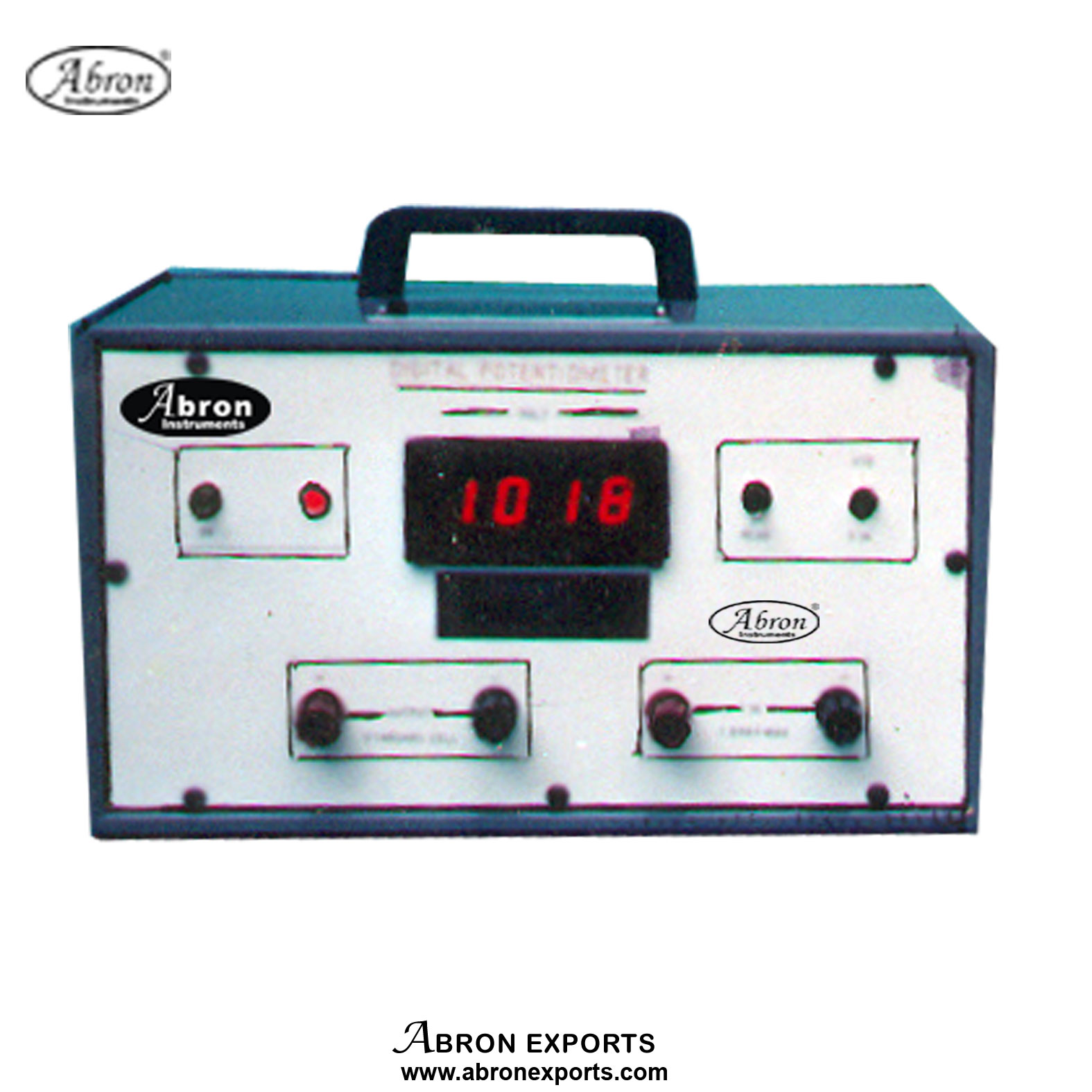
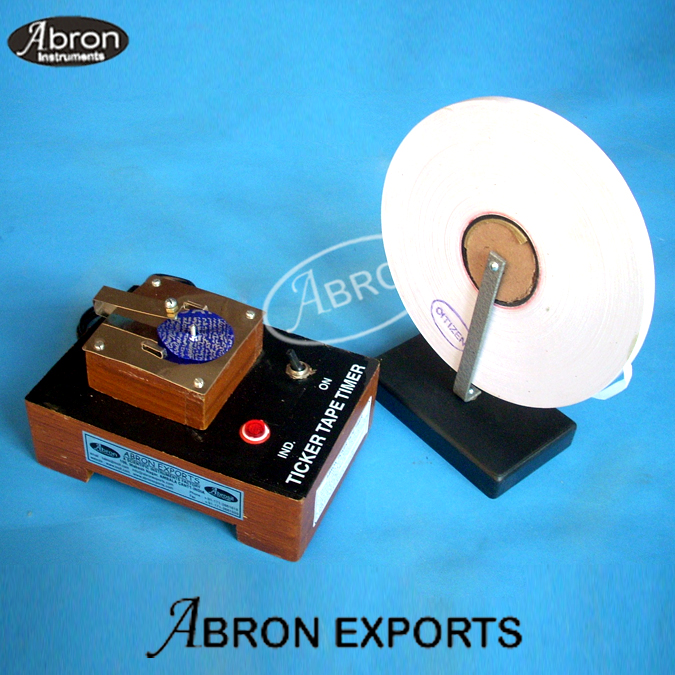
Apparatus Required : Bar Pendulum, stop watch digital, knife edges fixed to a rigid supports and meter scale

A Mechanics BSc Exp 003B Determination of C, couple per unit twist of the suspension wire.

A Mechanics BSc Exp 003B Determination of C, couple per unit twist of the suspension wire.

Additional Experiment. (i) Determination of C, couple per unit twist of the suspension wire. (ii) Determination of Is, moment of inertia of the suspended system and I0, the moment of inertia of the system with two added masses at x = 0, about an axis passing through the suspension wire

Apparatus Required :

Maxwell's Needle apparatus with solid cylinders only

and a stop watch digital

a stand base clamp to suspend it horizontally by means of wire,

and a meter scale

A Mechanics BSc Exp 003A Maxwell Needle Inertia Practical AP-786K

A Mechanics BSc Exp 003A Maxwell Needle Inertia Practical AP-786K

BSc Practical-To study the variation of moment of inertia of a system with the variation in the distribution of mass and hence to verify the theorem of parallel axes.

Apparatus Required : Maxwell's Needle apparatus with solid cylinders only-two similar weights with stand and split chuck attached holder to hang it horizontally by means of wire,and

a Digital stop watch and a scale

A Mechanics BSc Exp 002 Flywheel experiment setup Fly Wheel with counter steel 20cm dia flywheel with wall bracket abron AP-725K

A Mechanics BSc Exp 002 Flywheel experiment setup Fly Wheel with counter steel 20cm dia flywheel with wall bracket abron AP-725K

BSc Practical To determine the moment of inertia of a flywheel about its own axid of rotation. :

Apparatus Required : Fly Wheel with counter , meter scale,

vernier callipers,Digital stop watch,

set of weights and a pan

A Mechanics BSc Exp 001 Moment of Inertia Practical Setup

A Mechanics BSc Exp 001 Moment of Inertia Practical Setup

BSc Practical-To determine the moment of inertia of an irregular body, about an axis passing through its centre of gravity and perpendicular to its plane by dynamical method (Inertia table). :

Apparatus Required : Inertia table, irregular body whose moment of inertia is to be determined regular body whose moment of inertia can be calculated by measuring irs dimensions and mass,

Digital stop watch, spirit level 75mm-and vernier callipers

Optional Apparatus-physical balance with weight box 100gm with fractional